
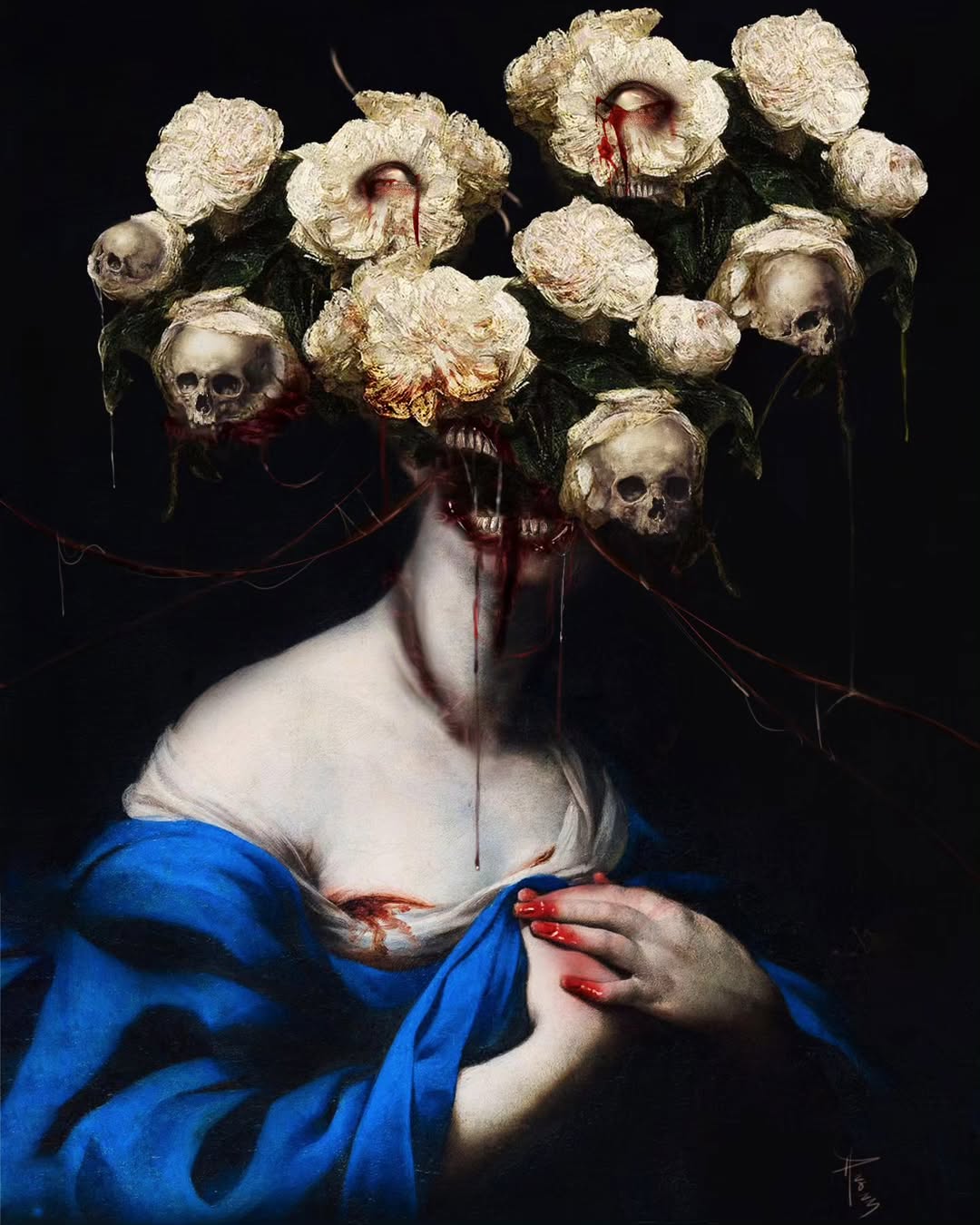
Roberto Diaz calls his practice “Arte del Caos.” The name is honest. Trained at the Design Academy and working with pencil, acrylic, and digital painting, he builds images at the precise point where the sacred and the anatomical meet and refuses to separate.
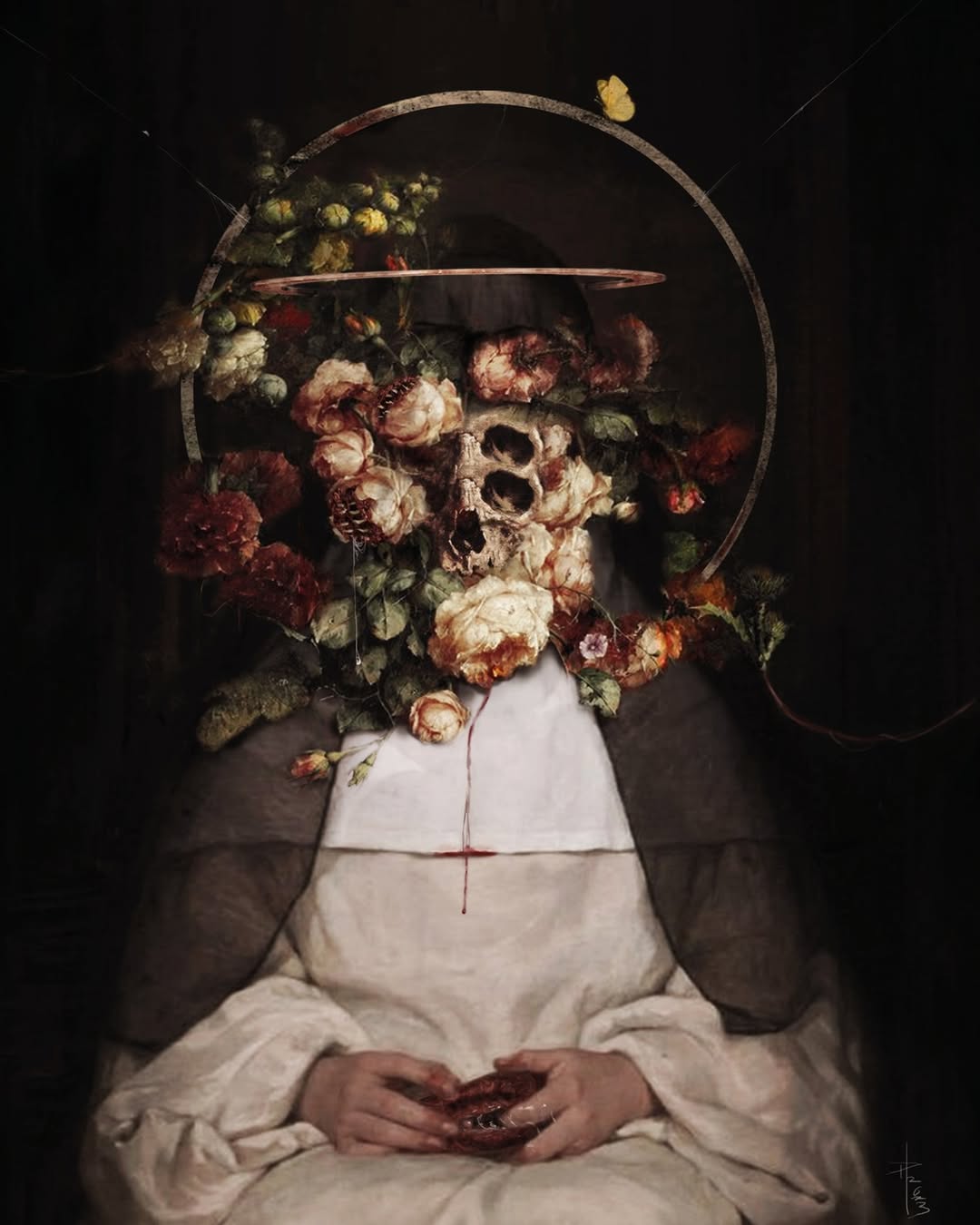
The surface seduces first. His palette pulls from the Old Masters, burnished and somber, chiaroscuro and the lavished amount of elements, remembering us also of the Flemish overflowing vases of Veerendael.
Then the subject registers. Flowers that bleed. Angels with bird skulls for faces. Nuns whose jaws split into serrated rows of teeth. The artist composes and creates around the wounds that he depicts.
Grammatical schism
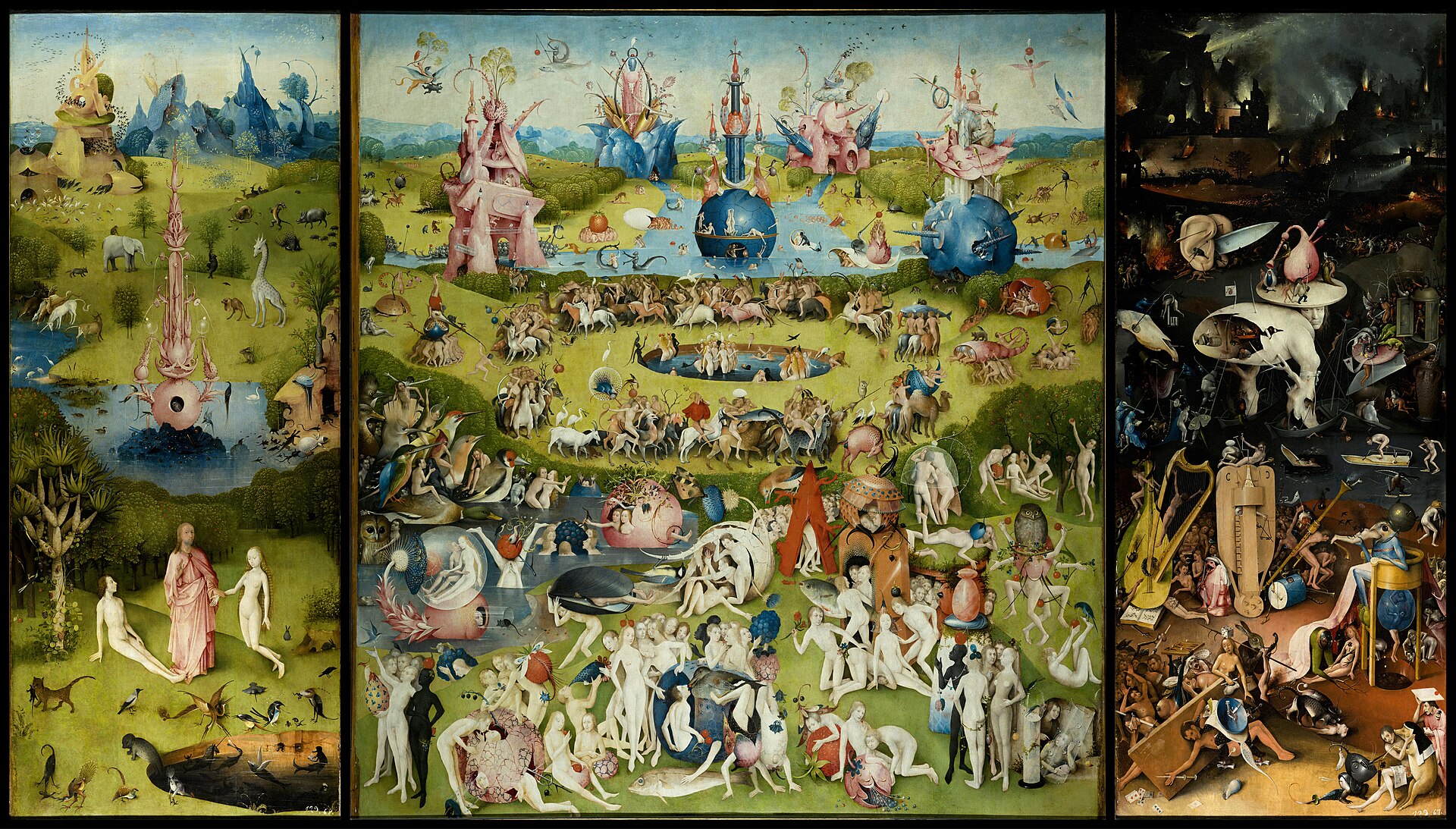
This is where Hieronymus Bosch becomes the obvious reference, and also where Diaz departs from him. Bosch’s hell panels in The Garden of Earthly Delights are crowded with monsters, but they operate inside a medieval moral framework. Sin produces deformity, and punishment is legible. Roberto Diaz doesn’t offer such a framework, and his figures do not suffer because they sinned. They suffer because they exist, or in/through their existence. Halos become rusted chains, religious robes cover exposed viscera. The sacred vocabulary stays, but with a completely different grammar.
The halo in the depiction of the seated angel from Lost Religion series with red robe is a rusted chain. The angel seated on a throne holds a staff while a skull rests in the folds of its robe. Kant’s words appear on the left: “It is not God’s will merely that we should be happy, but that we should make ourselves happy.” Diaz lets that sentence sit next to a figure whose face is rotted open and says nothing more about it.


Power of Abjection
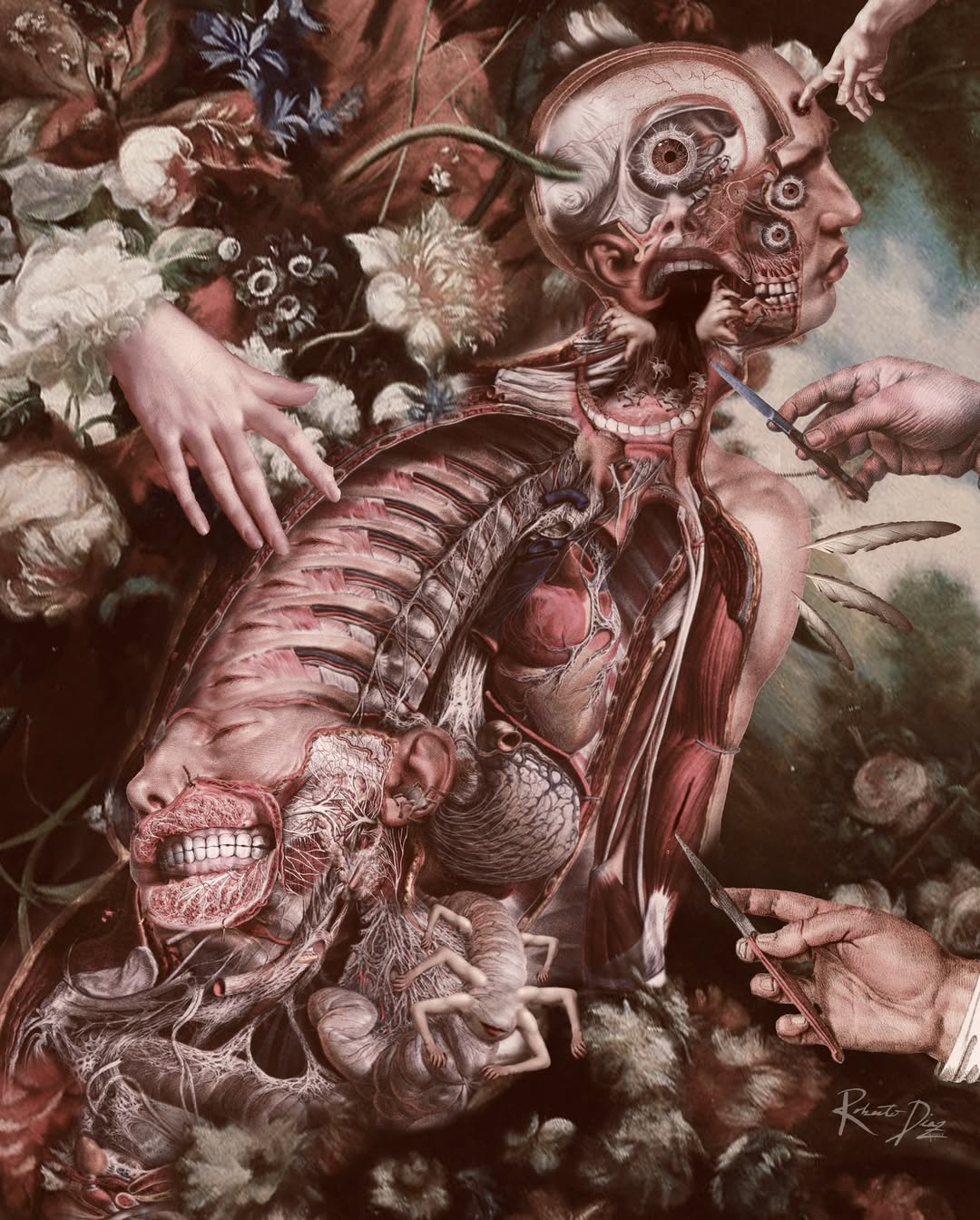
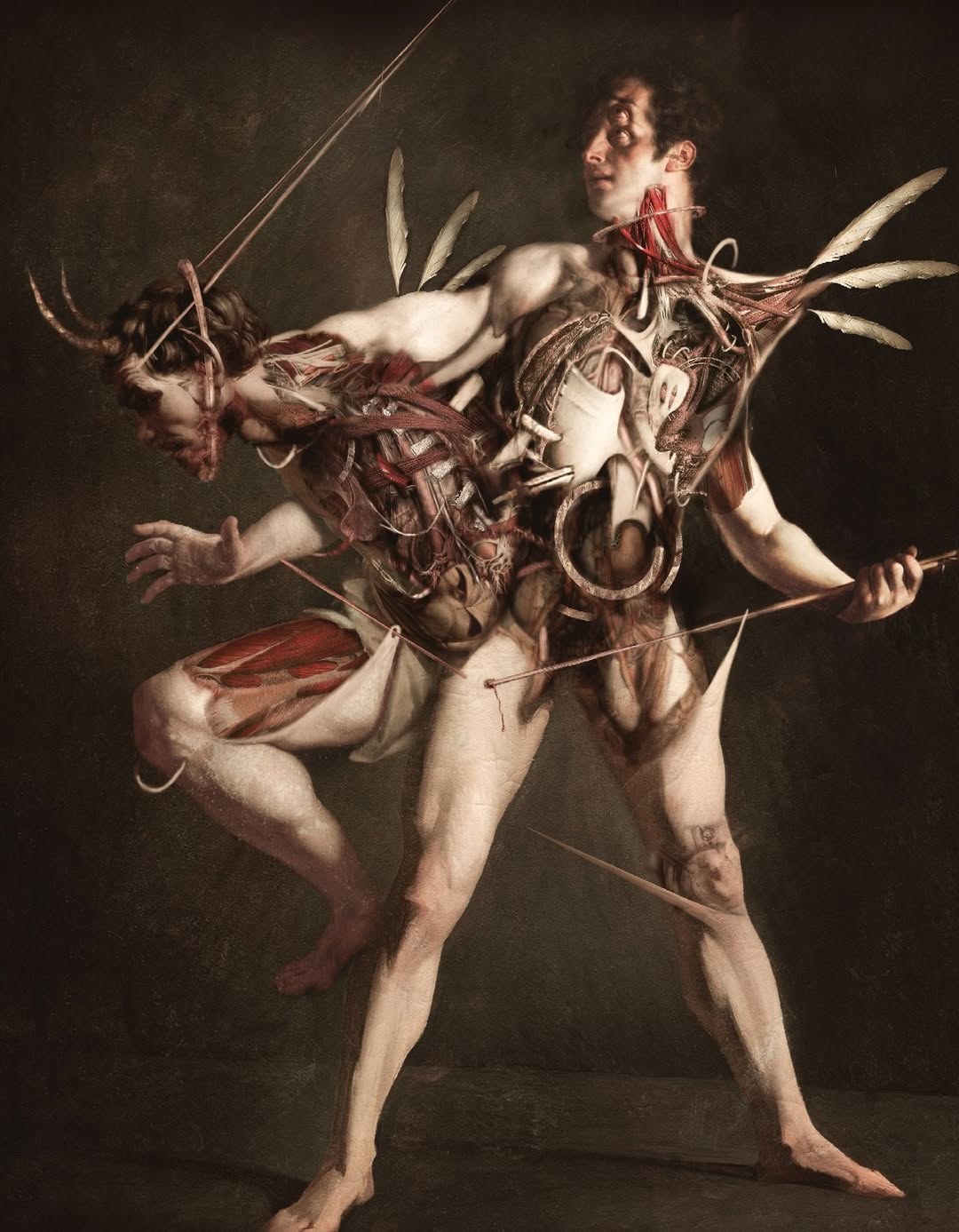
This is where Julia Kristeva’s theory of abjection becomes the right lens. In Powers of Horror she describes the abject as what we permanently thrust aside in order to live, the bodily reminder that the boundary between self and other was never stable. Abjection, for Kristeva, marks a “primal order” that escapes signification in the symbolic order, the human reaction of horror and vomit to a threatened breakdown in meaning caused by the loss of distinction between subject and object, between the self and the other. Roberto Diaz makes that breakdown visible through the open bodies and the other faces emerging from inside them, as if the self would leak. In Dream Dualism Part I, multiple hands reach toward a figure whose skull is peeled open and whose thoracic cavity is open wide. Other faces emerge from inside the body. The body is not singular.
Christian iconography depends on the body being legible and controlled. The saint’s body bleeds in a specific place, at a specific moment, for a specific reason. Martyrdom has grammar as well.
This artist changes that grammar, giving us anatomical exposures that follow no martyrological logic. The viscera in The Devil in Me, two figures locked together with their interiors visible and tangled, feathers and musculature and organs fused, reads less like sacred suffering and more like a biological fact stated plainly. Bodies contain other structures that do not care about meaning, as a purely formal malign multiplication.
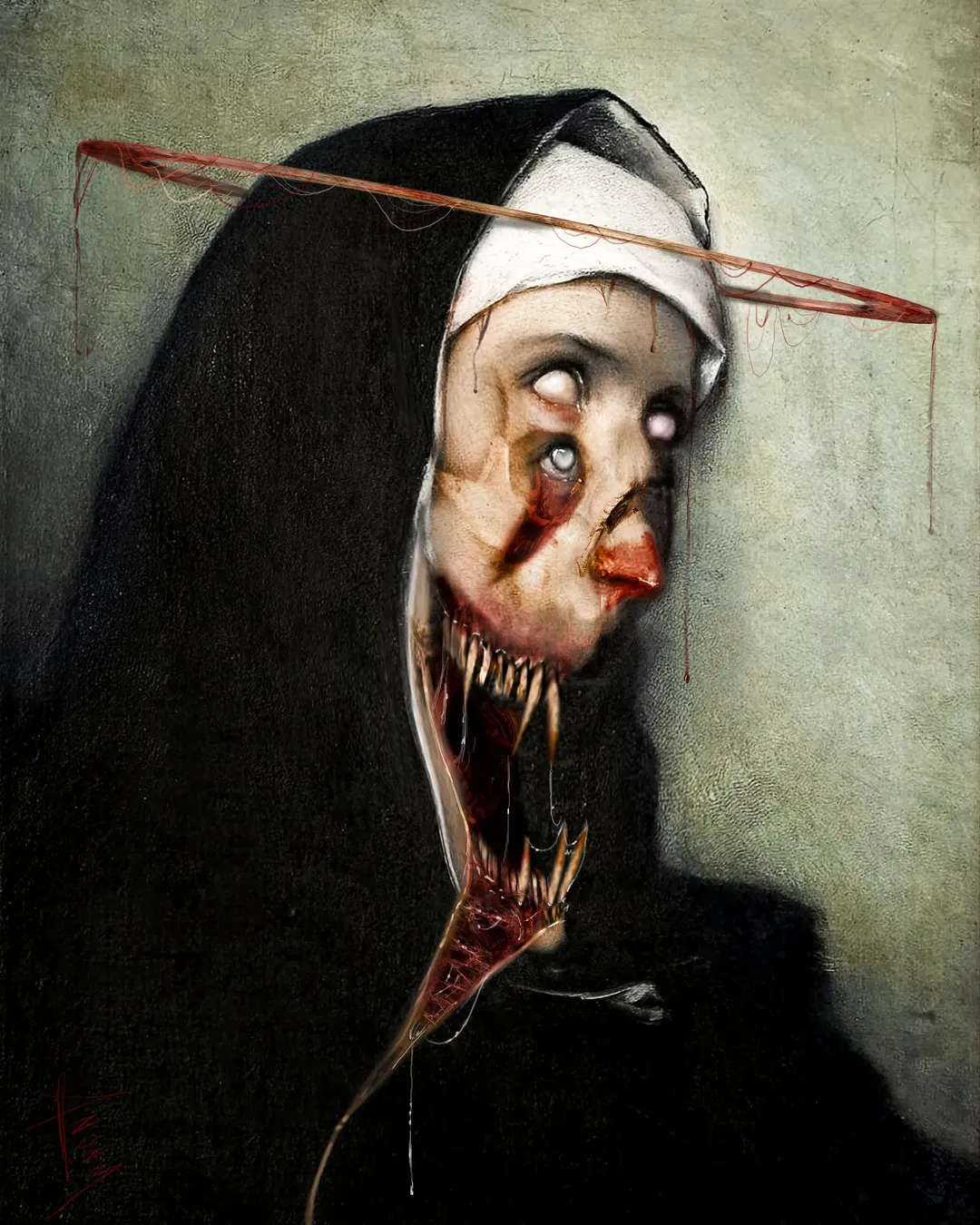
Each piece strikes a balance between repulsion and beauty, with multiple eyes, gaping wounds, and signs of decay sitting inside compositions that retain a classical dignity. This tension is not accidental. The juxtaposition between aesthetic pleasingness and sinister conception exploits the instinctual repulsion against perceived flaws and deformities in the human physicality, accomplishing a profanation of the so-called divine (because we are made in the image of God). He uses the visual language of devotional painting, the poses, the lighting, the fabric, to frame images that devotional painting would never depict. The nun in the painting Disbelieve wears her clothes with the posture of a Flemish portrait subject. Her halo is also a copper wire stretched thin across the composition. Her lower jaw has become a predatory beak. You read the image as a portrait before you read it as a horror.
This other image from Lost Religion series places a figure in the pose of a classical nude, flowers surrounding them, a snake at their feet coiled around what appears to be an apple while the chest cavity opens into an exposed ribcage.
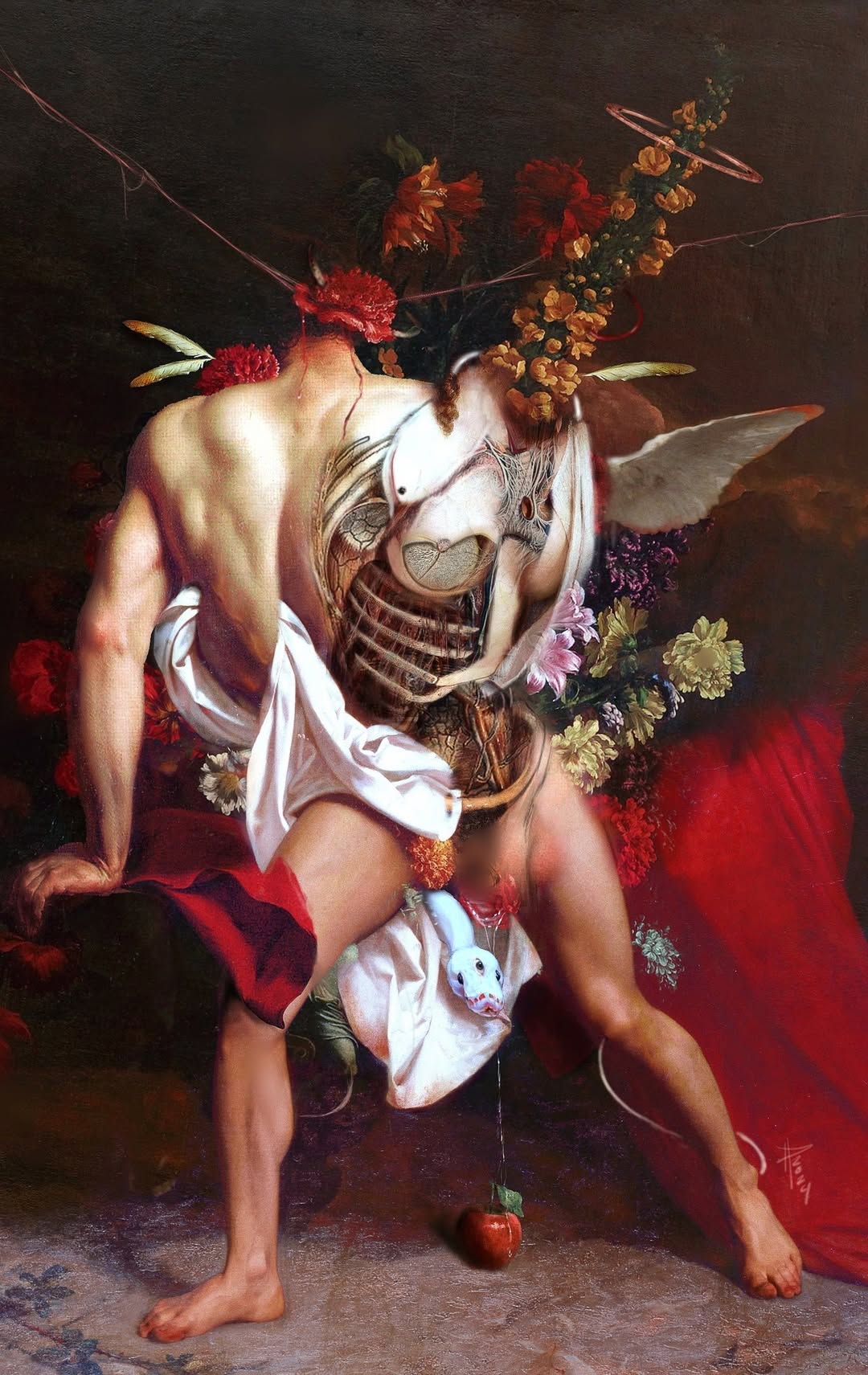
Eden, anatomy, original sin, and a fight between angel wings and devilish horns occupy the same frame without resolving into any single reading.
When the promise of structure fails
Roberto Diaz is proud to note that his work is done without AI tools. This matters formally. The precision with which he merges Baroque source material with anatomical horror requires sustained attention to surface, texture, and the internal logic of each original composition. The graft has to hold. In his work, it does. The seams are part of the image, not failures of technique.
Might this be a theology without doctrine, where the sacred forms persist, stripped of their promises. The body remains the central subject, as it always was in devotional art, but its openness here is just what the body is. Mortal, composite, permeable, and indifferent to the meanings we assign it.
The roses are also skulls. The angel is also a corpse.
The distinction was never as secure as the iconography required.
Lasă un comentariu