
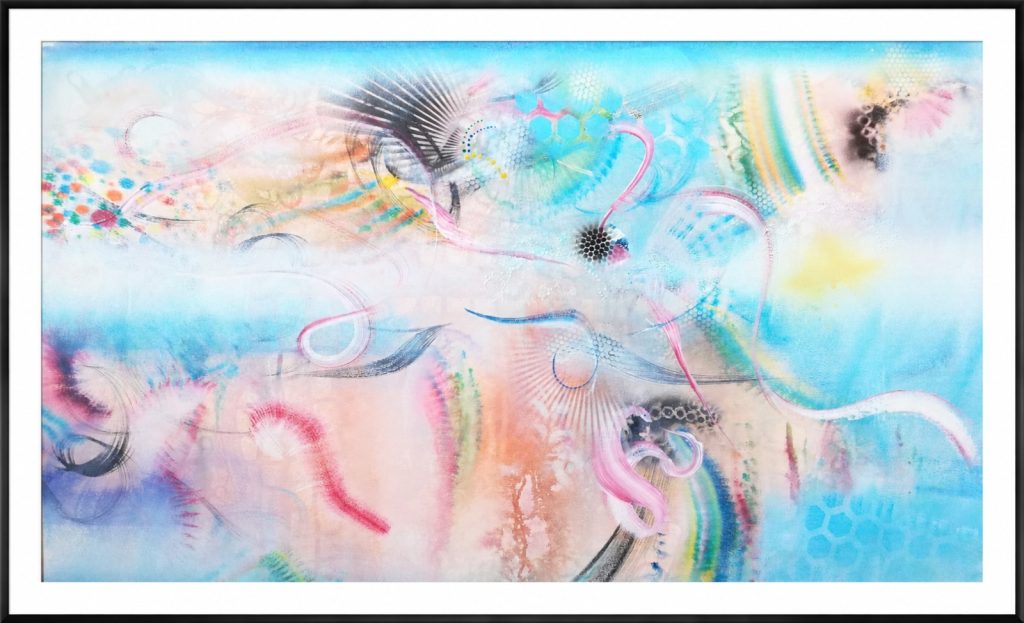
I came into contact with the artwork of Costin Brăteanu recently, and while analysing his portfolio, I got the impression of looking at an artistically represented geography. Going further through the artist’s strata, I remembered the concept of palimpsest, which could better describe what I was trying to understand.
palimpsest is a manuscript page, parchment, or writing surface from which the original text has been scraped, washed, or rubbed off so the material can be reused for a new document, while leaving faint, visible traces of the older writing beneath.
Gérard Genette used this term for literature, naming the text underneath hypotext and the one above hypertext. And I can read the artworks of Costin Brăteanu in the same way, layer by layer, from bottom to top, as in a stratigraphy. Each series also adds another stratum. None of them erases the one before.
The artist was born in 1978, in Petroșani, and graduated in painting in Timișoara in 2001, the city where he later opened his gallery. The order of the following series follows the logic of the surface, from the simplest one to the most crowded one.
Figures and Horizons
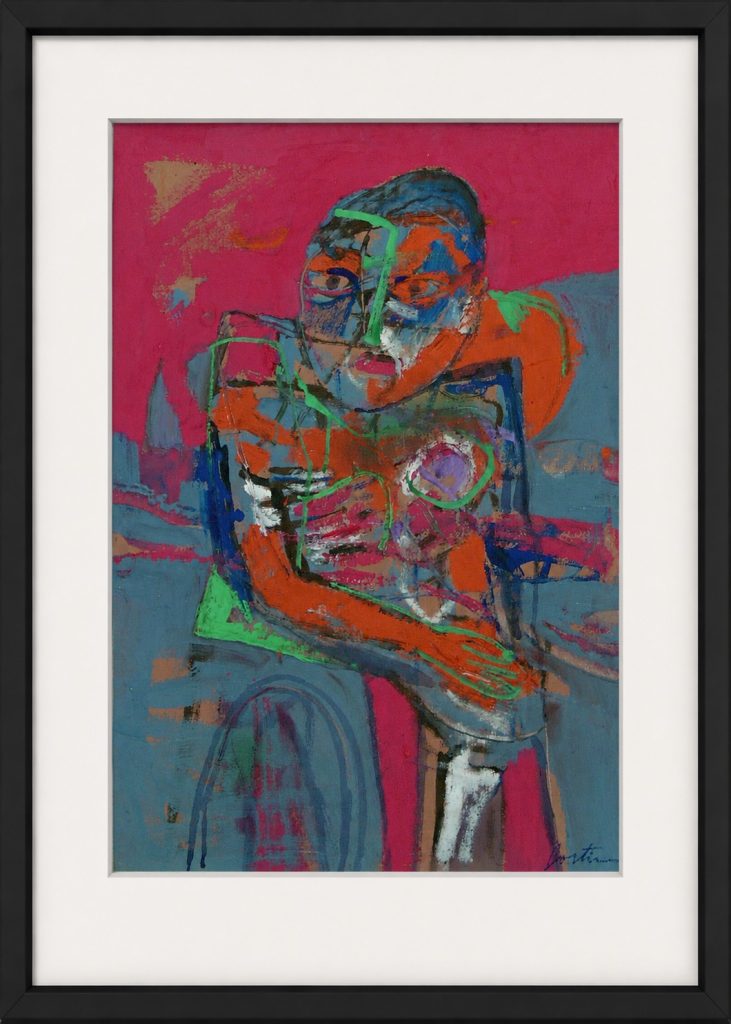
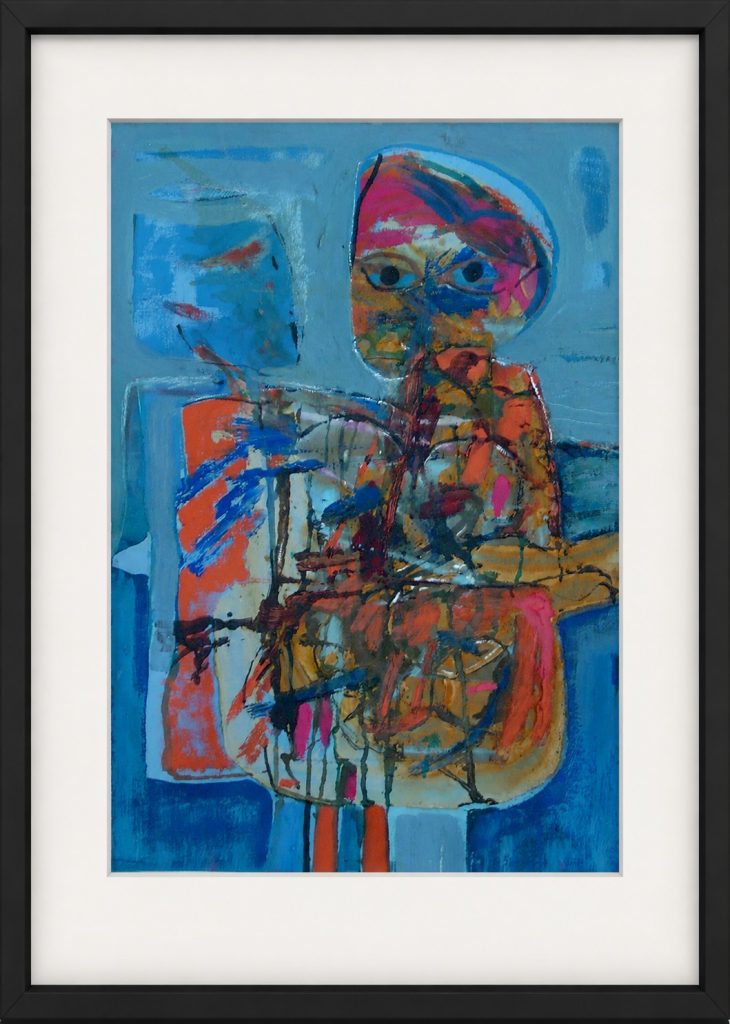
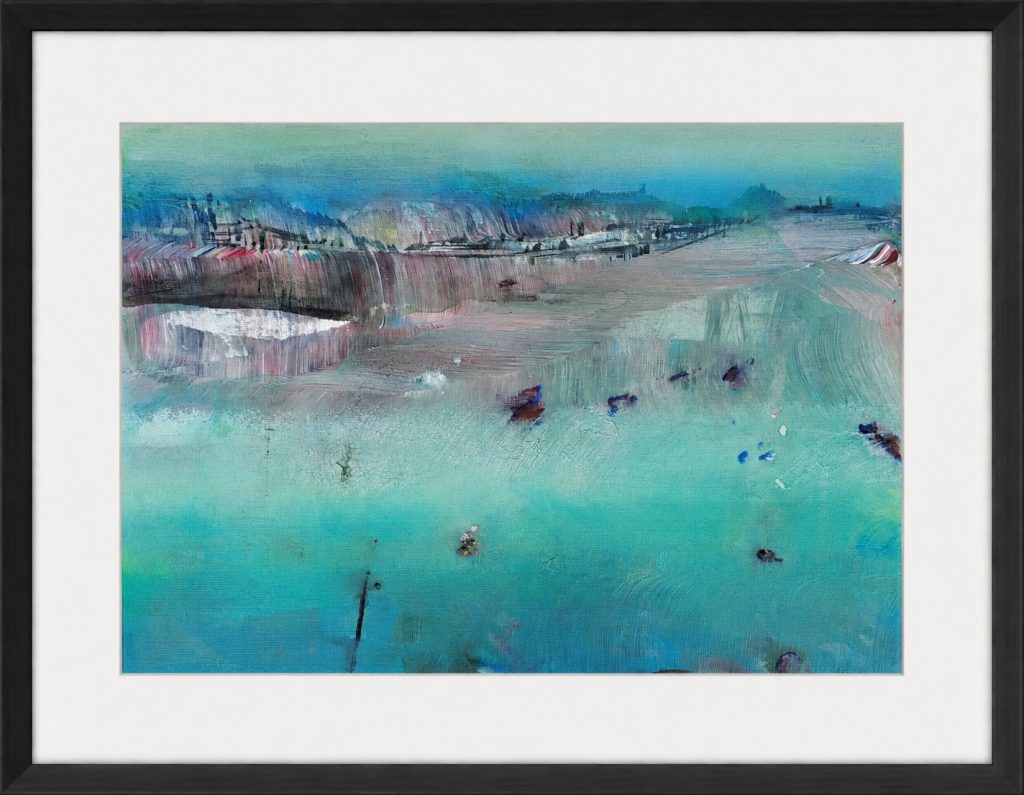
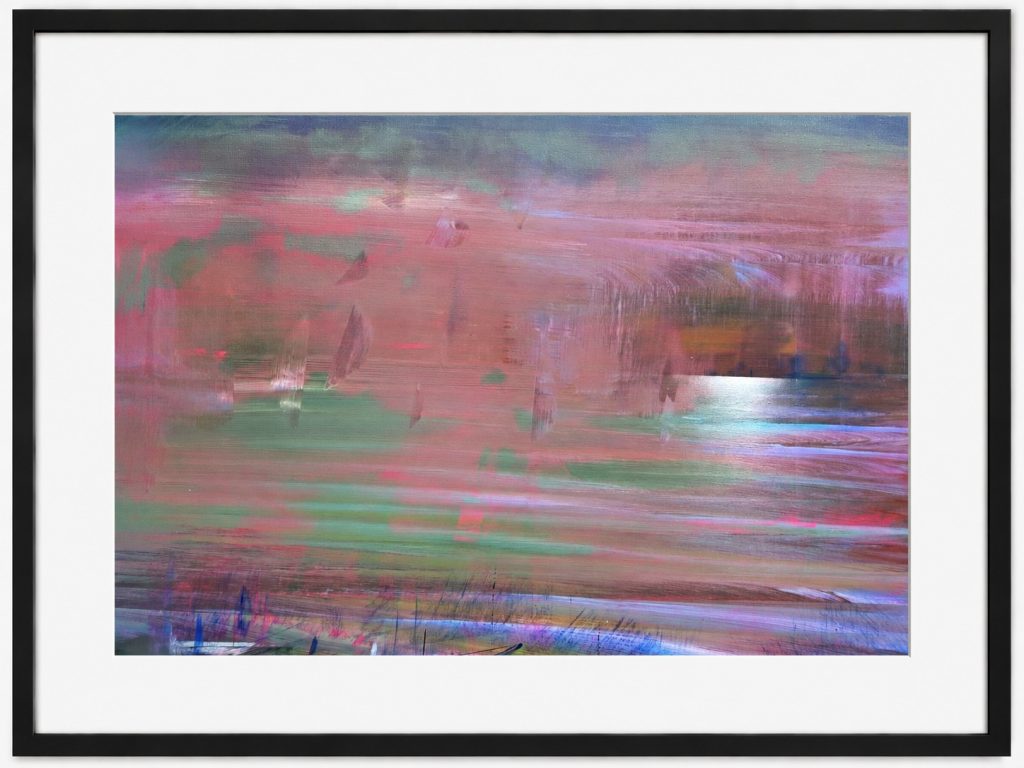
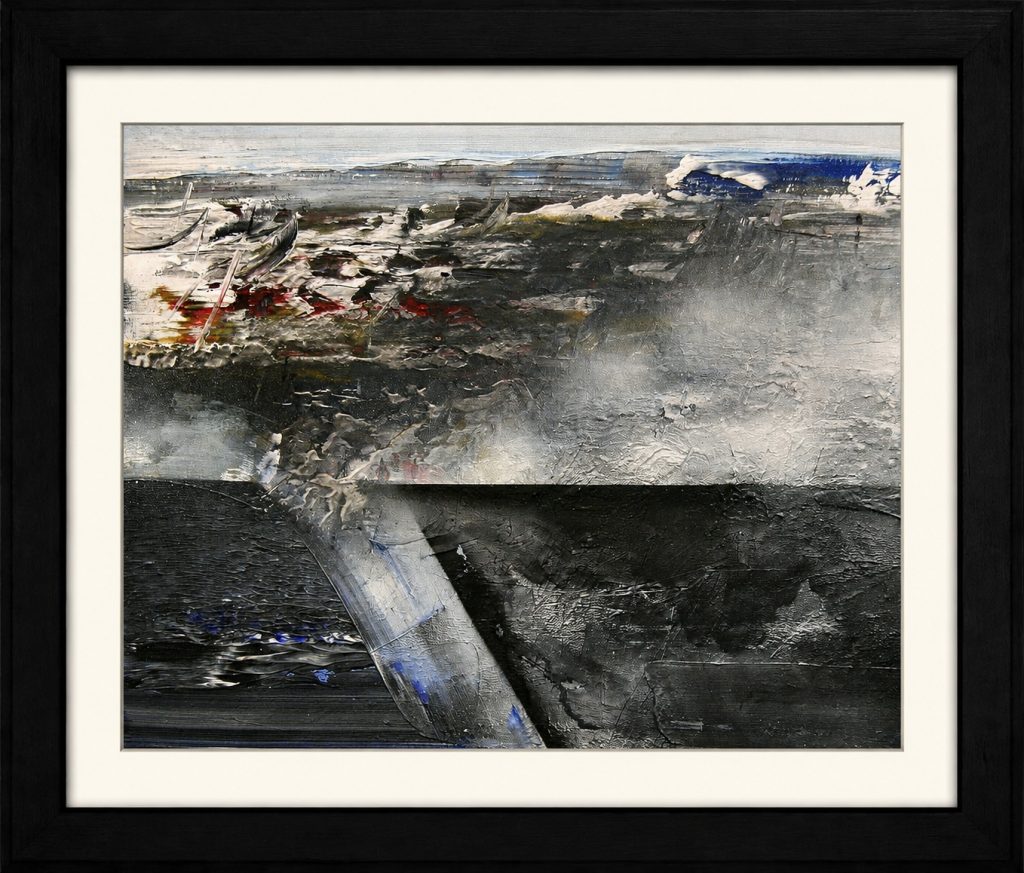
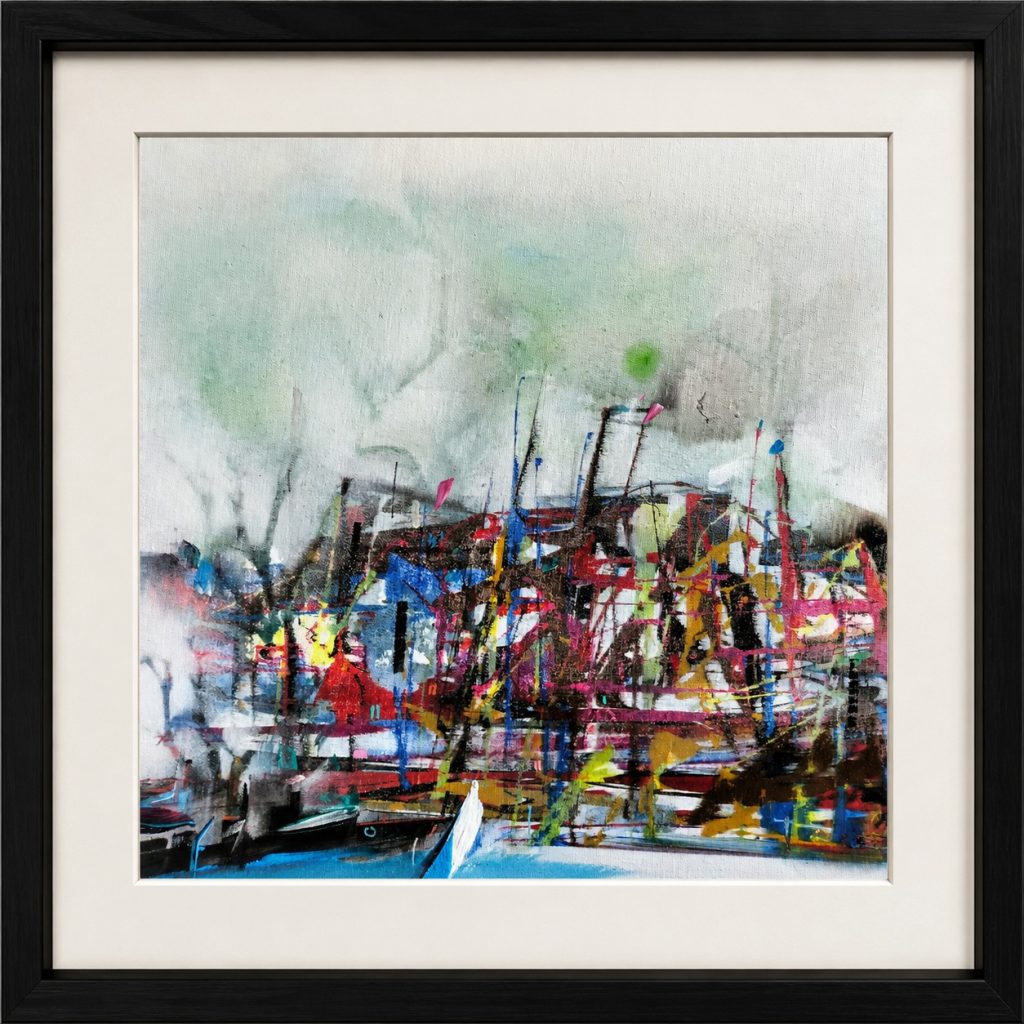
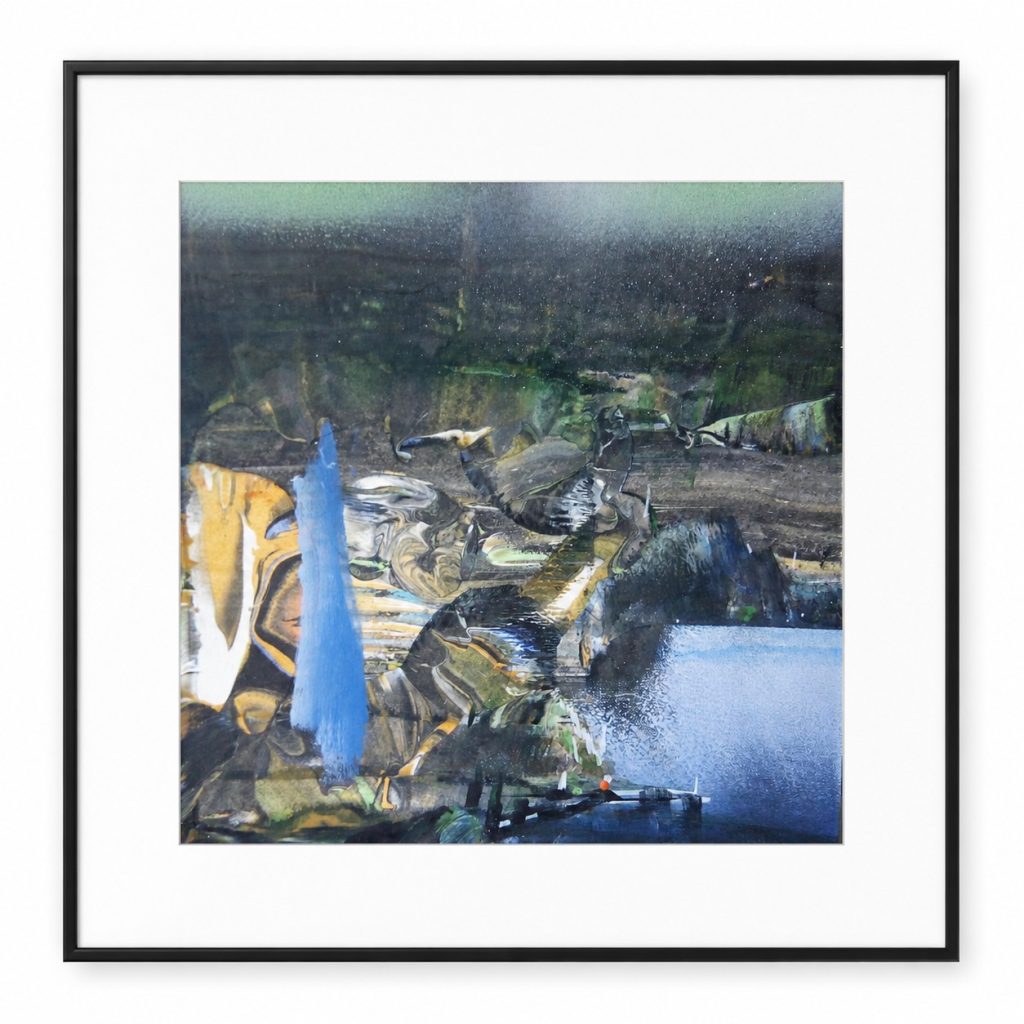
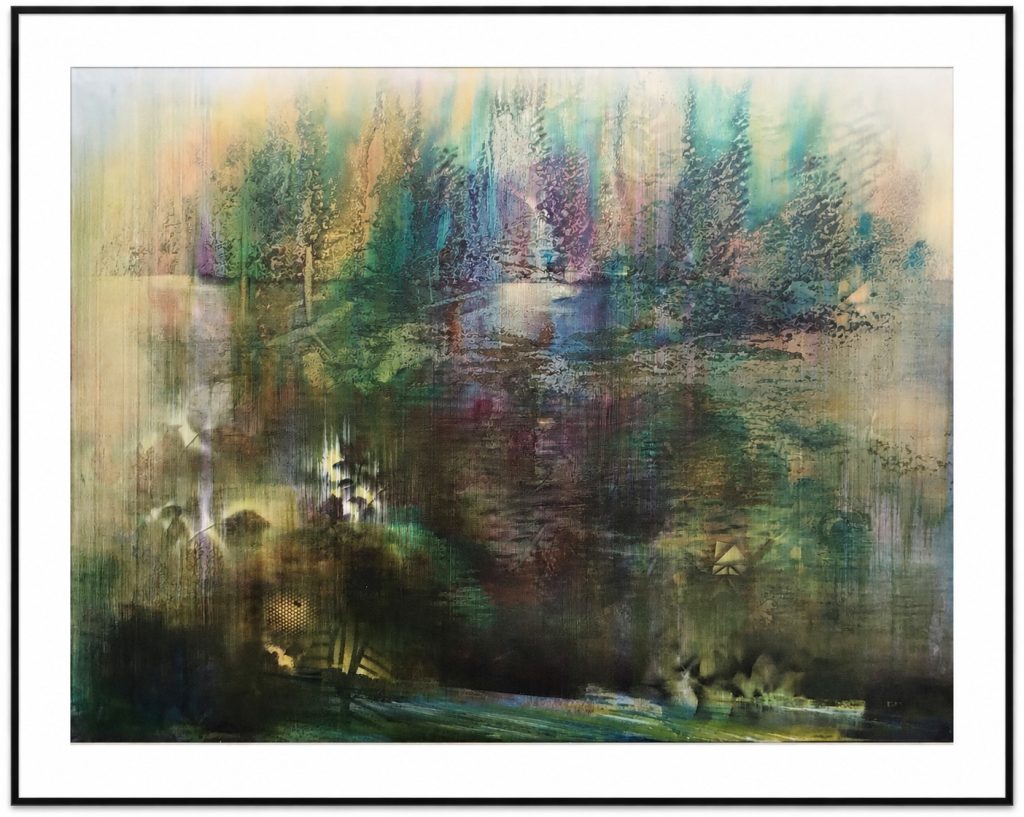
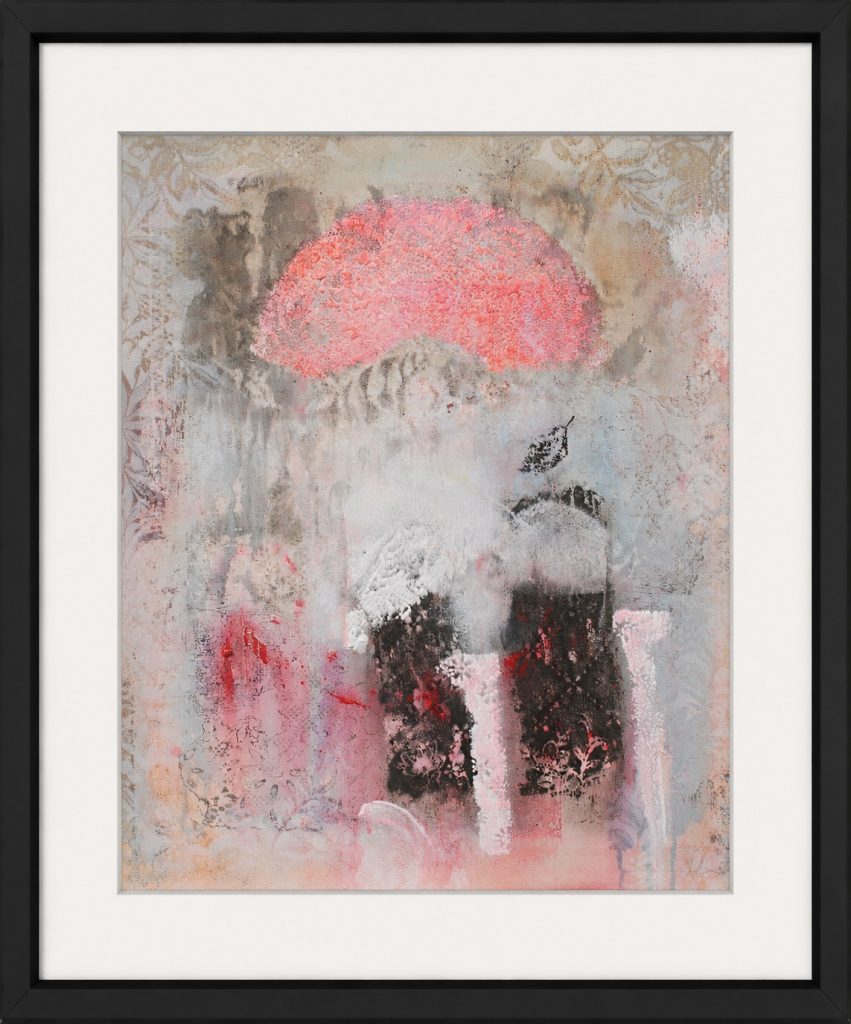
Two seated figures occupy compositions with full and bright backgrounds, one in red, and the other one in blue (fig. 1, 2). The outline appears to be drawn directly into the wet paint. The bodies are composed of orange spots, without clear modelling. In the landscapes I decided to include in the same family, the horizon divides the field into two bands (fig. 3, 4). The paint appears to have been dragged horizontally with a blade, and the trails remain visible.
This is the hypotext. The painting here is made of a single layer, applied directly, but the act of scraping already belongs to the palimpsest, because the scribe does the same with the parchment before writing.
Branches and Water
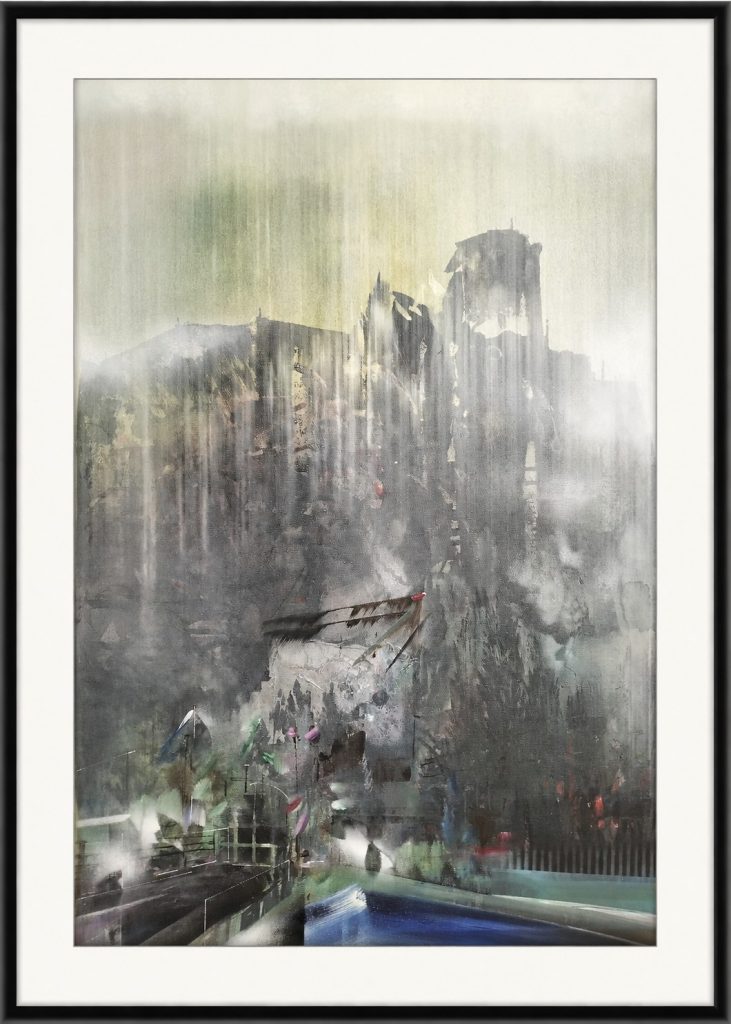
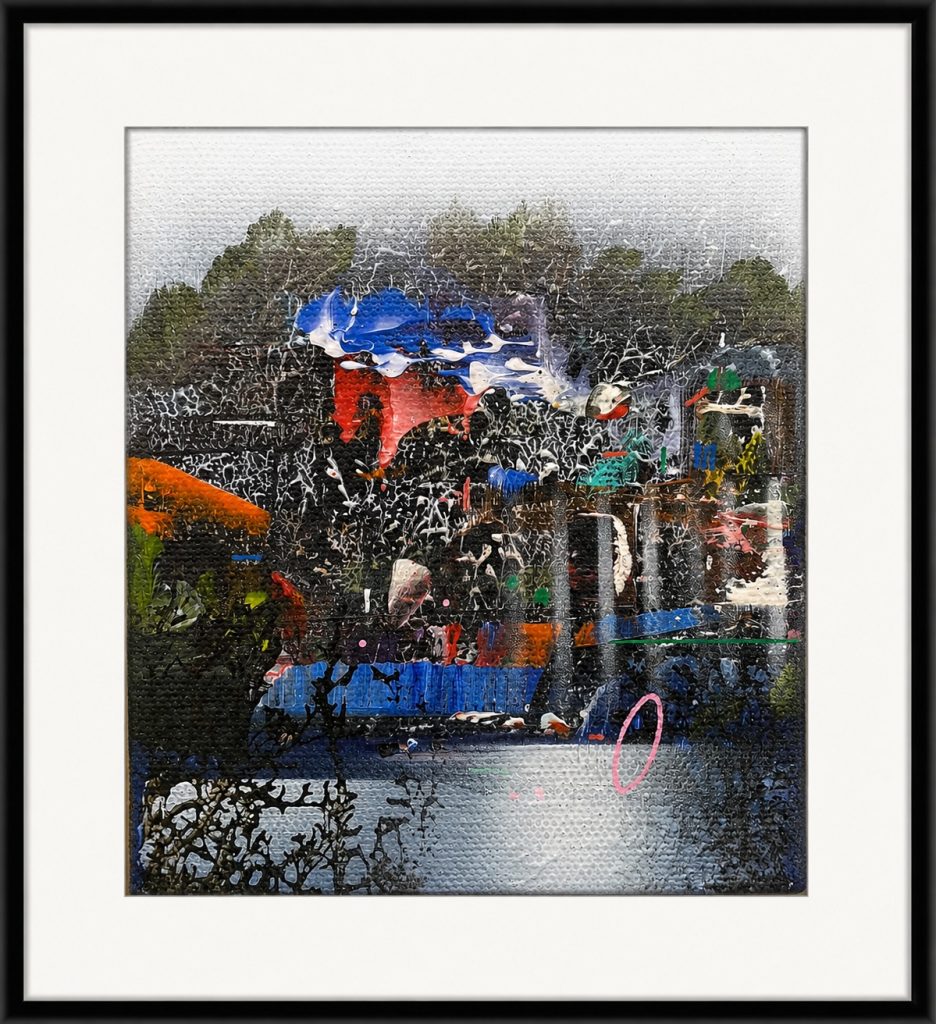
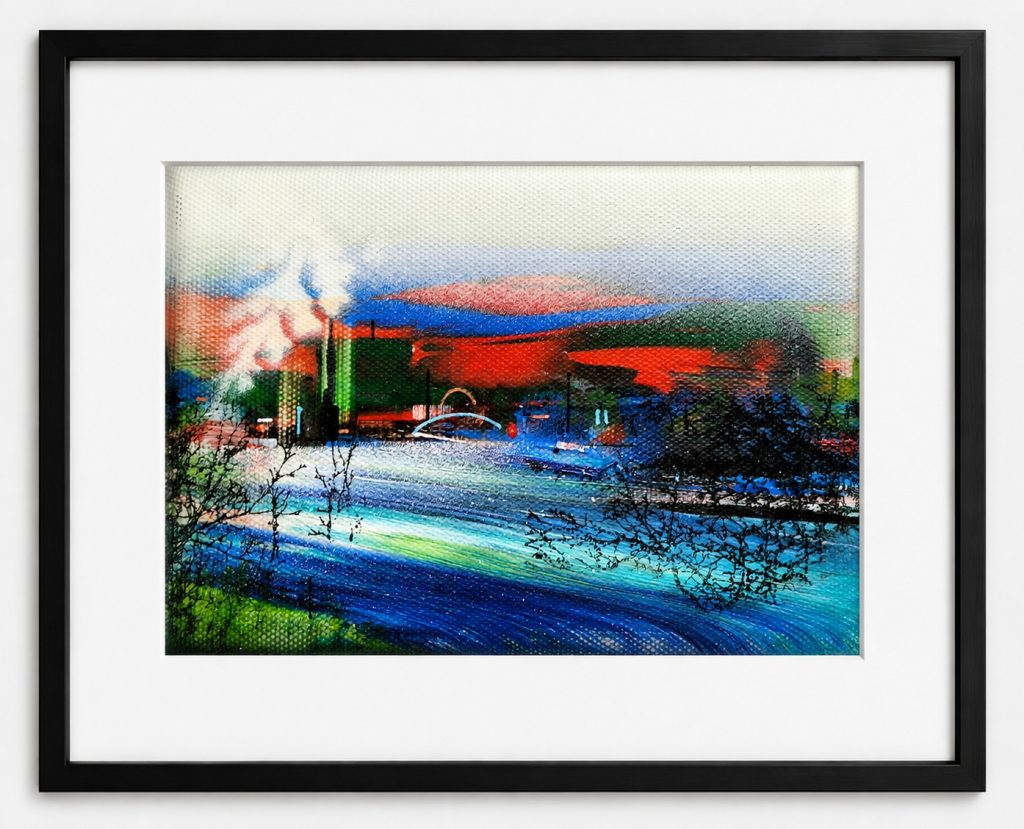
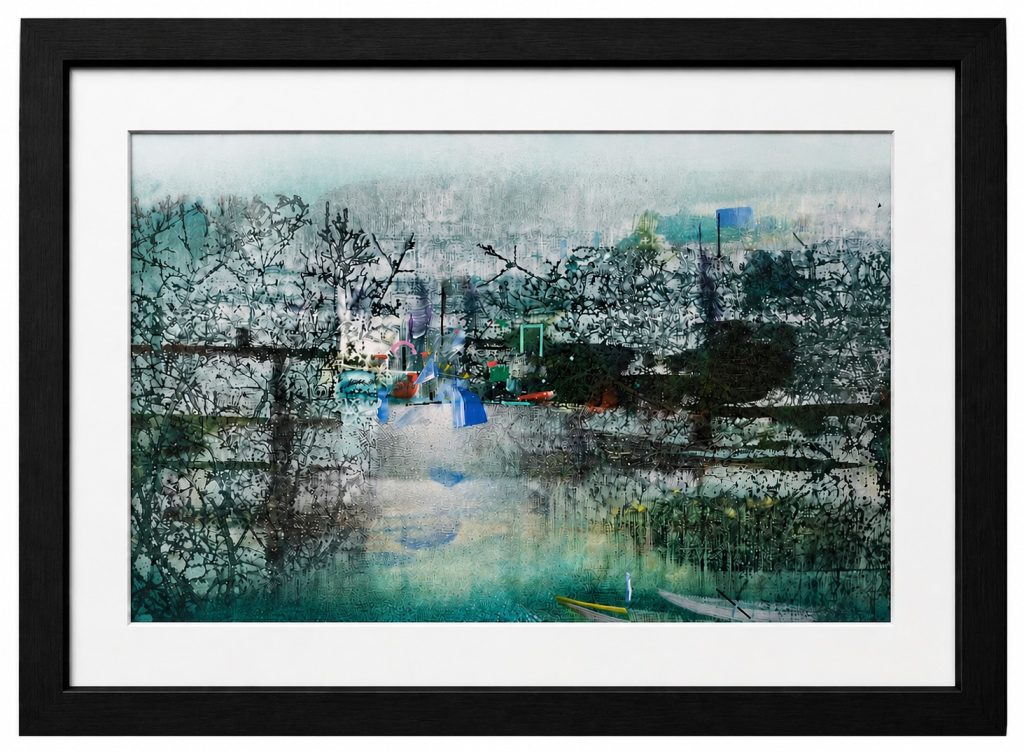
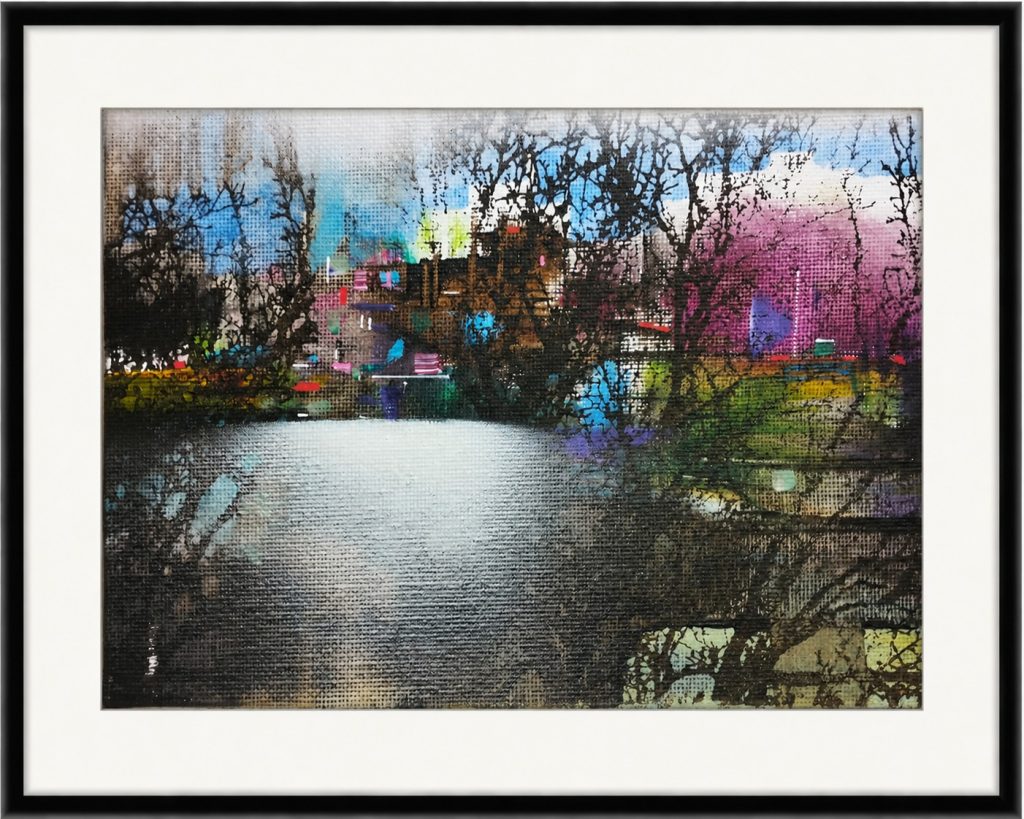
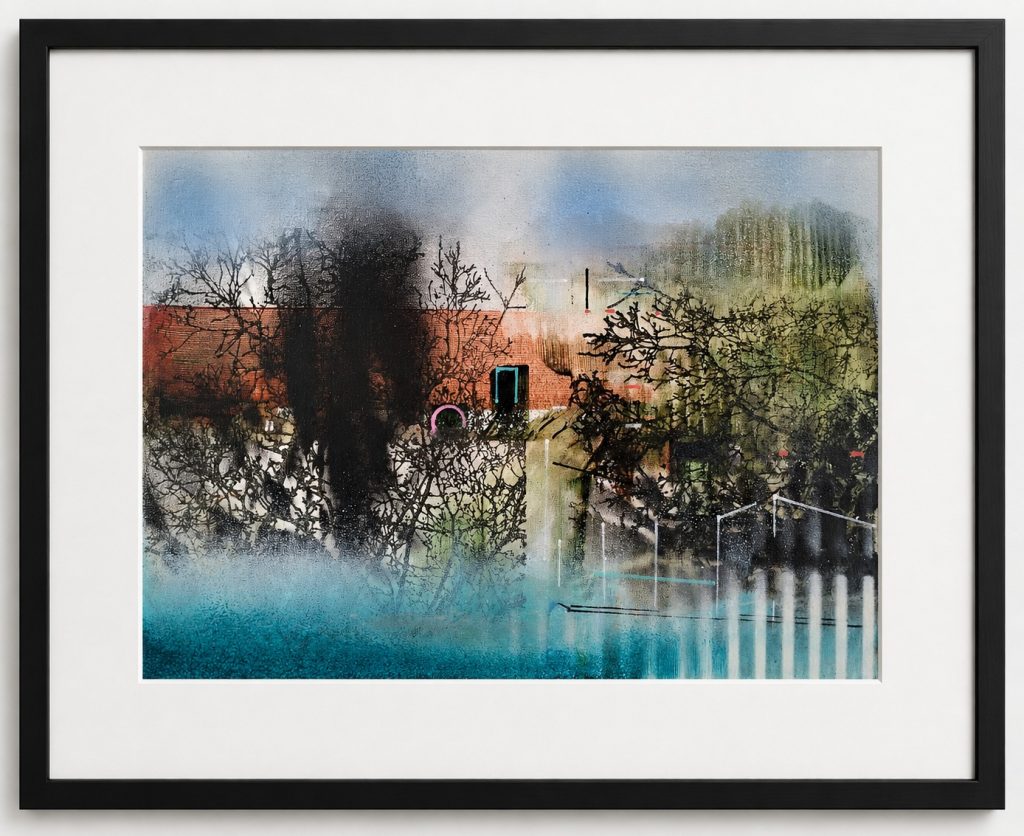
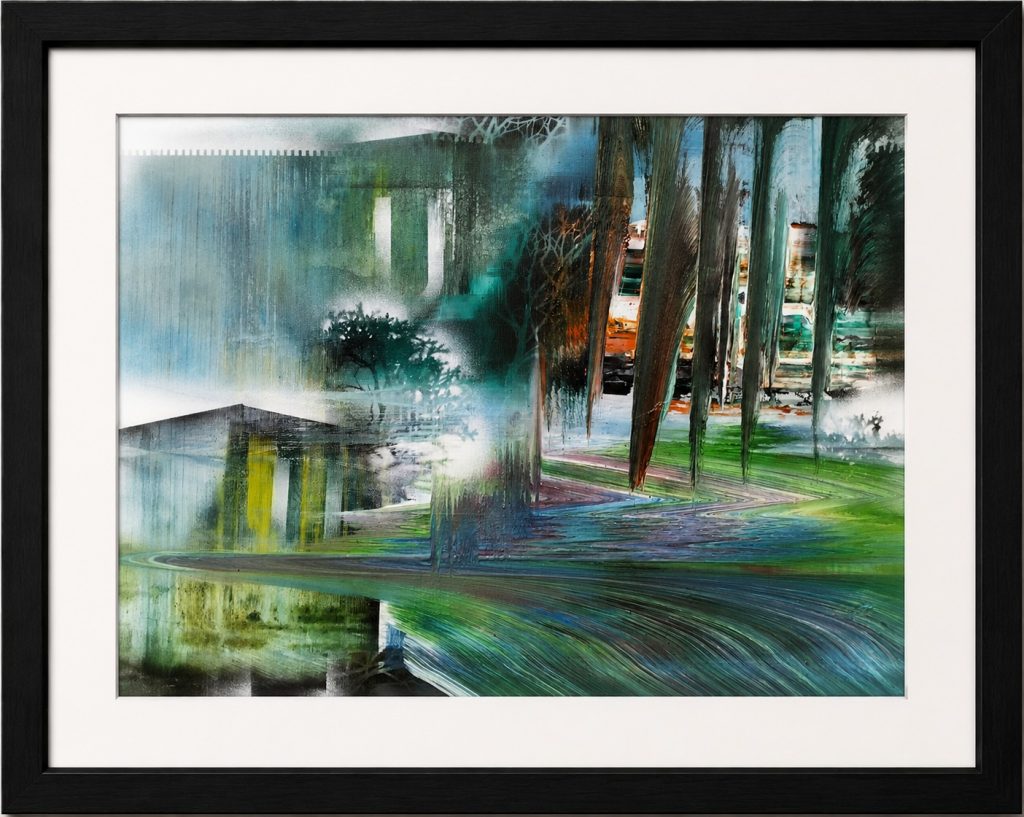
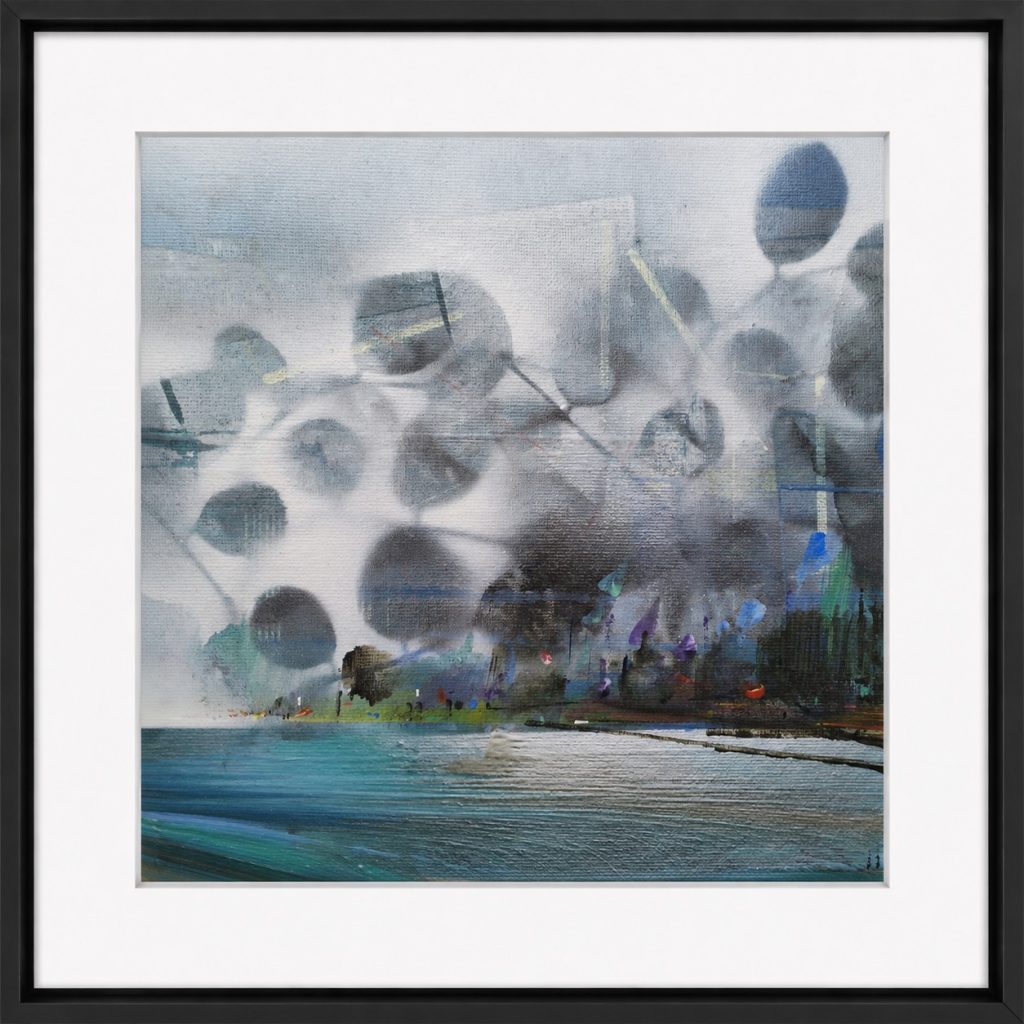
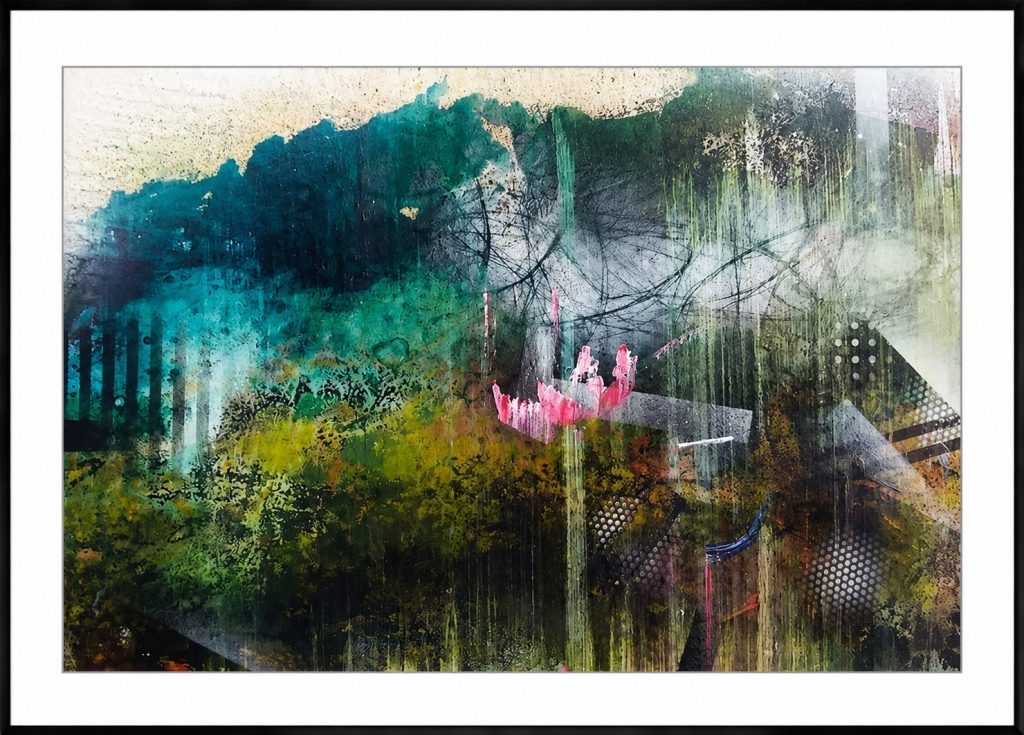
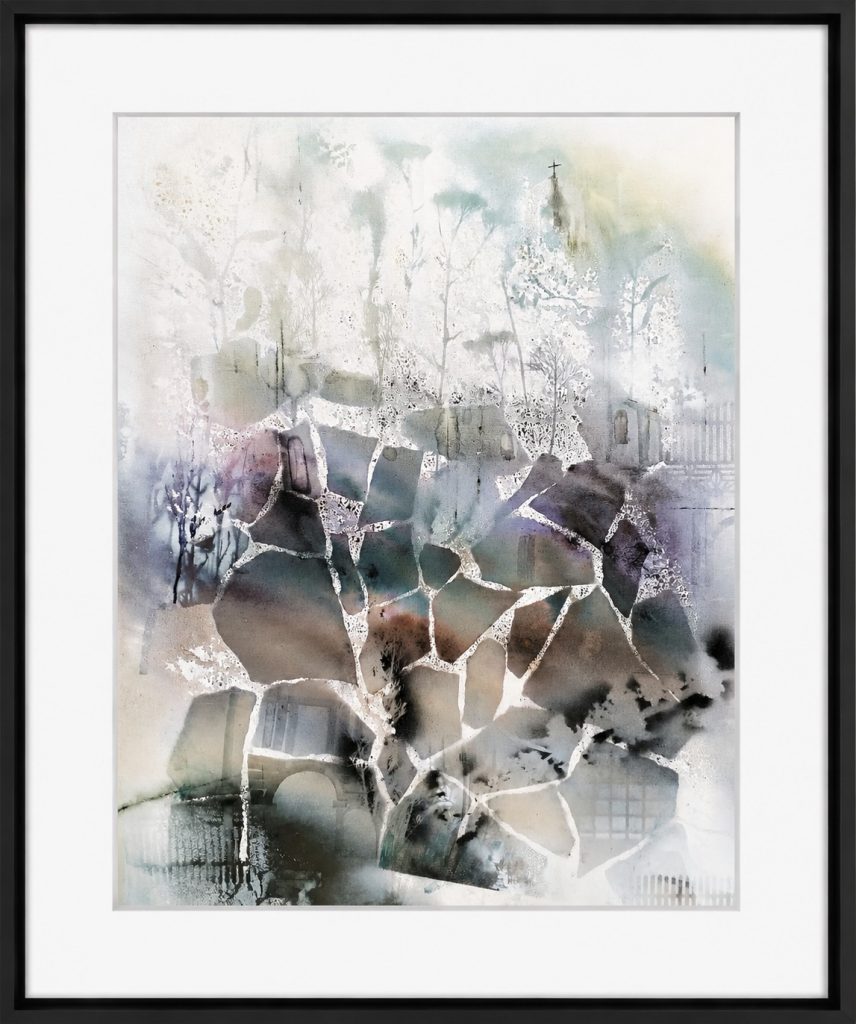
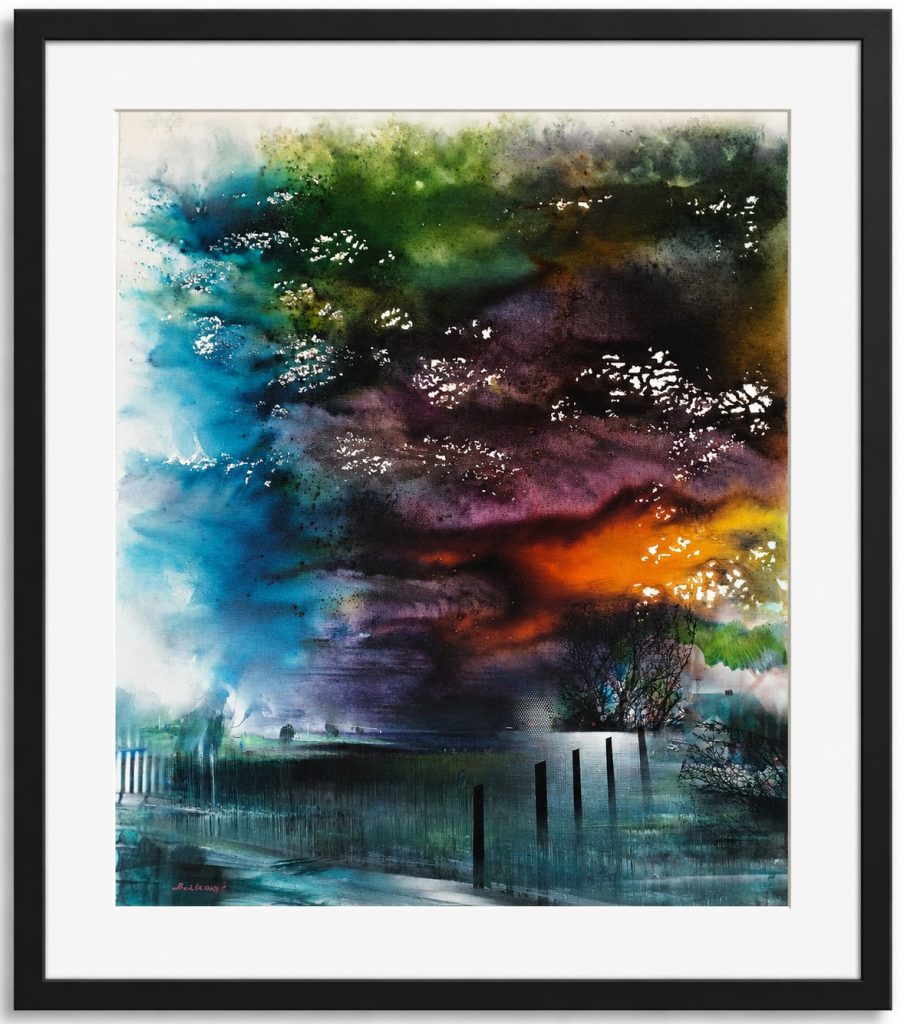
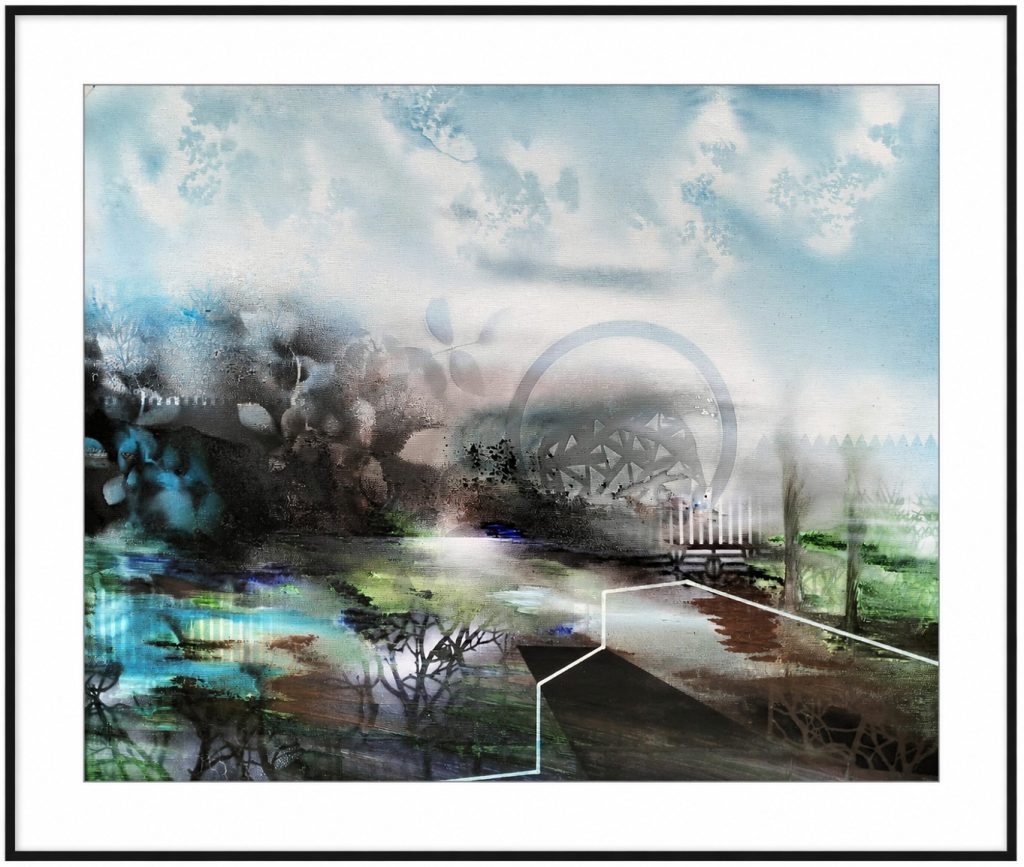
Here the surface receives a second image. Black silhouettes of branches cover fields of colour (fig. 9-15). In the foreground there is almost always a light, “open”, band of water. Behind the branches you can see fences, roofs, a factory chimney or a bridge. In fig. 9, there are vertical drips of colour that go over the entire image.
The eye reads both images at the same time. The screen of branches is in front, and almost everything else is behind it, and they do not cancel each other out. It is the first overwriting. The landscape is no longer seen directly, but through another drawing.
The Leaf as Pattern
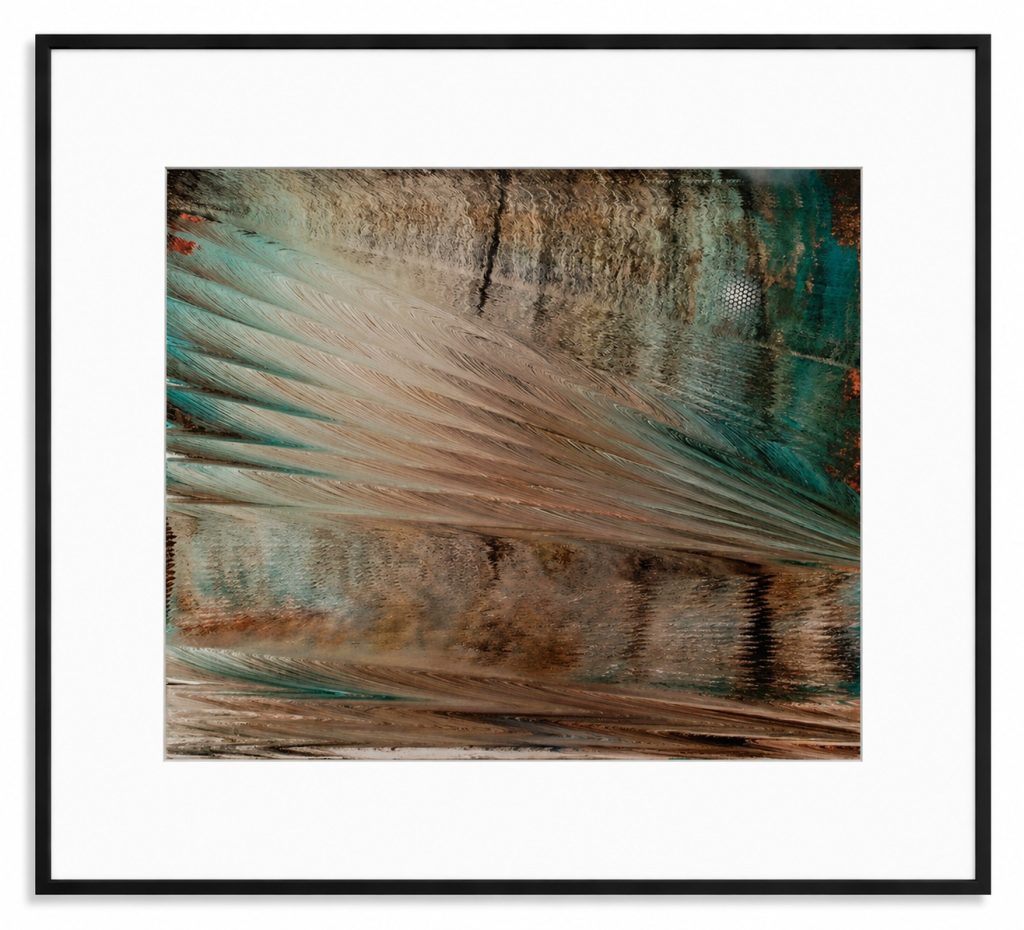
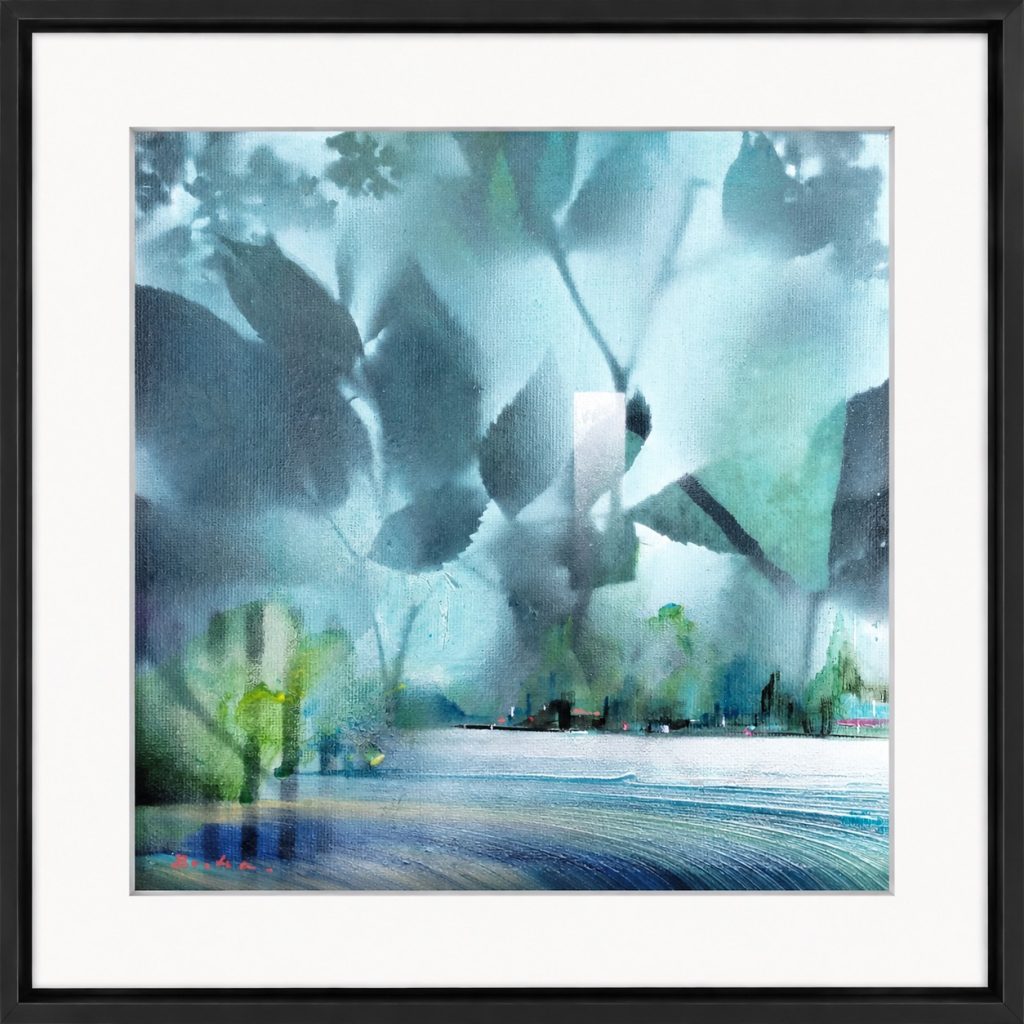
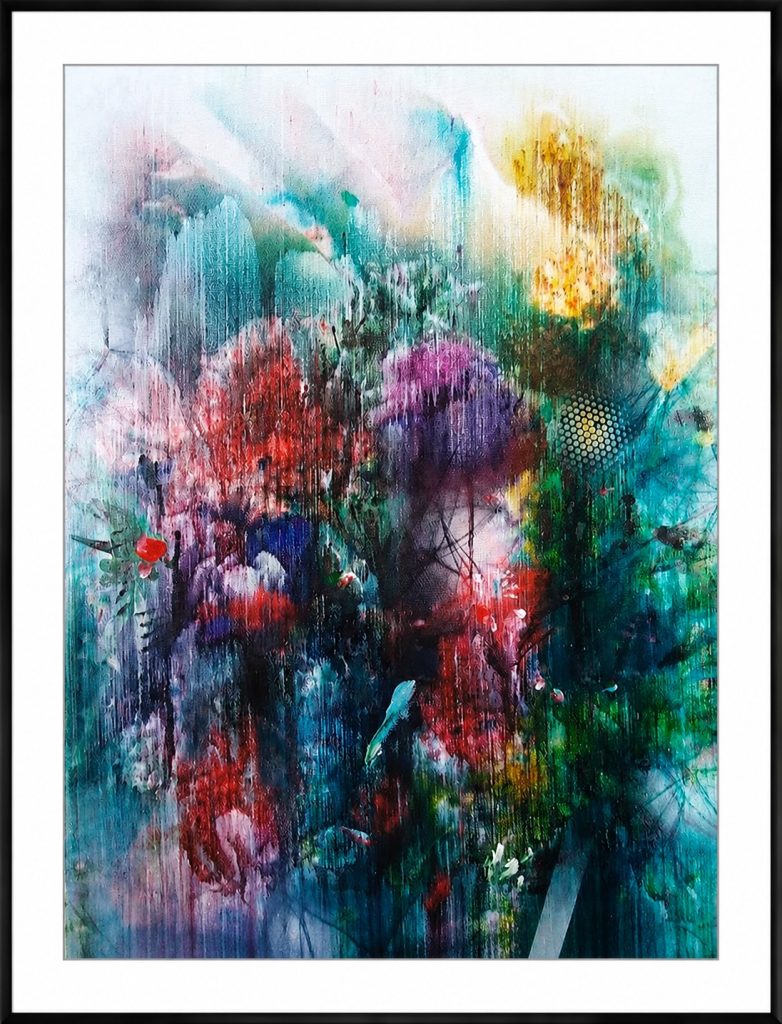
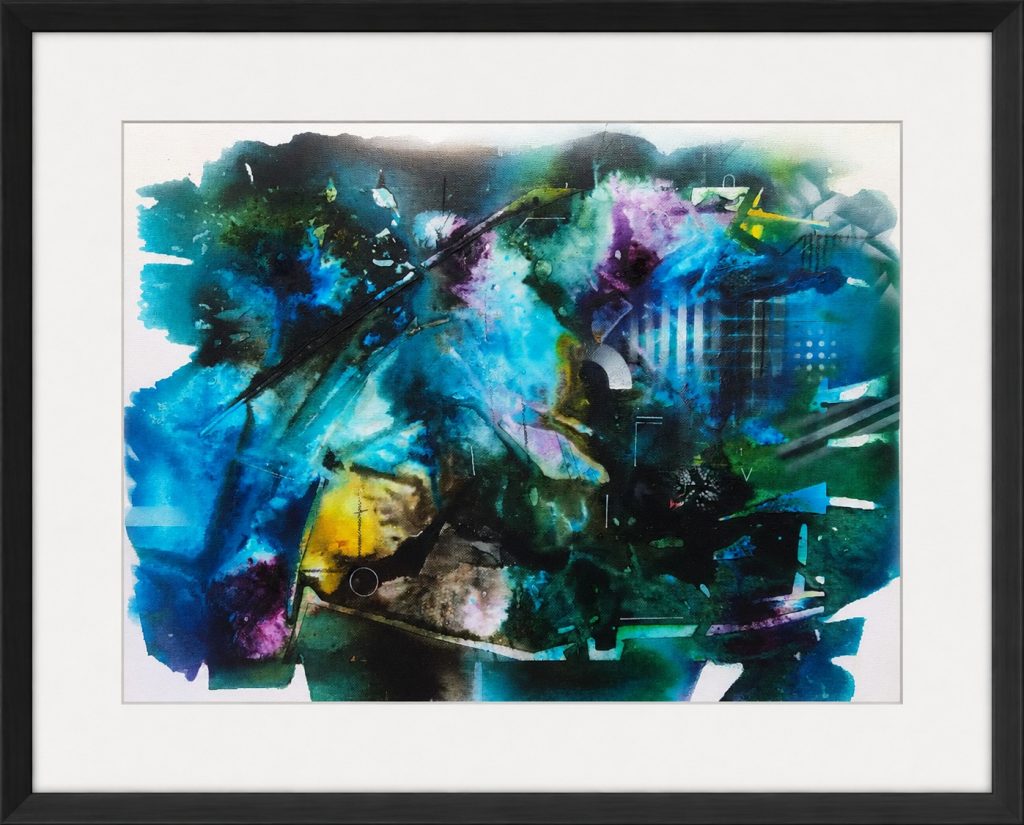
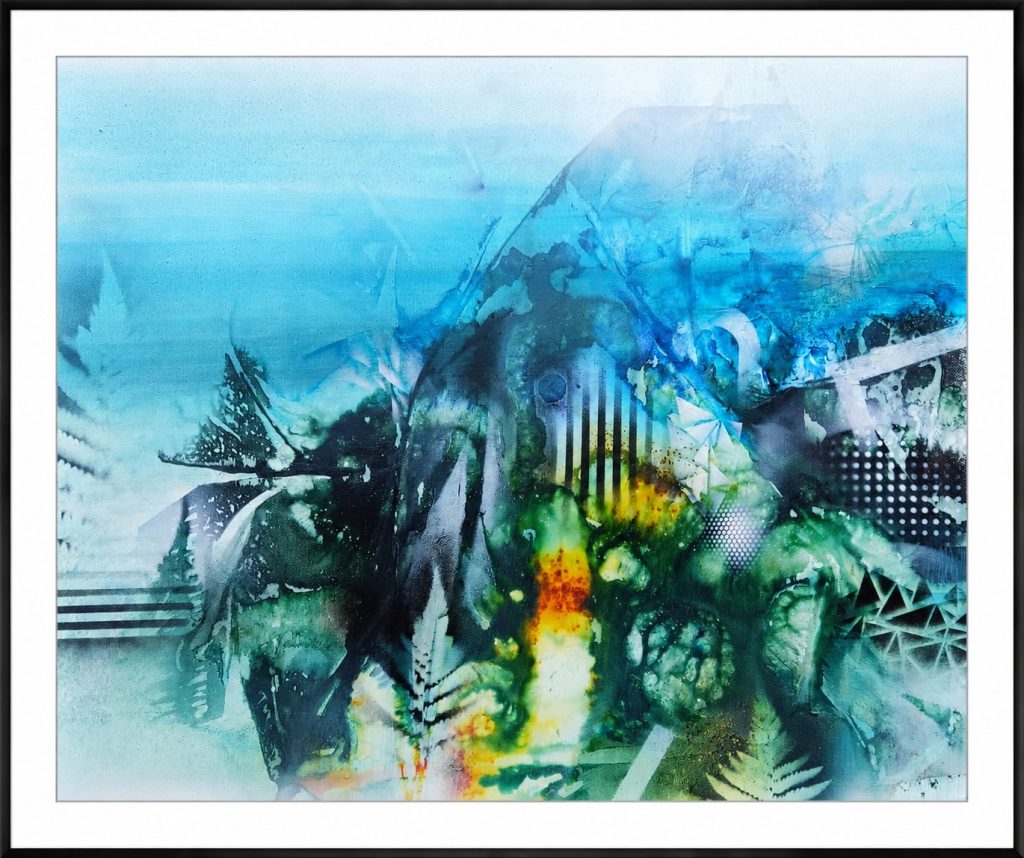
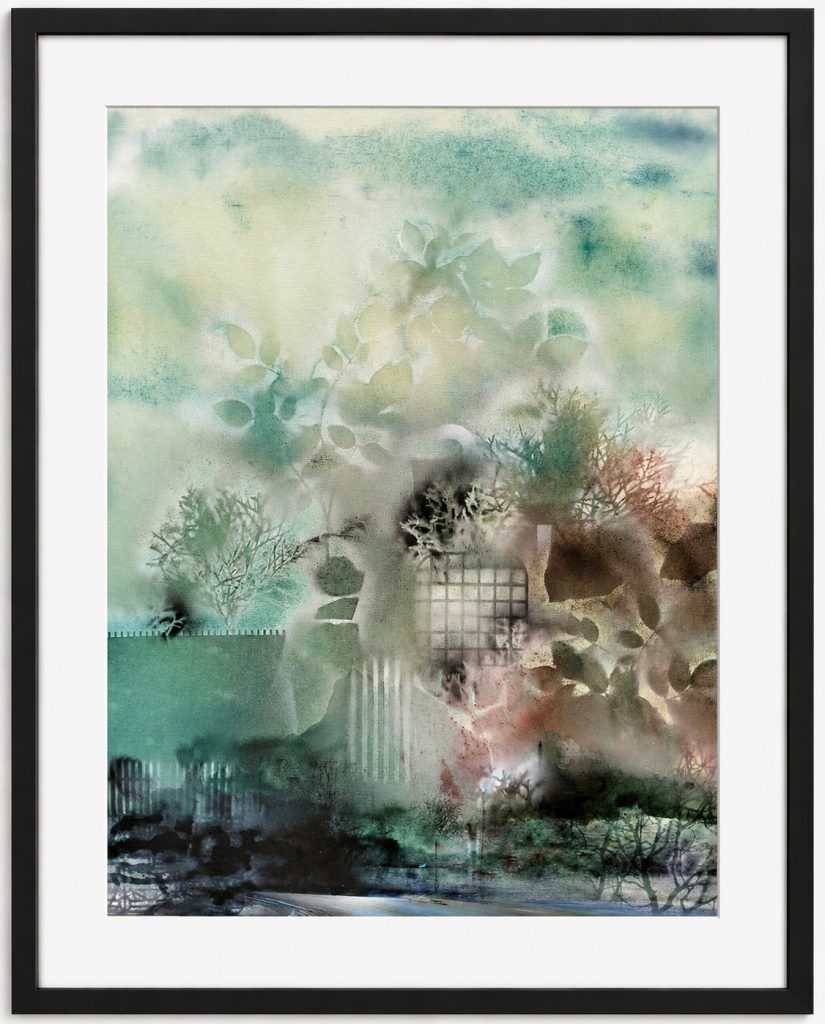
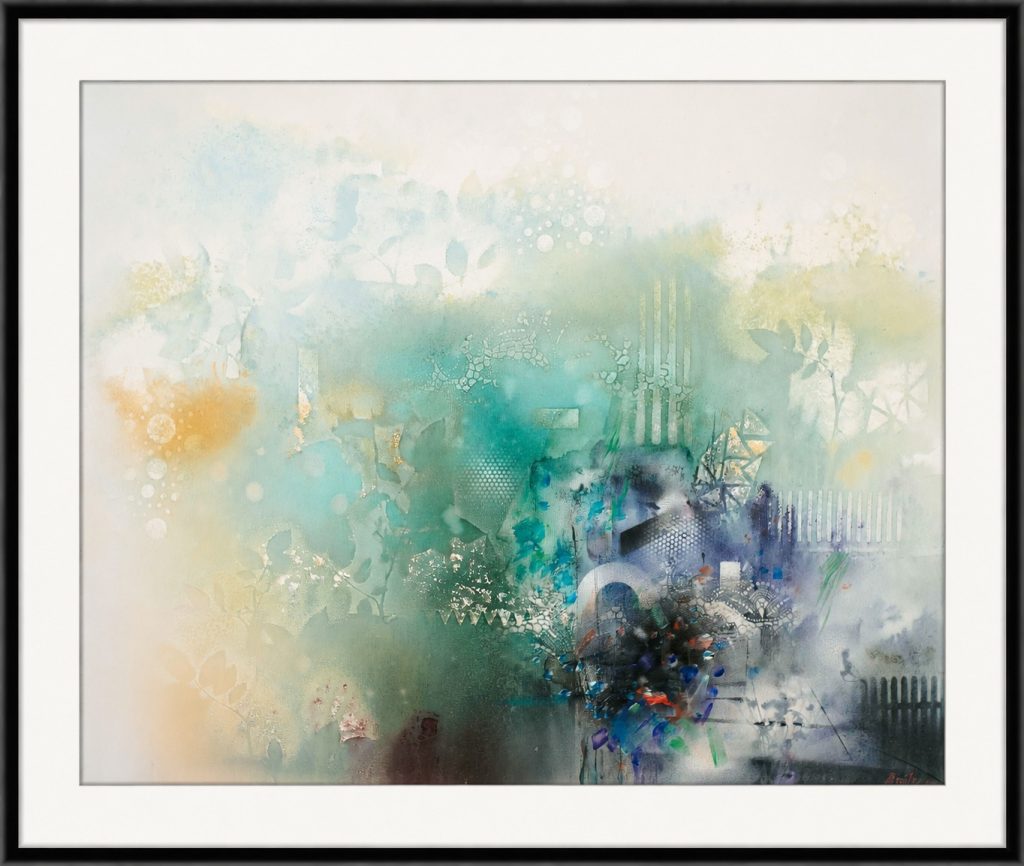
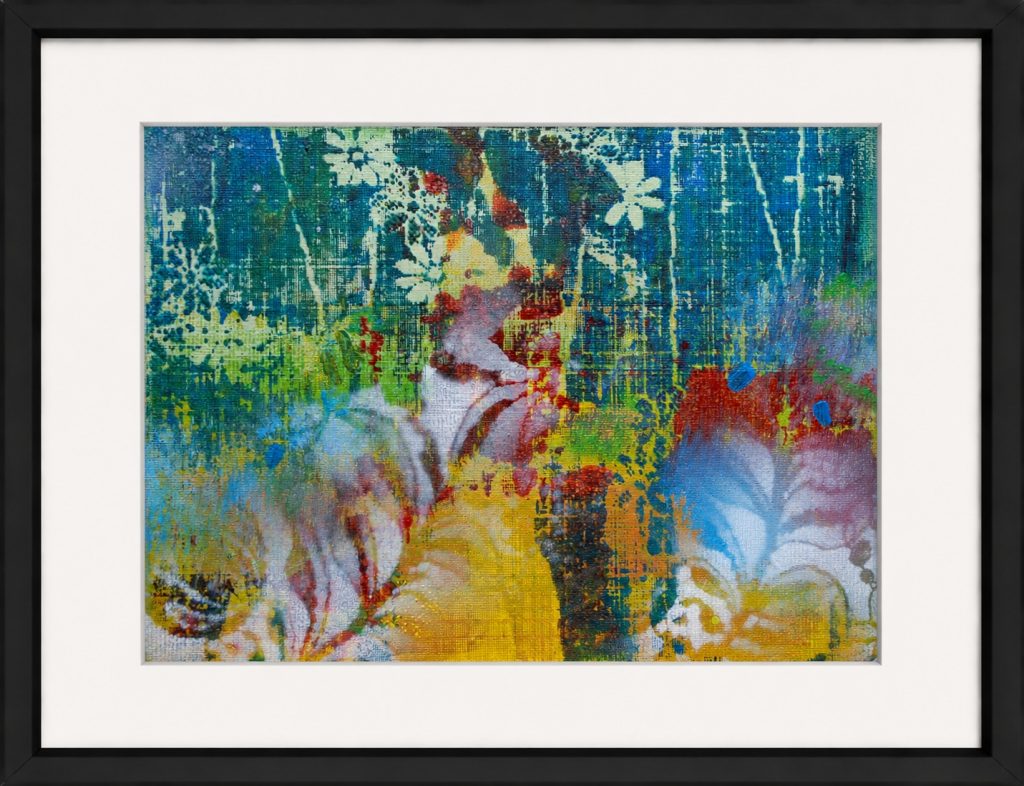
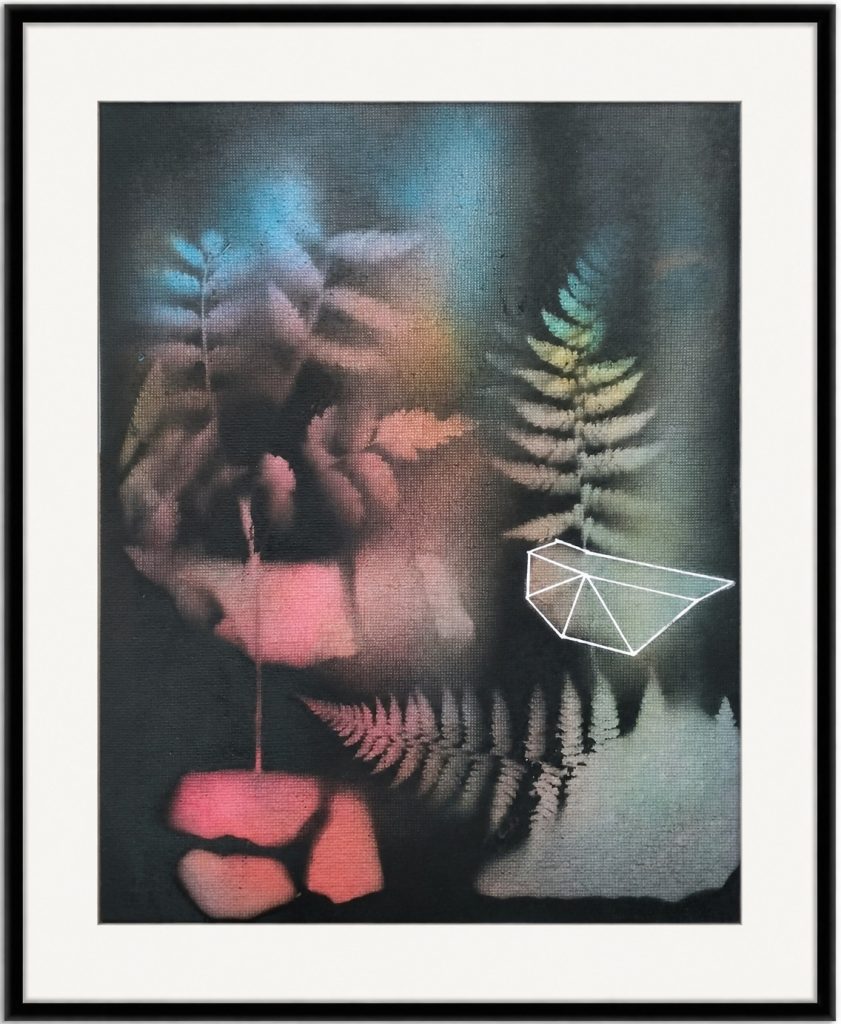
In the next series, the plant leaves a shape in the negative. Leaves and ferns appear as pale shapes on a sprayed background (fig. 16-30). The contour is sharp, and the interior is hollow. The effect indicates a stencil process. The plant appears to have been placed on the surface, covered in colour and then lifted. Here and there, dots and vertical bars appear, also in negative (fig. 21, 22).
The image registers an absence. The plant disappeared, the trace remained, in the same way in which the erased writing is visible through the new one. Photograms work in the same way, from Anna Atkins‘s cyanotype herbariums to Man Ray. The palette cools towards turquoise, green and grey, while two artworks keep the red and violet of flowers (fig. 18, 27).
Lace, Shirt and Sheepskin Coat
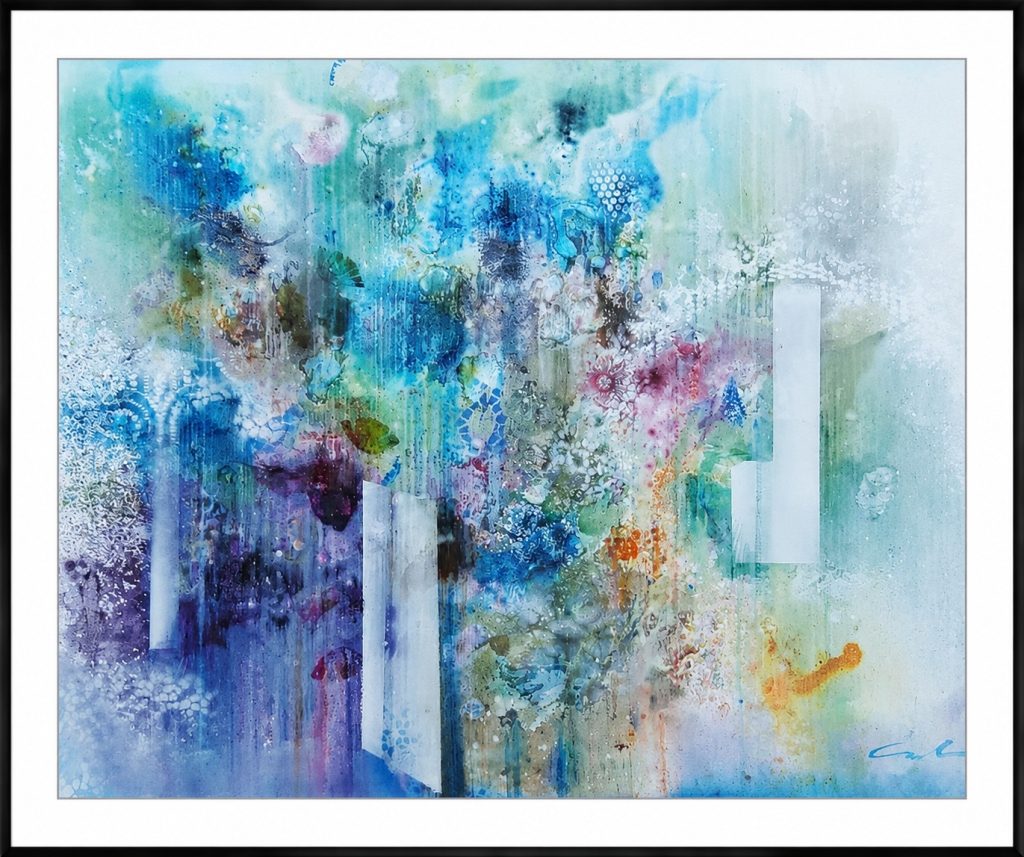
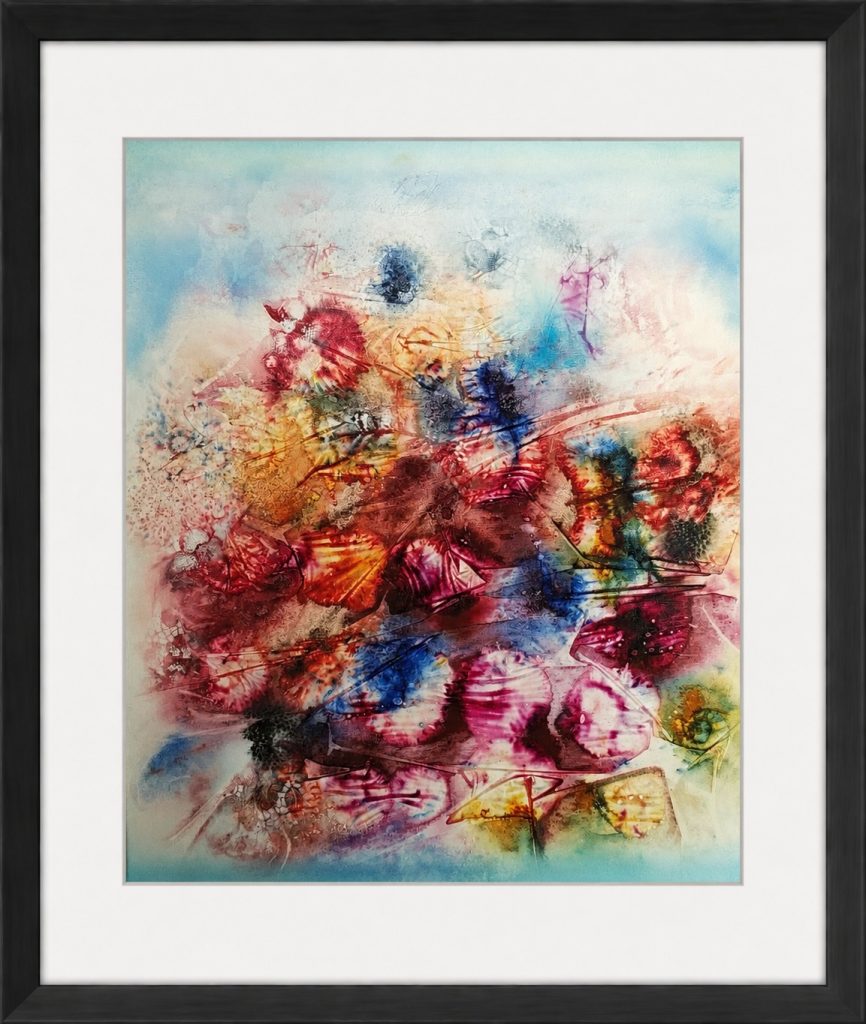
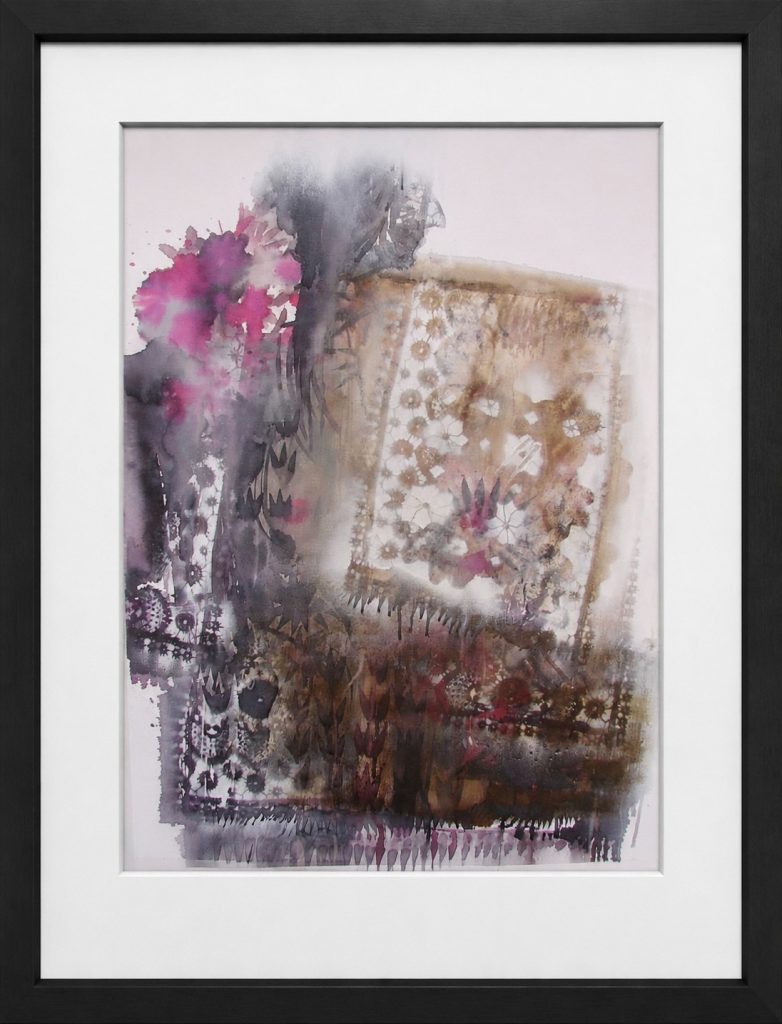
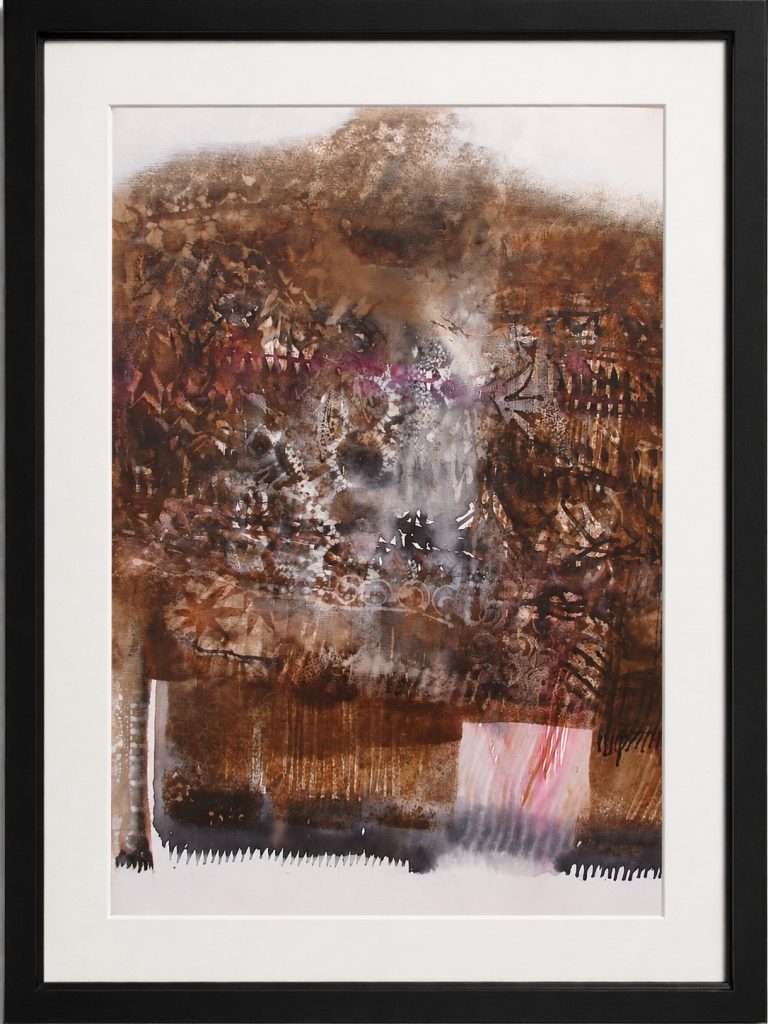
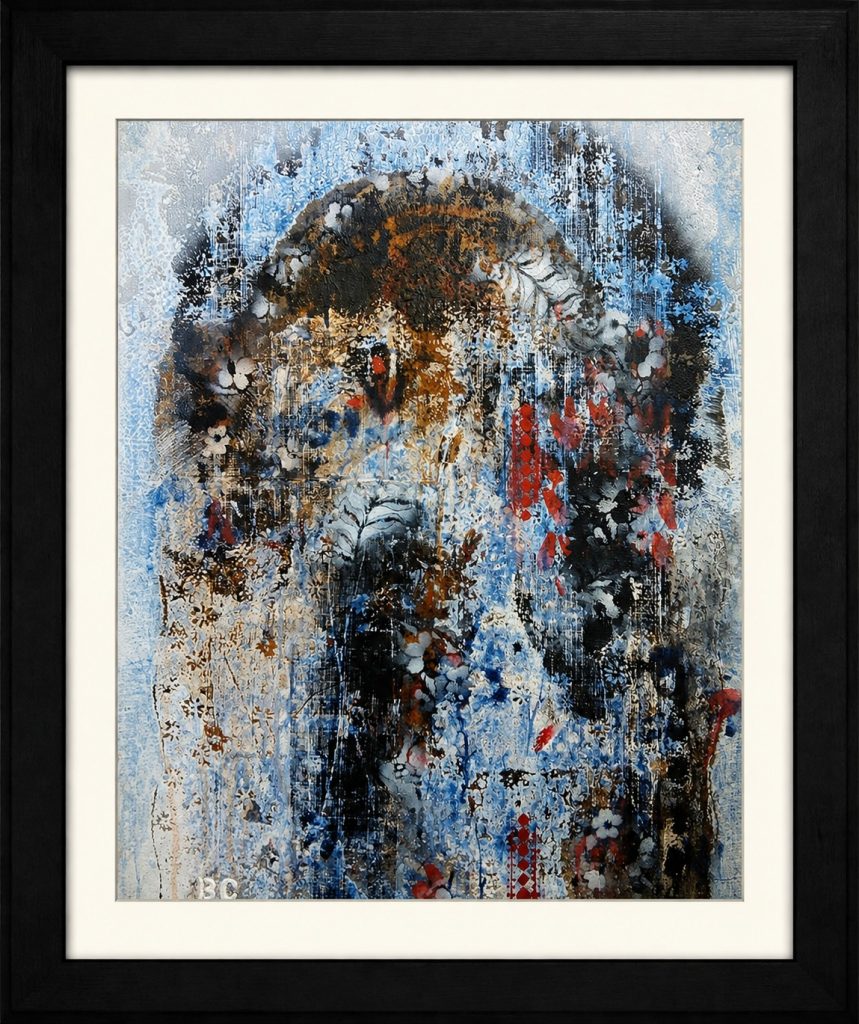
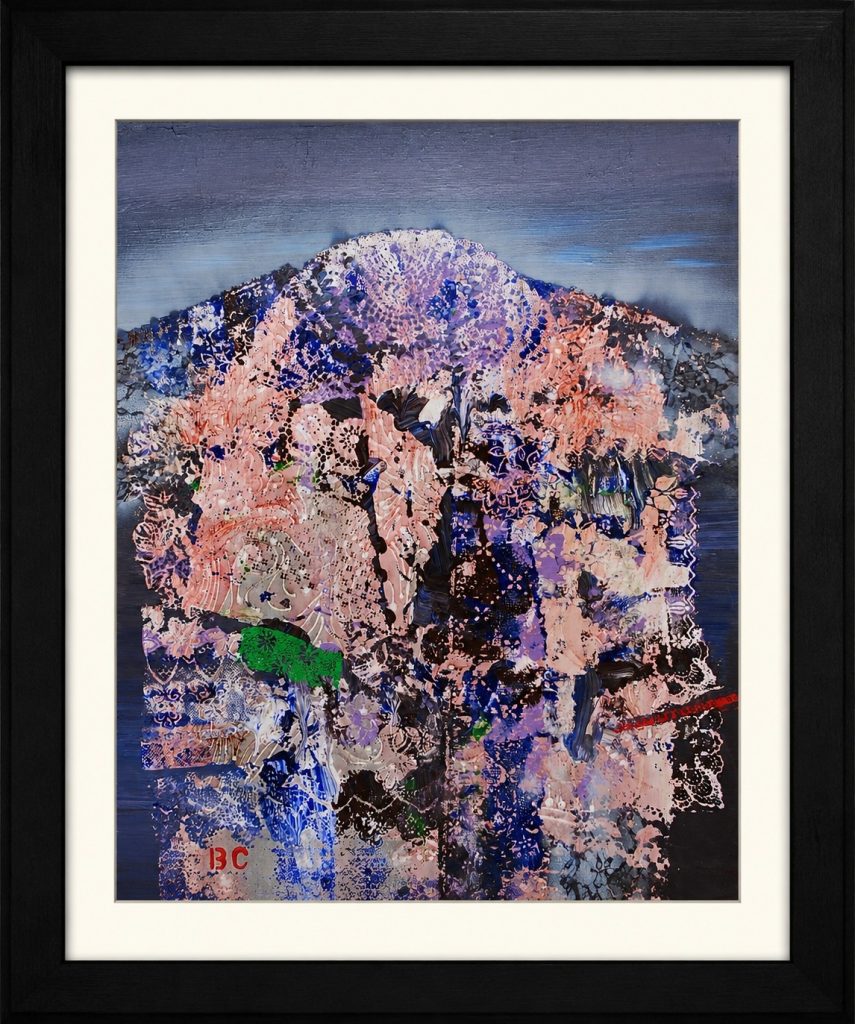
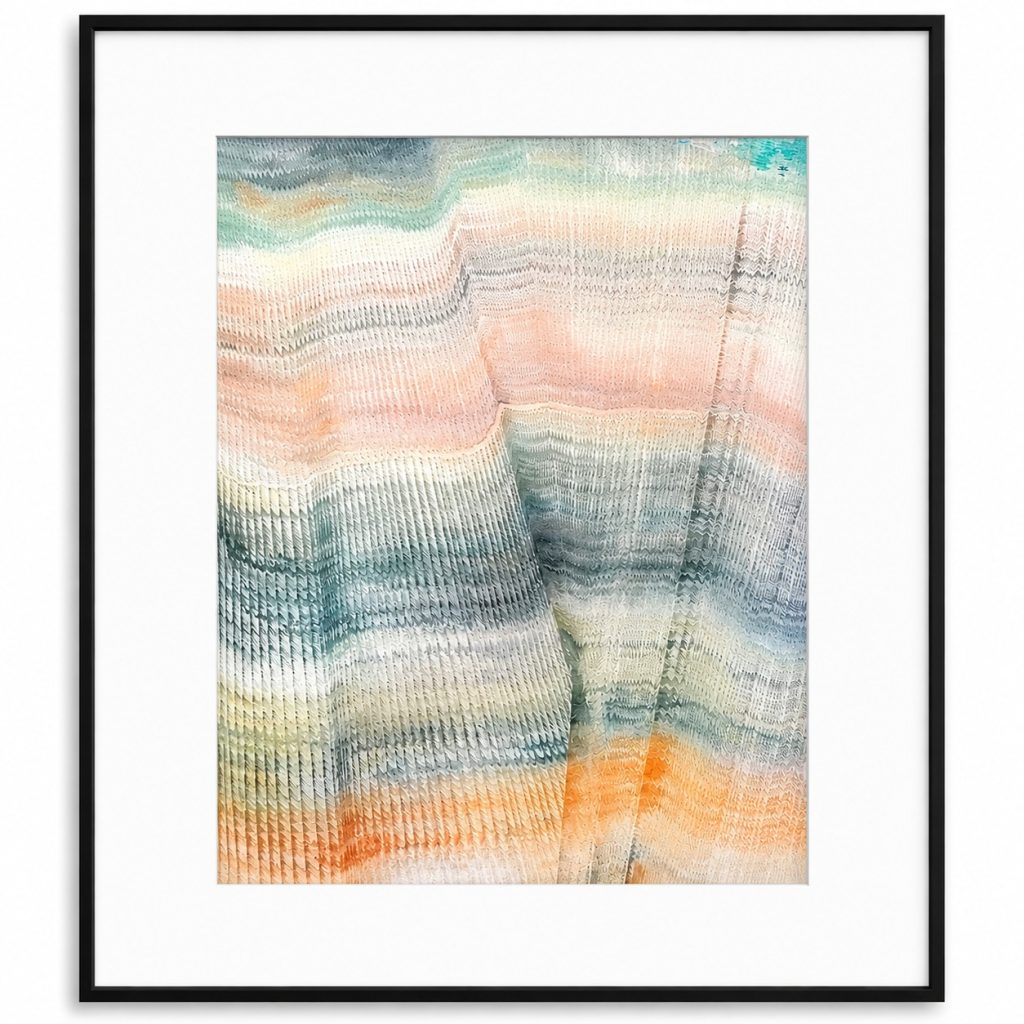
The vegetal pattern makes room for the textile one. Lace patterns and embroidery appear printed in colour (fig. 31-38). In fig. 32 and fig. 34, the shape of a garment fills the whole canvas. The first one resembles a traditional sheepskin coat. Another one, in fig. 37, shows a fabric in horizontal stripes, rendered thread by thread.
The words text and textile come from the same verb, texere, to weave. The lace pattern is a “text” written earlier, by some other hands. The artist transfers the pattern by imprinting it, reminding of Max Ernst’s frottage. Under the personal memory of the landscape appears a collective one, of the home and of clothing, close to the reading of the Romanian blouse in The Woman as Cosmos.
The White Line
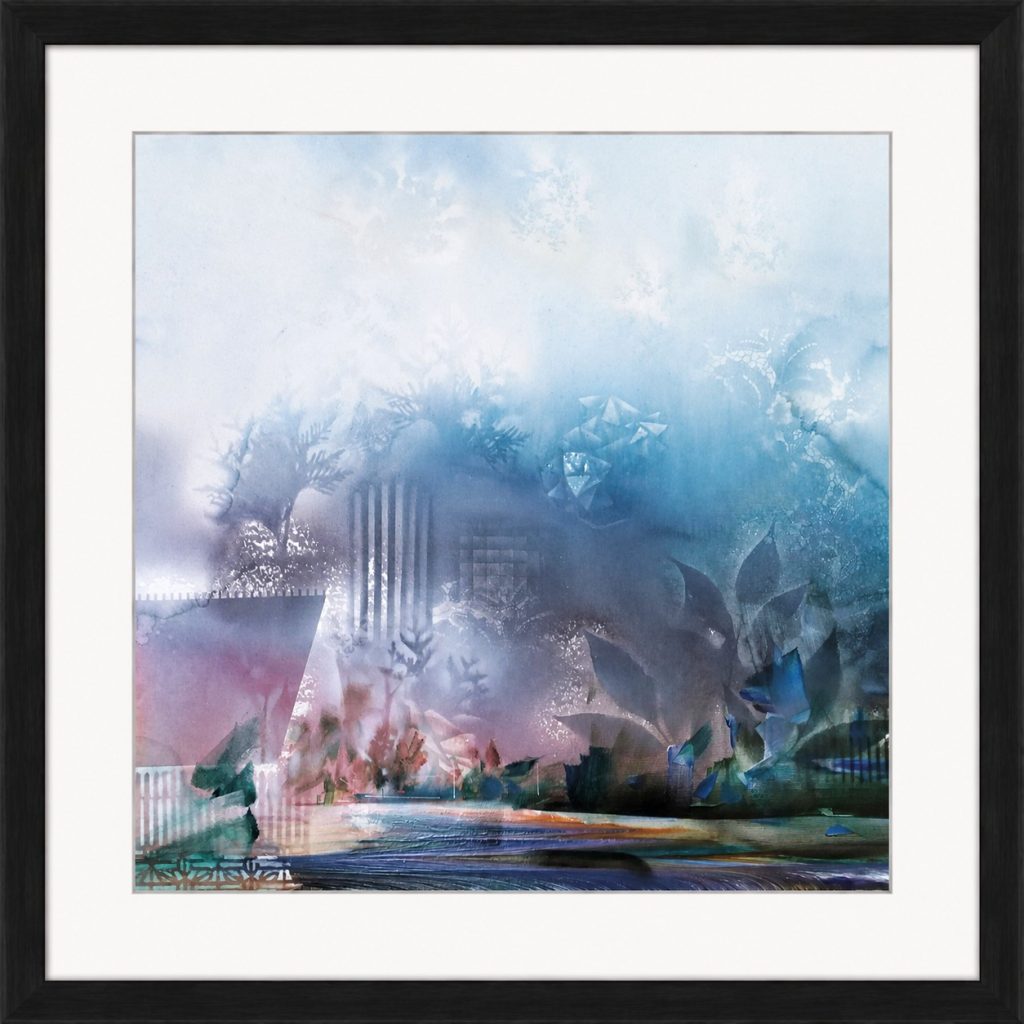
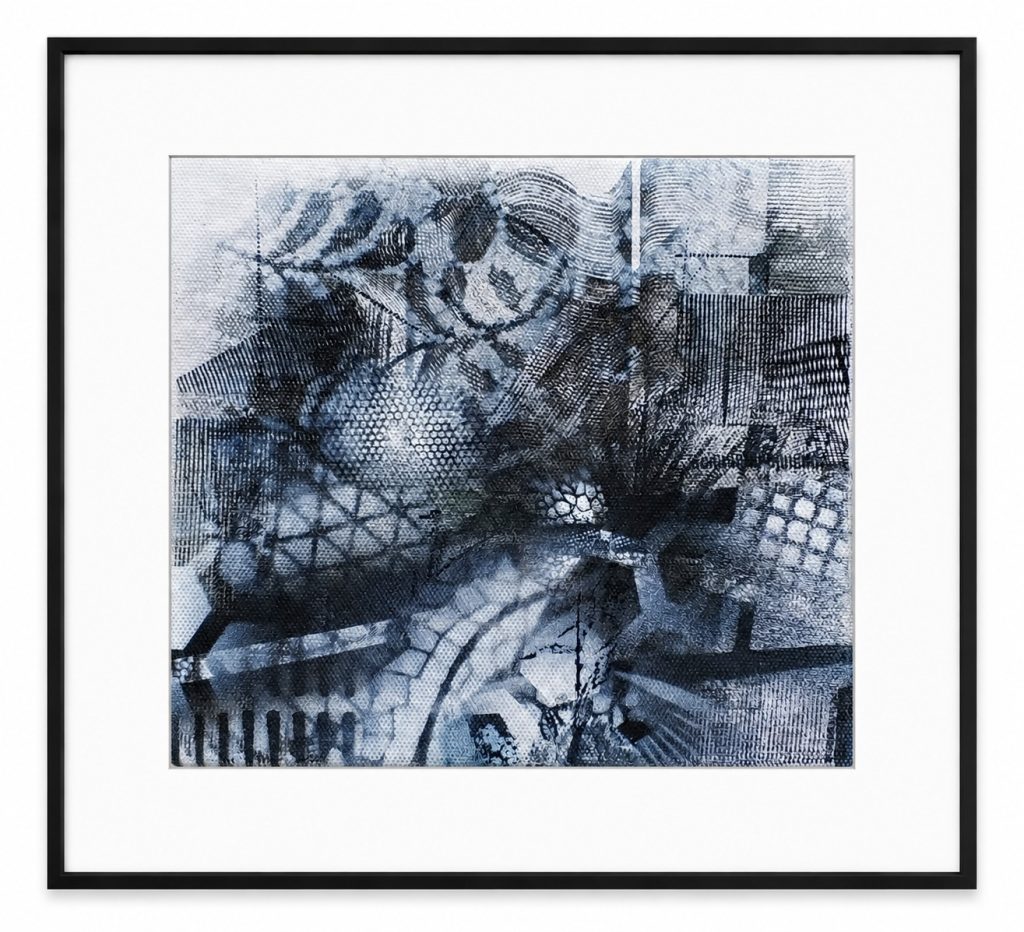
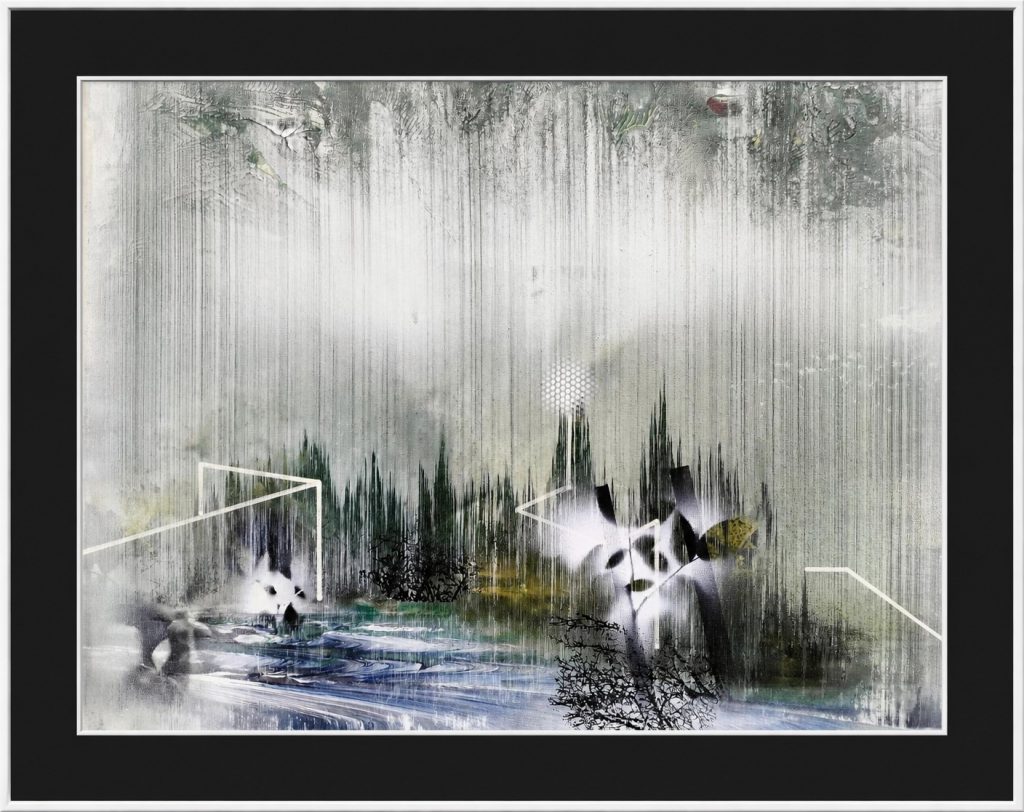
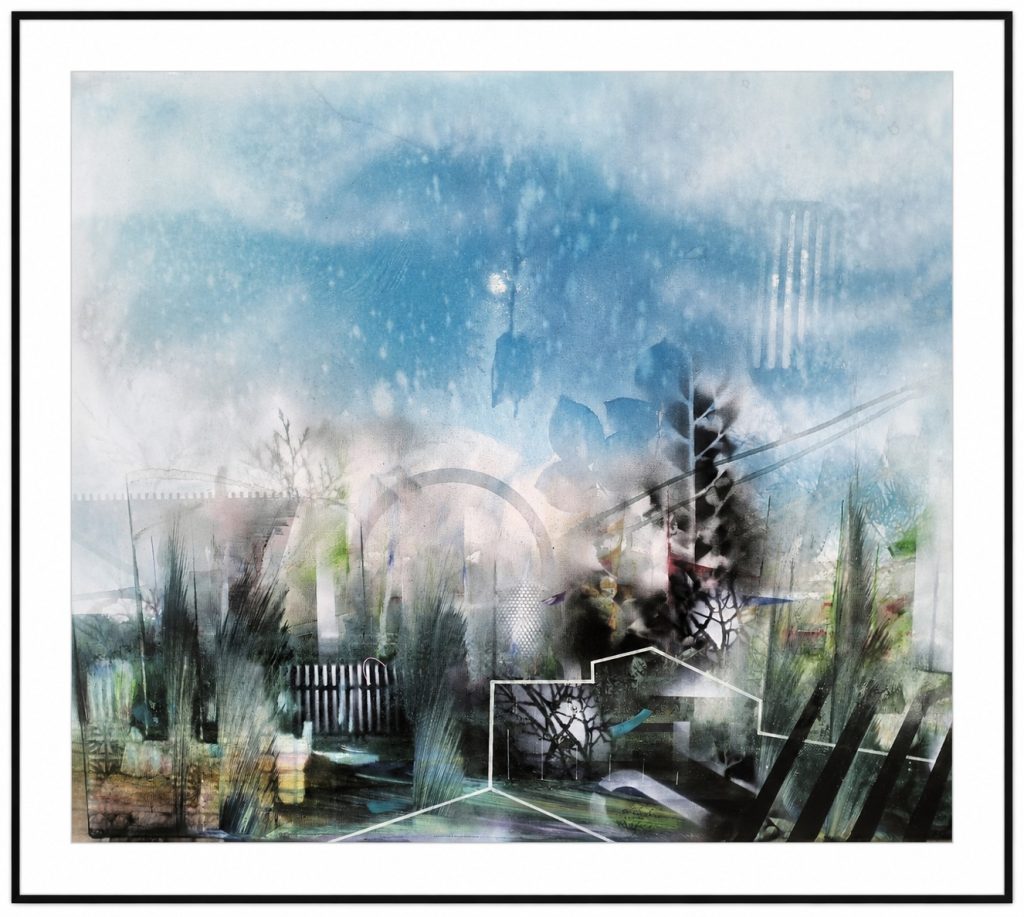
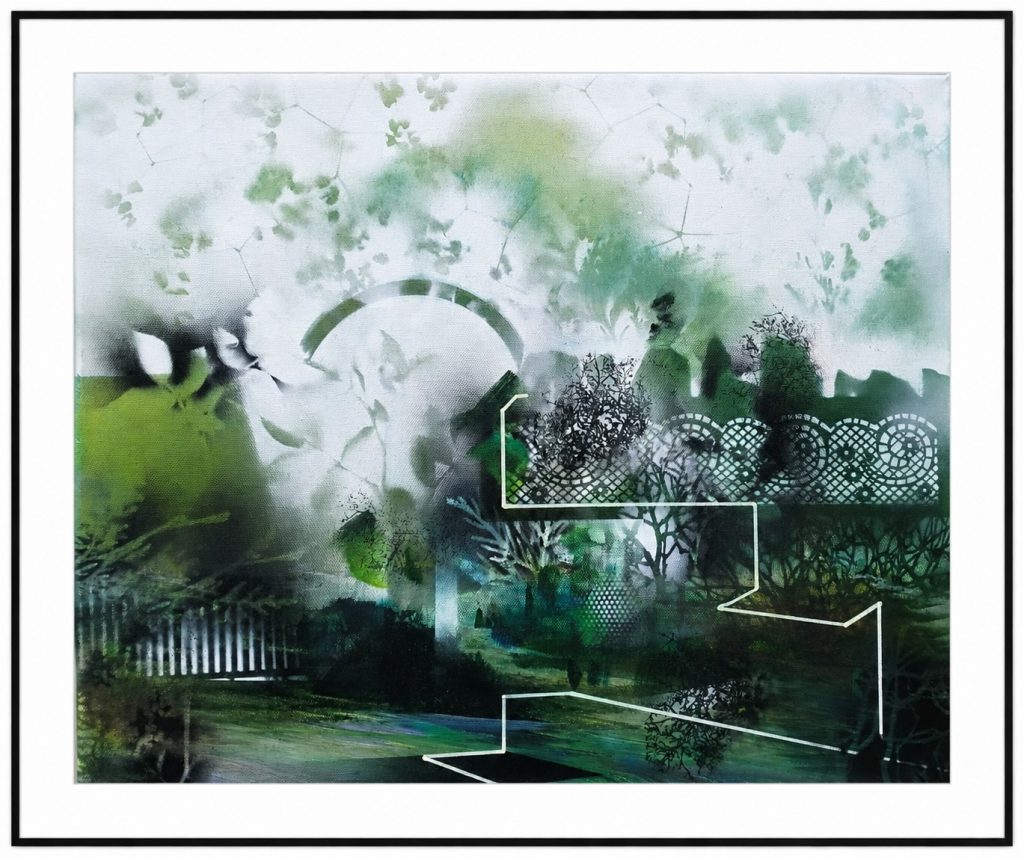
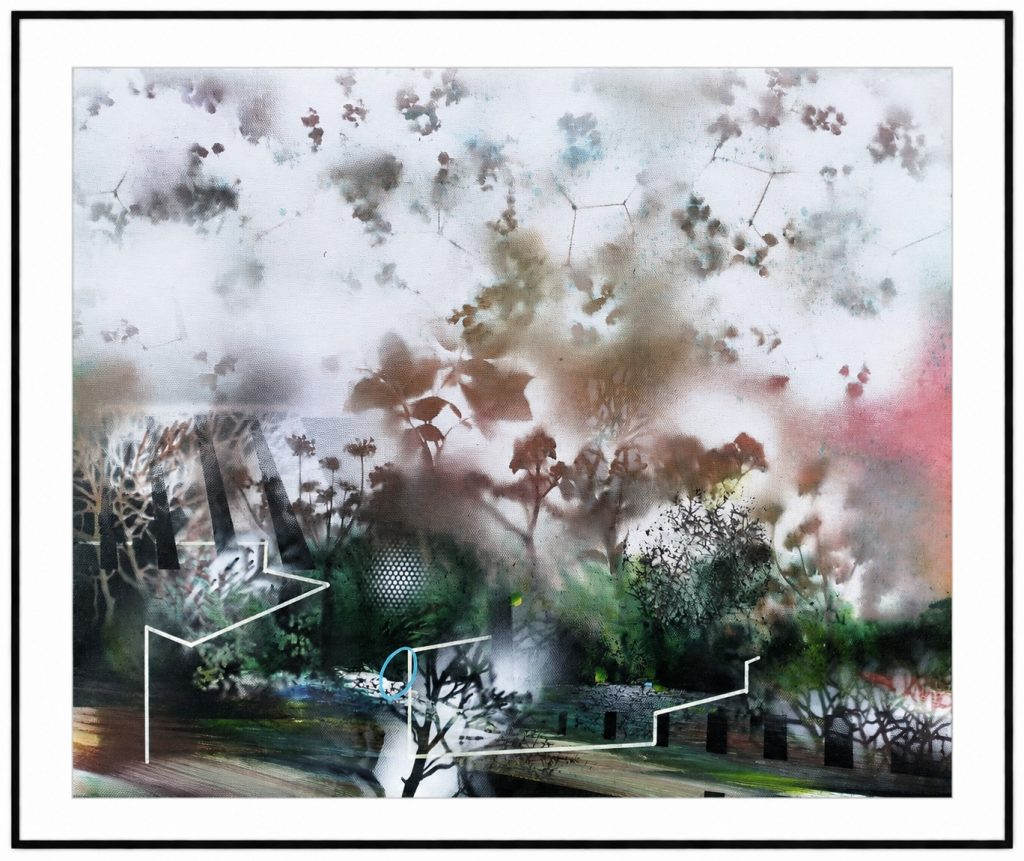
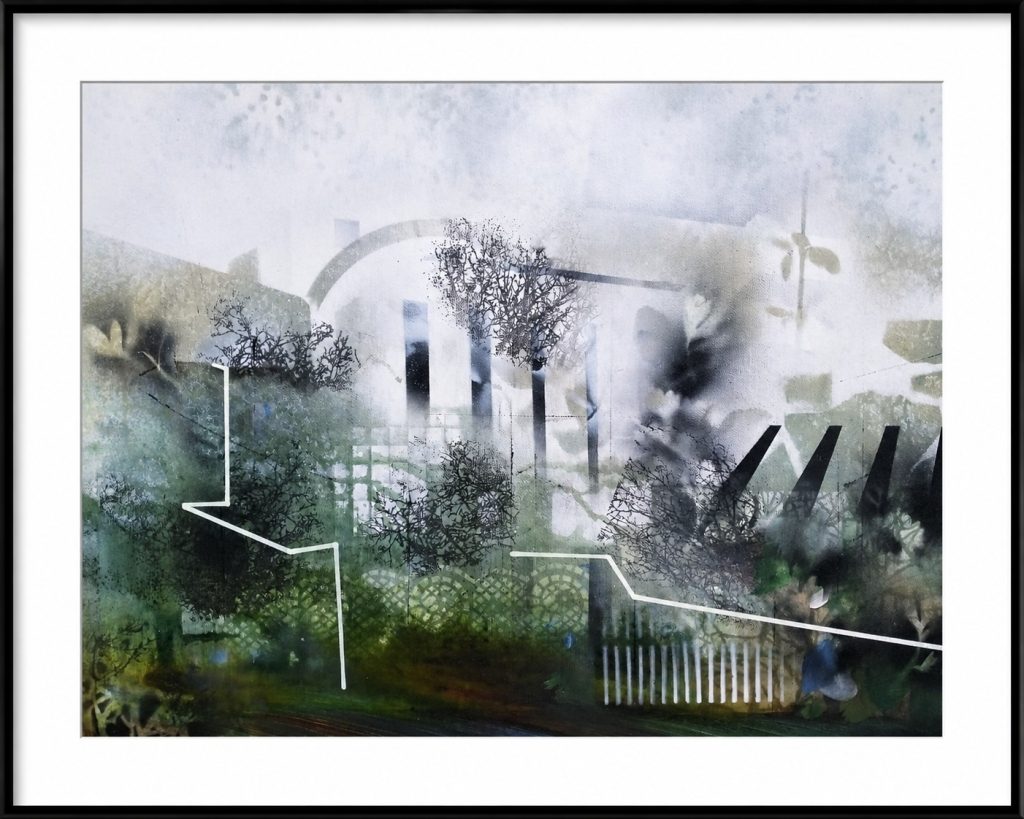
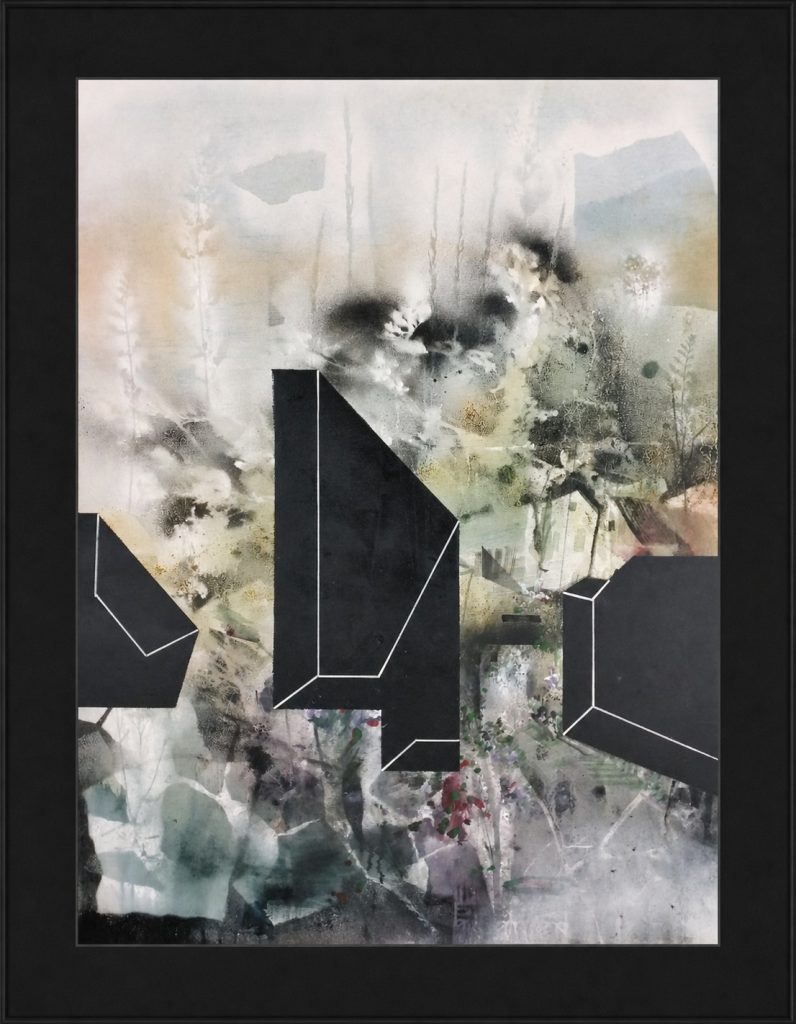
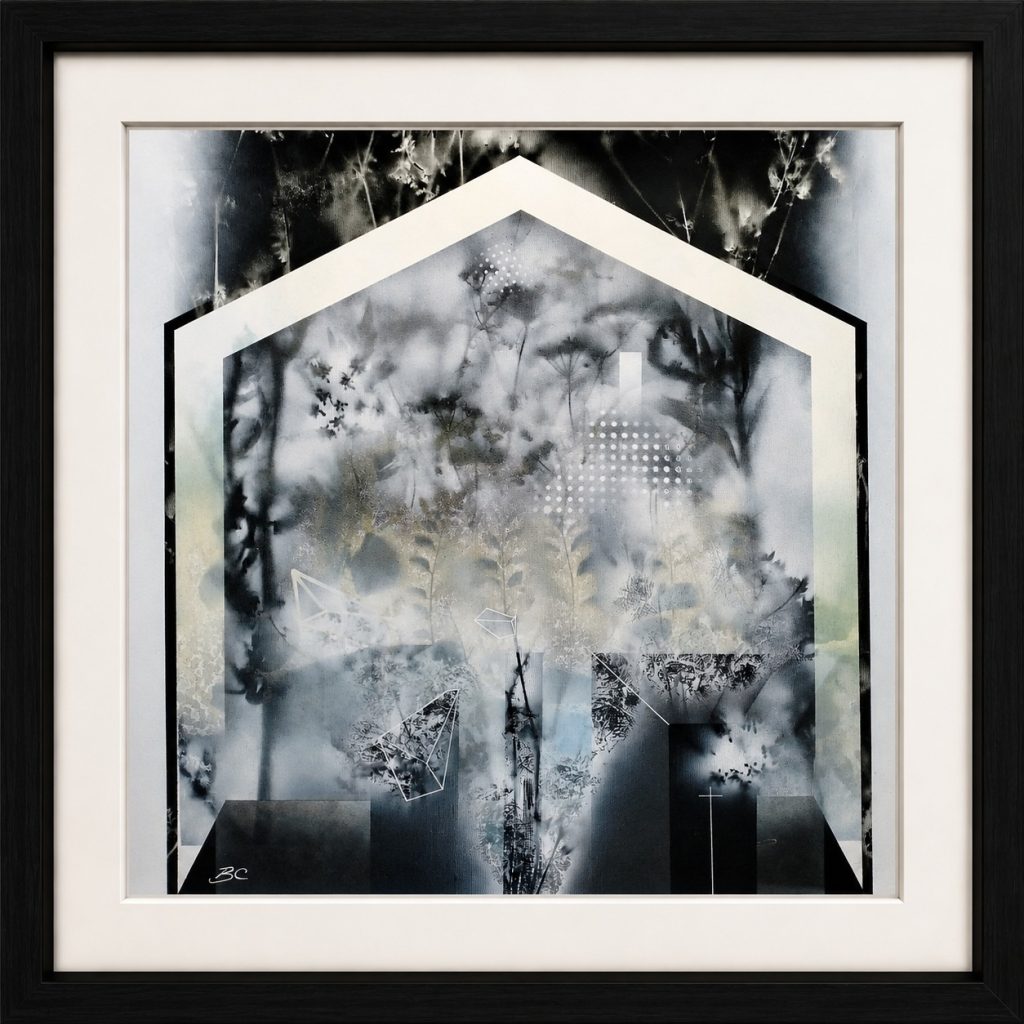
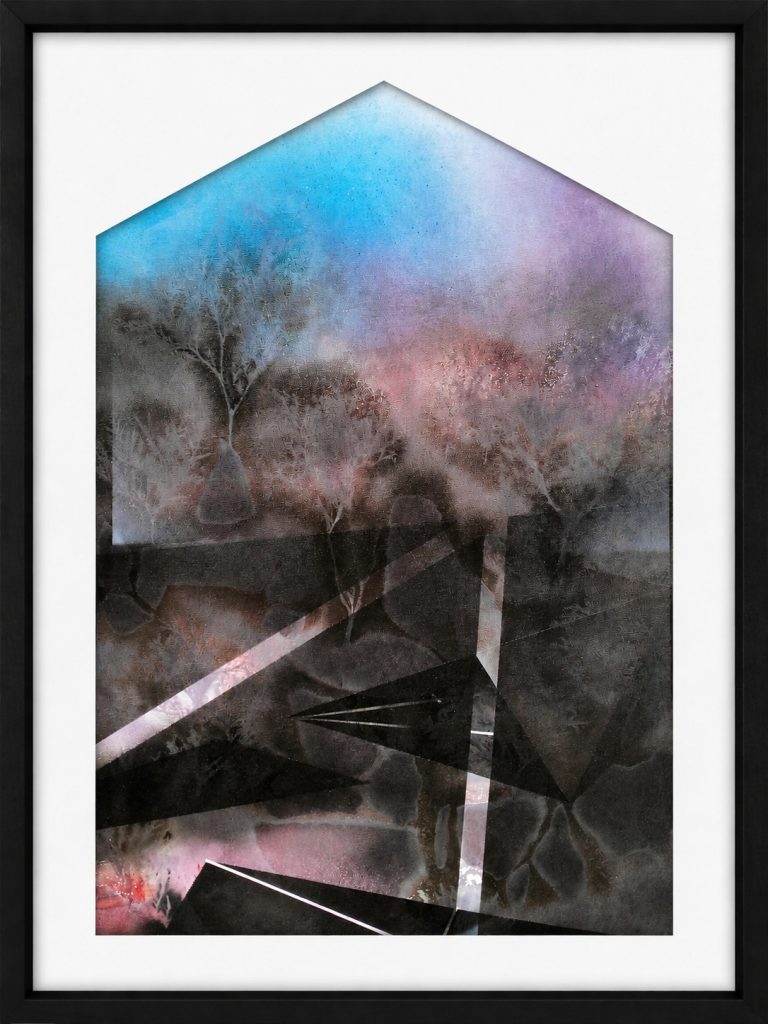
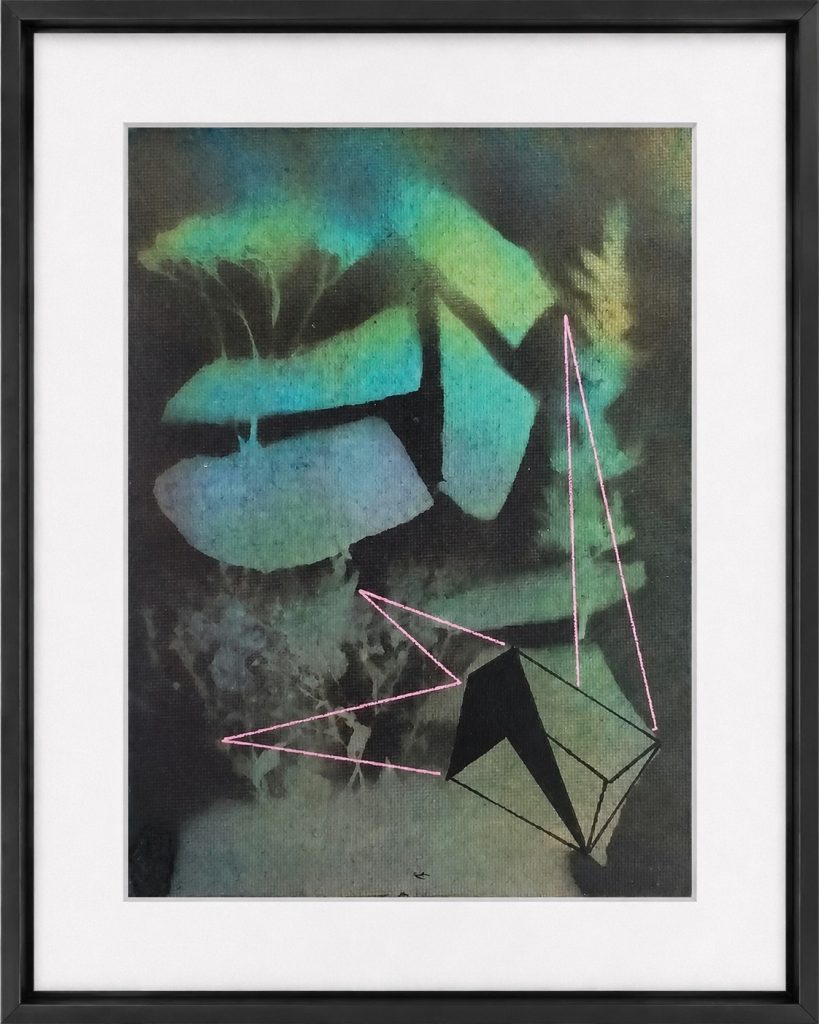
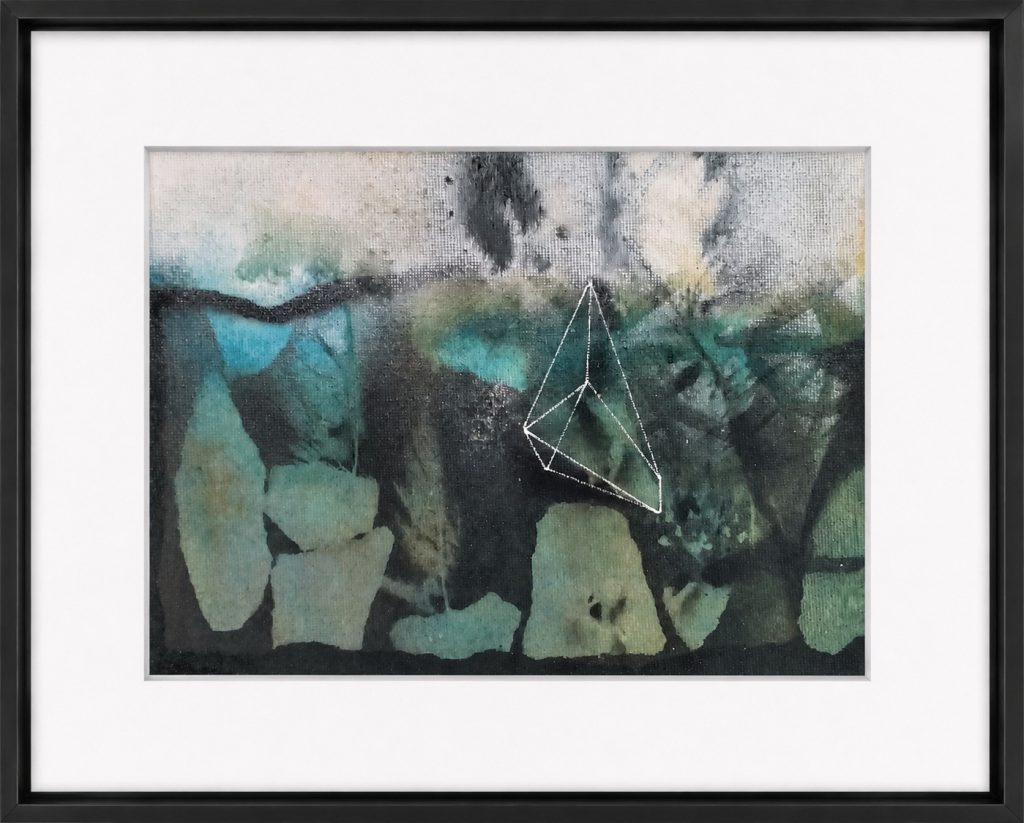
There is a white line that appears over many of the artist’s artworks. It crosses the landscape and doesn’t follow anything from what is below. It does not outline a tree or enclose a house. In other artworks, the line creates empty geometric solids, seen in perspective (fig. 48, 49, 50). Two compositions even take the shape of a “pointy house” (fig. 46, 47). The palette narrows to black, grey and white.
The line sits above all the strata and doesn’t follow the shapes underneath. This is why it looks drawn at the end. In medieval manuscripts, readers wrote glosses in the margins. The artist’s line has the same purpose, adding a visual commentary to the image without being a part of it. Its right angles oppose the fluid, curved shapes of the leaves or branches. Being thin, the line covers almost nothing under it.
Nail and Rust. Rebirth, the Joy of Being
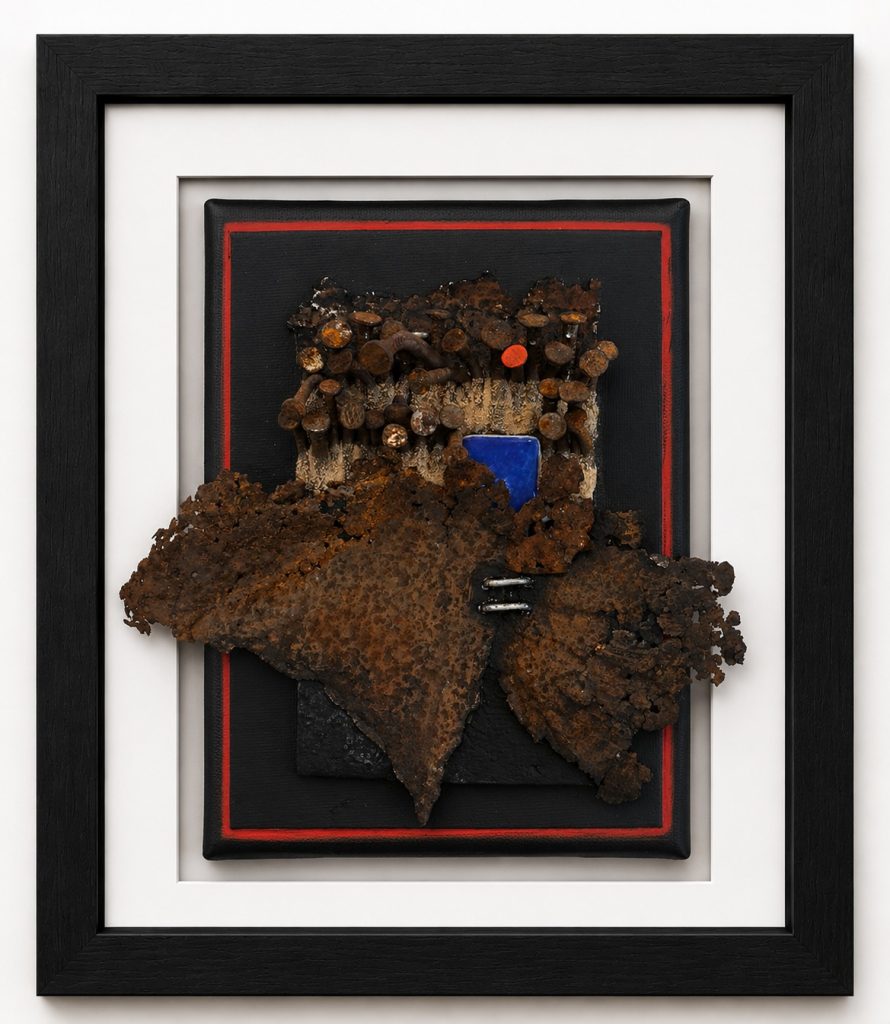
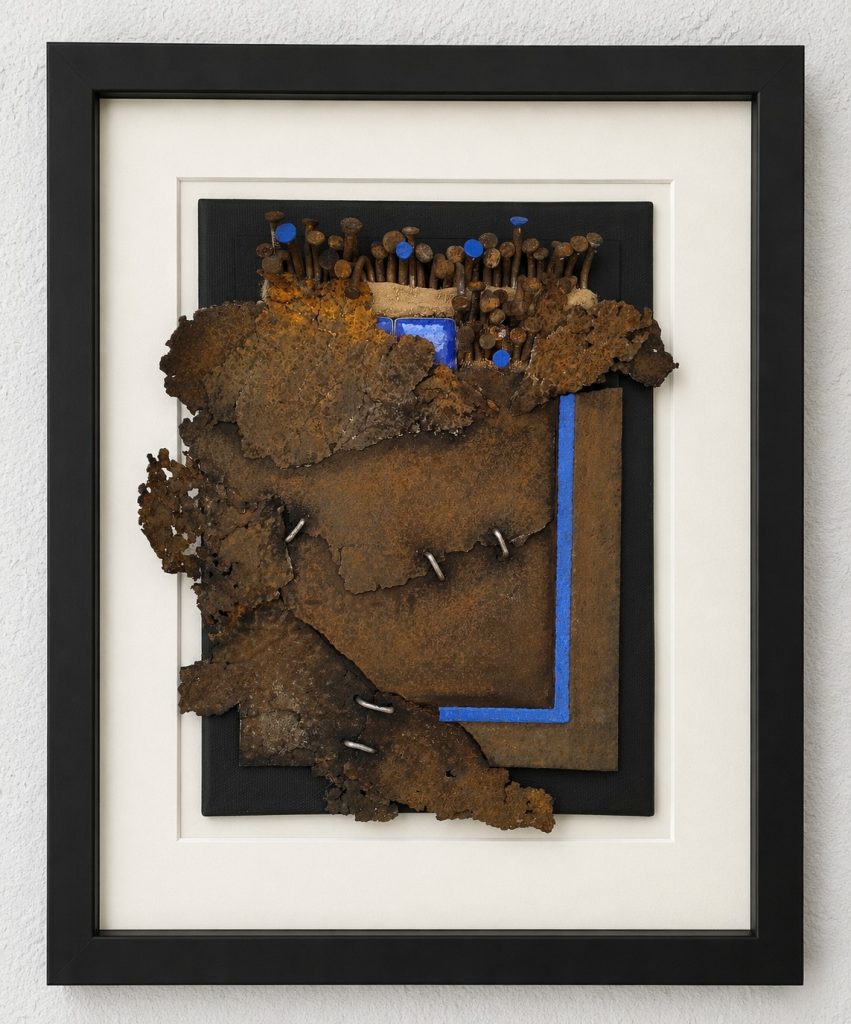
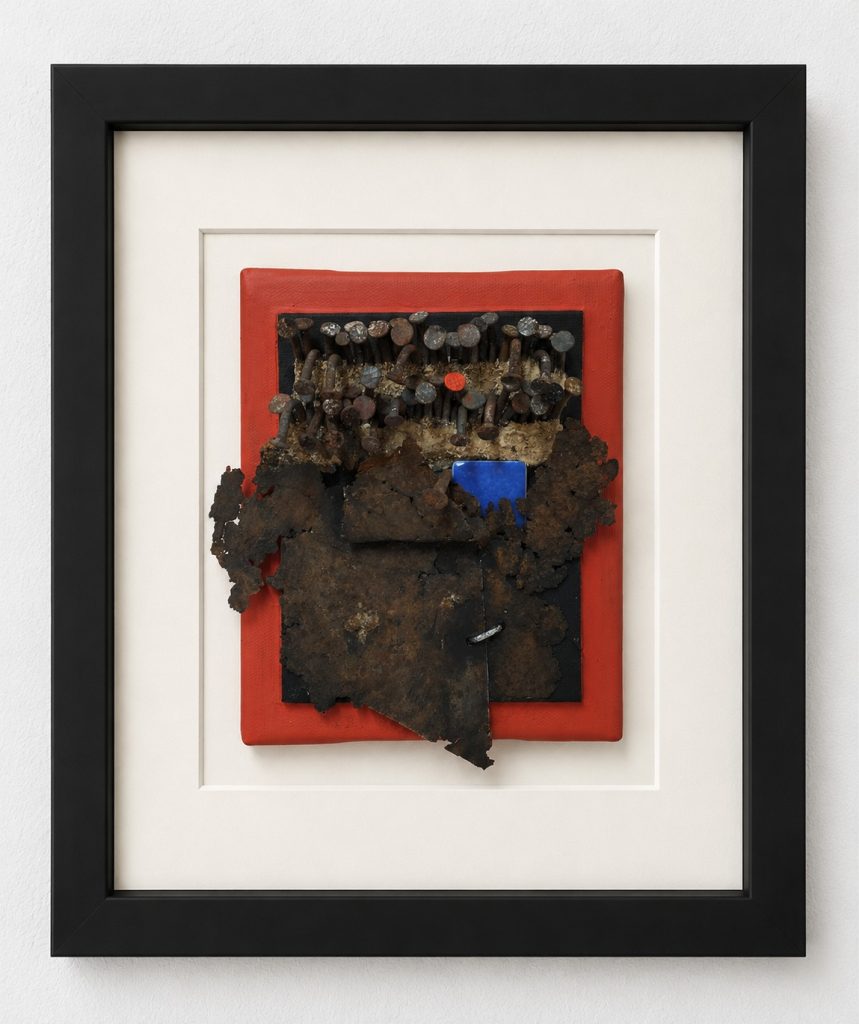
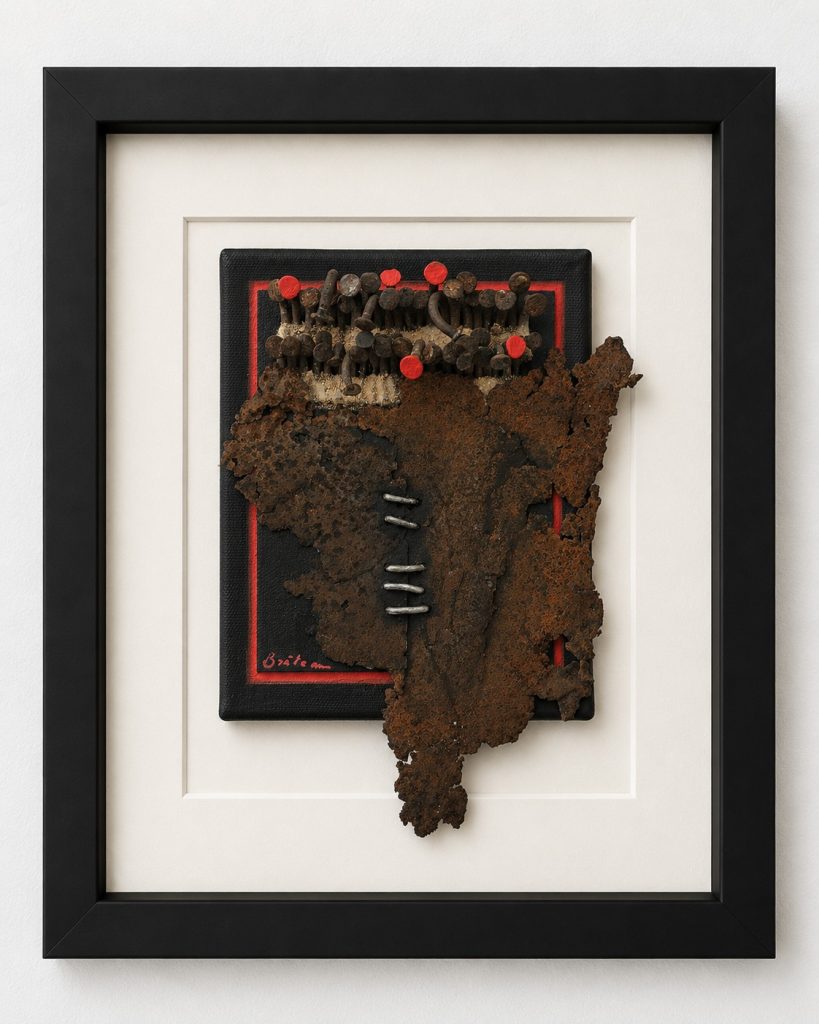
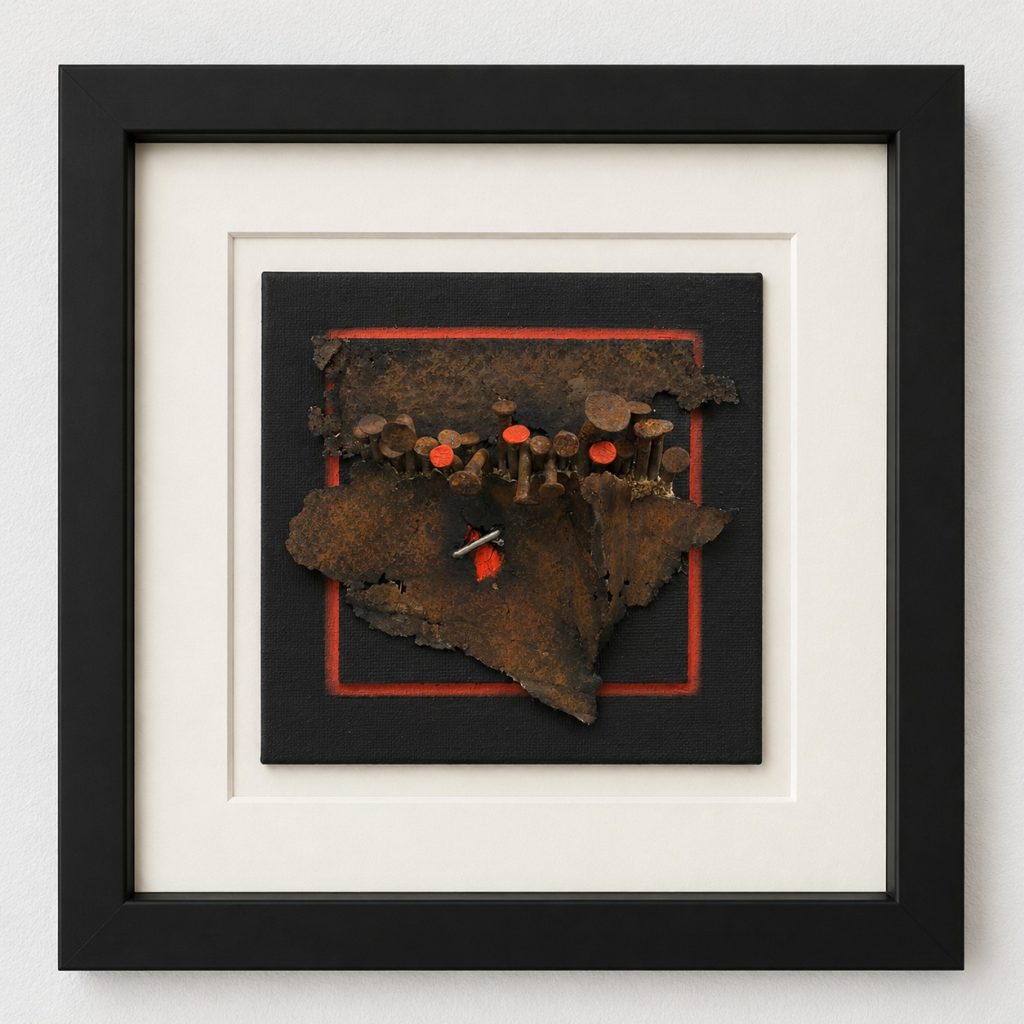
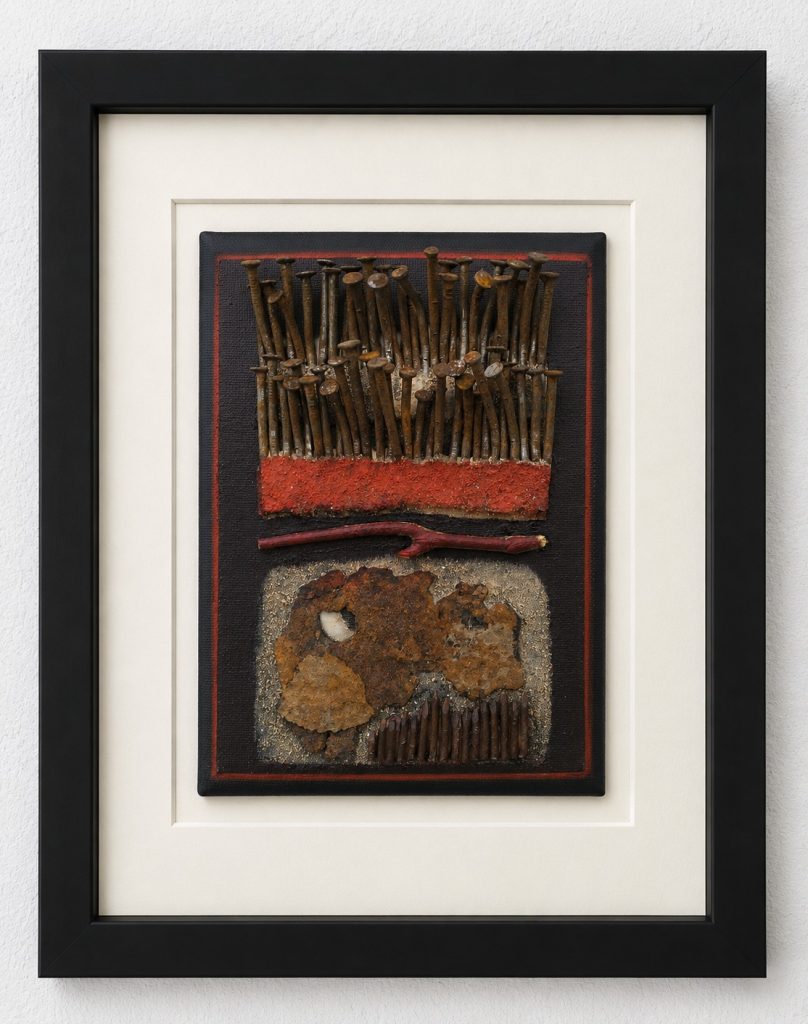
In the cycle Rebirth, the Joy of Being, the strata become matter. The support is a small black canvas, with a red or white framing (fig. 51-56). On the upper part there are rows of rusted nails. Some of them have a red or blue head. Under them there are metal sheets eaten by rust, held in place by staples. The titles name a beginning, Foundations, Fruits of Mud, Coming to Life, Budding, The Third Day.
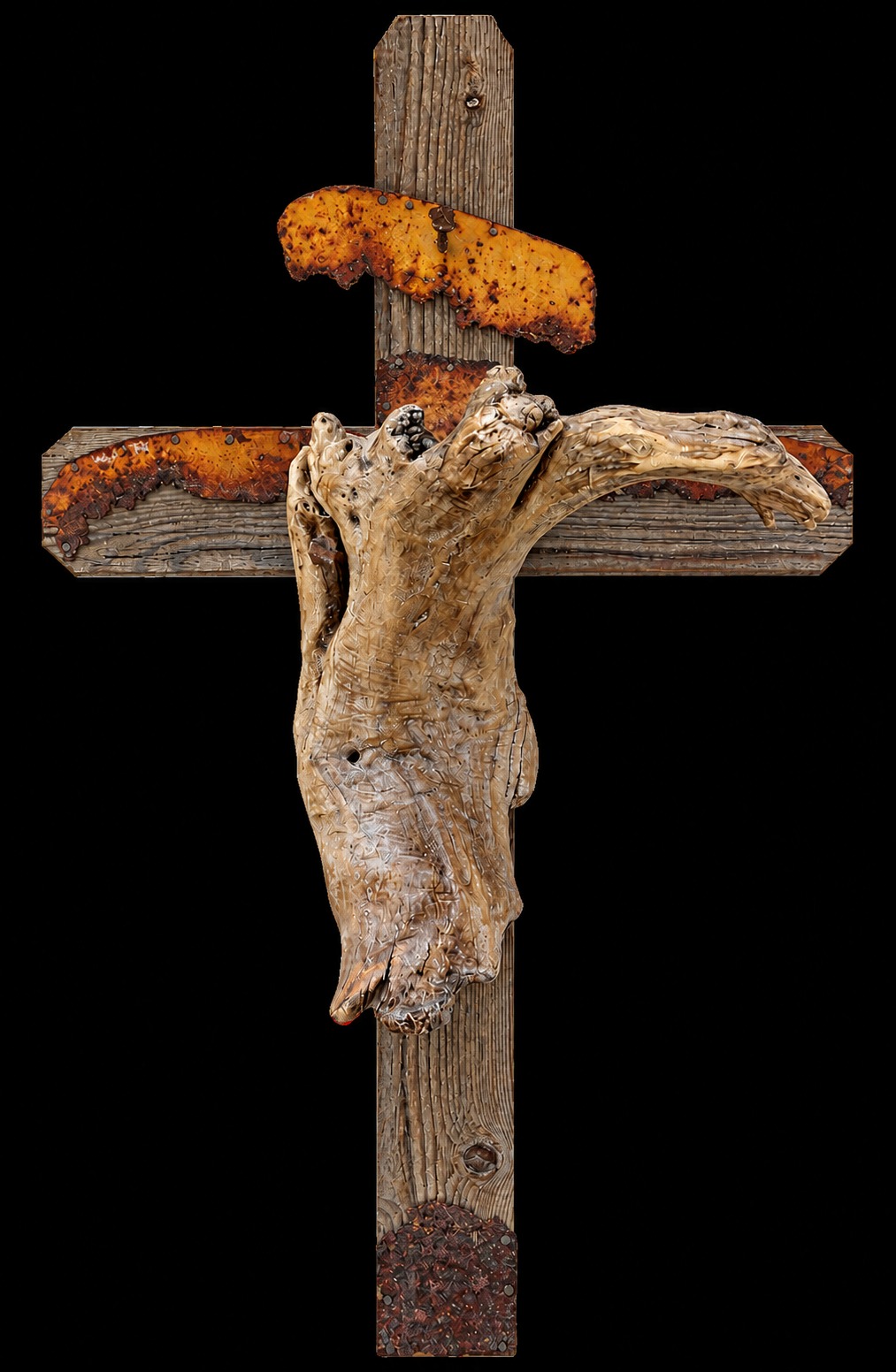
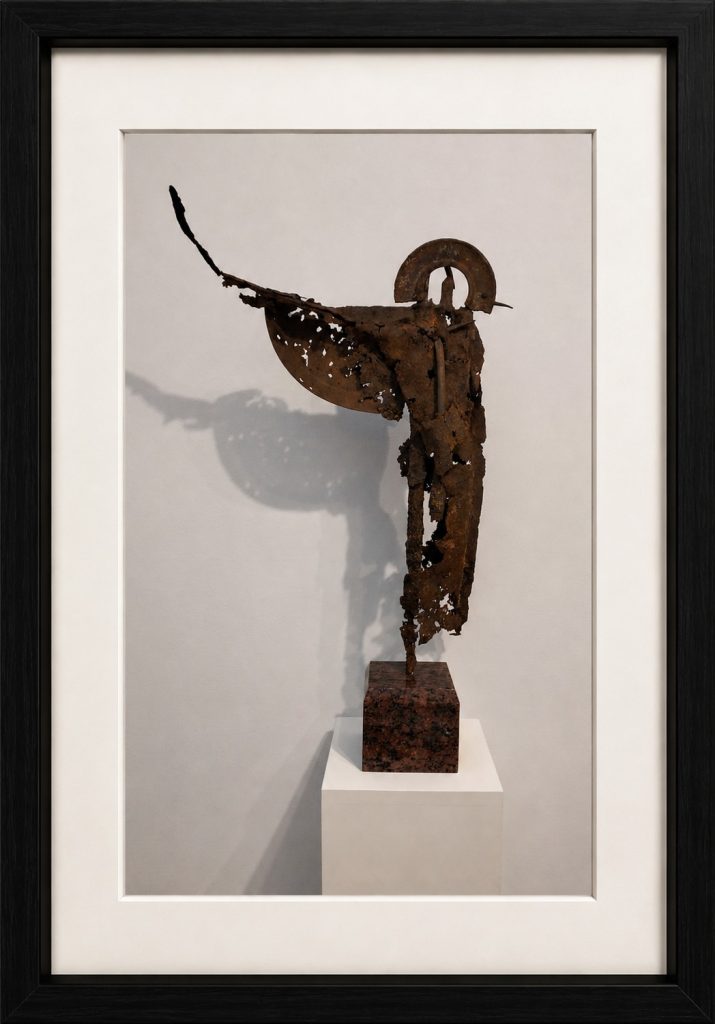
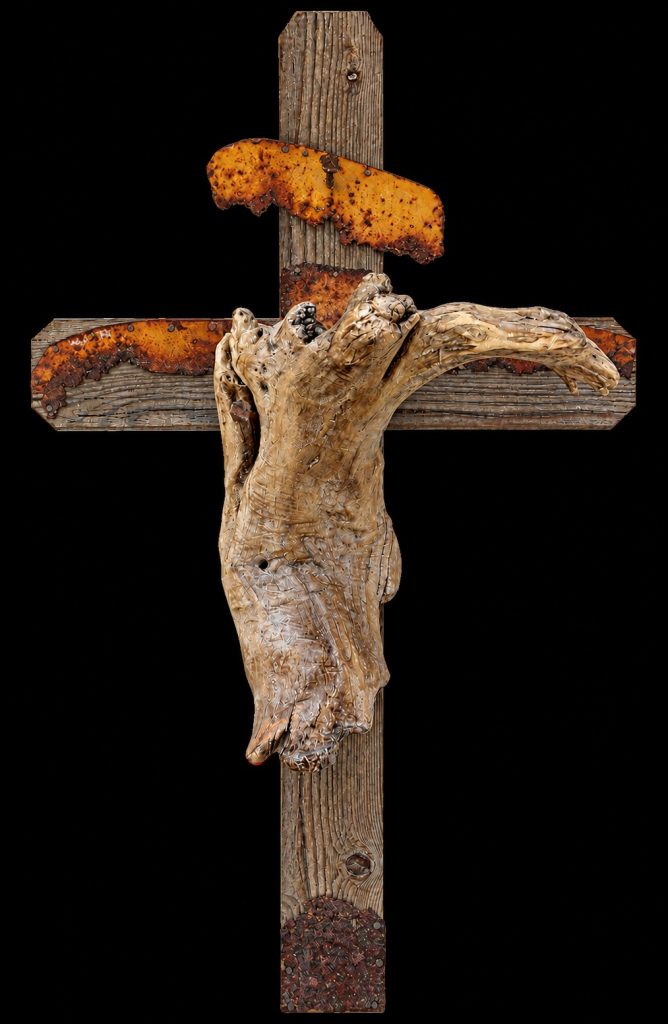
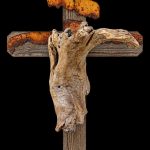
Rust is time writing on metal, without the artist’s hand. The palimpsest moves from the image to the object. Three pieces leave the frame entirely, fig. 57, 58 and 59. The last one is a crucifix with an eroded wooden body, fixed to a cross made from an old plank.
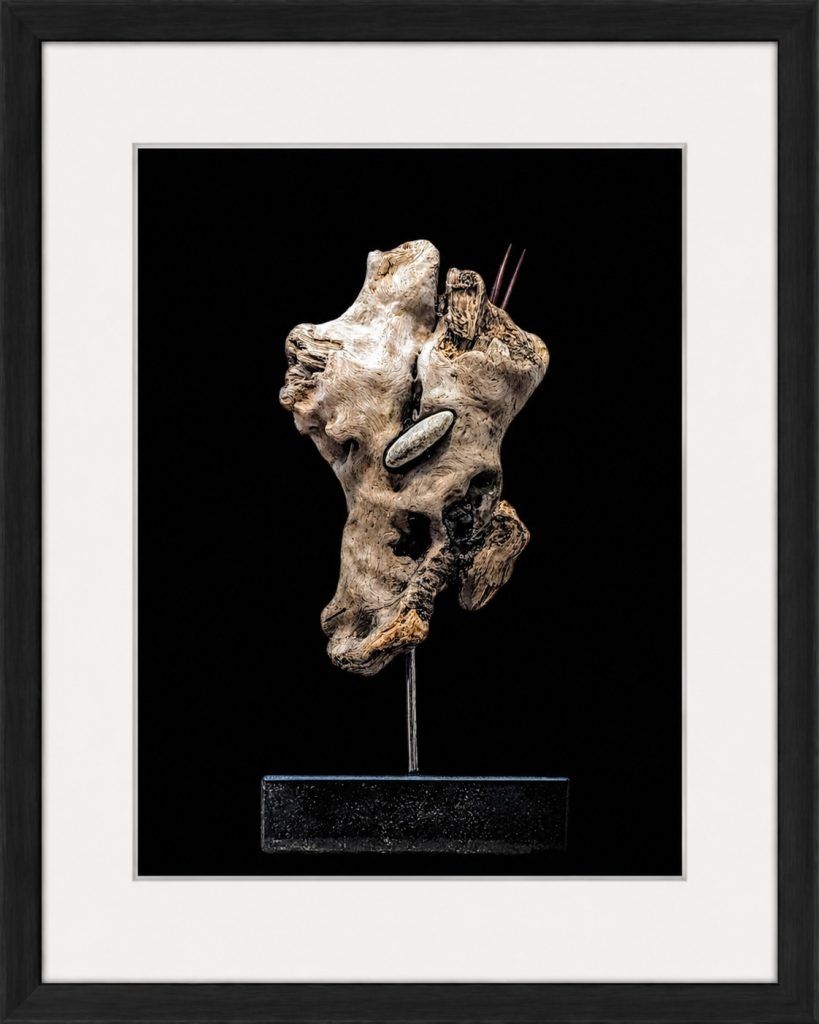
My personal favourites, the works in fig. 58 and 59, offer a simplified view of how the sacred works, mediating between nature and culture through the power of image. In fig. 58, the eroded wooden fragment is not sculpted. Its shape was formed by time and erosion. The artist’s intervention is small. He sets a smooth oval stone into the wood, and two thin wires rise from the top. It is enough for the object to gain posture, and to bring the wood out of nature placing it in front of the viewer with the aura of a cult object.
In fig. 59, the same type of wood resembles the body of Christ. Its shape reminds us of a body with the arms stretched, but nothing looks modelled after an iconographic canon. The cross is made from an old plank, with added rusted metal sheets. The resemblance comes from the position, and the wood placed on the cross becomes a crucifixion.
Conclusion
Reading from top to bottom, the strata appear in a reversed order. First the line, then the nails, the lace, the leaf, the branches and the first paint. Each one remains visible under the next.
The painting of Costin Brăteanu requires a slow reading, layer by layer, in the same way a restorer reads a wall. The stratigraphy doesn’t close meaning, it only shows the way in which the surface received what it keeps.
Lasă un comentariu