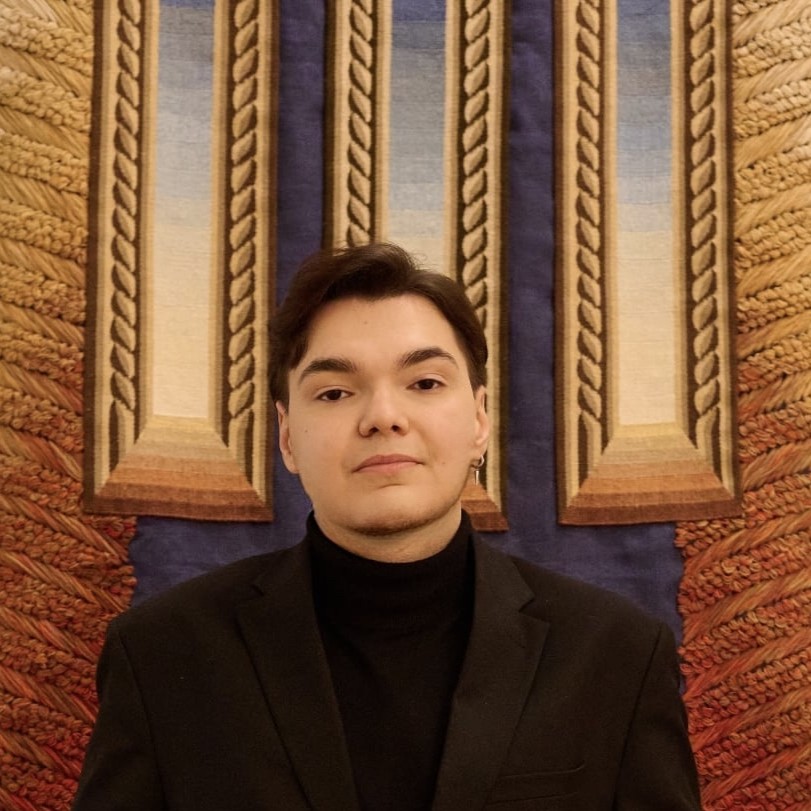
I entered the field of curating because I want to recover the unjust distance that appeared between the audience and the art object. Somewhere along the way, art was moved away from people. Academic language, cultural snobbery, and institutional distance built a wall between the object and the person standing in front of it, a wall I want to take down.
Medium is not a limit for me. Painting, poetry, film, textile, or music, they all raise the same question: how does a person come to understand a meaning they don’t recognize at first sight, one that seems not to belong to them? I build my entire practice around this question. And I always start from perception, not from theory. Theory comes after, as a tool through which I name what has already been perceived. I use ideas as a set of lenses, because that way they bring out what is already visible in the work, instead of dictating what should be seen.
Since dreams are one of my research subjects, I also treat symbols as a genuine form of knowledge, not as mere decoration. I read them according to their own internal logic. I structure my curatorial concepts the same way, looking first for the hidden grammar of a work and only then for its surface story, because a symbol often carries a memory that the culture around it has forgotten. Part of my role is to bring that memory back.
To do this, I push against two habits at once. The academic habit of speaking above people, and the commercial habit of speaking down to them. Both damage the same thing, the direct contact between a person and the object, and that is why everything I write and curate exists to protect that contact.
Every decision I make, from a wall text to where an object sits in a room, comes down to a single test: does this bring the viewer closer to the work, or does it add another layer between them? That’s why I see my role as a curator as that of a mediator who works, paradoxically, to disappear. A project succeeds, for me, when the viewer forgets I was ever there and is left only with the work, with the moment they lived alongside it, and with the shared story that formed between them.

All rights reserved.