
Before diving further into the article, the recommendation is to check the artist instagram hyperlinked below and read the captions of the paintings, as they provide the best insight into the artist vision and philosophy.
Quentin uses a unique technique of hydrophobic means and acrilyc paint to create his artwork. He comes from a vast genealogy of artists from France, one of his ancestors being the creator of the watercolor relief. He lives and creates in Romania for almost 5 years, previously being exhibited at Kulterra in 2025.
The exhibition Being vs. Having, by artist Quentin Hubert, opened on July 23, 2026, at Kulterra. The exhibition asks a question, urgent and old:
what am I, beyond everything I own?
The title of this exhibition comes from an earlier conversation. I had this discussion with Quentin last year, while we were leaving MoBU, searching for the core of his work, a body of research spanning at least fifteen years.
He names the central wound of modernity: a slow, systematic substitution. Existence gets replaced by accumulation. Life gets replaced by its image. The sacred gets replaced by its price. Quentin Hubert did not build an exhibition about this wound. He built one from it, and against it.
The Spectacle of the Wound
Marx, one of the pivotal philosophers of the artist, called it commodity fetishism: human relations, between people, between man and land, between man and his own labor, get replaced by relations between things. A coat, a machine, an algorithm on a screen takes on the look of intrinsic value, as though value lived in objects rather than in the living hands and hours that made them. The commodity speaks, and we listen. The commodity commands, and we obey.
Guy Debord, a century after Marx, sharpened the point further: in our time, the commodity did not simply invade life, it became life. We no longer only buy and sell things; we buy and sell ourselves. We trade our attention, our desires, our identities on a market that never closes. Debord named this the spectacle: the total rule of appearances over Being.
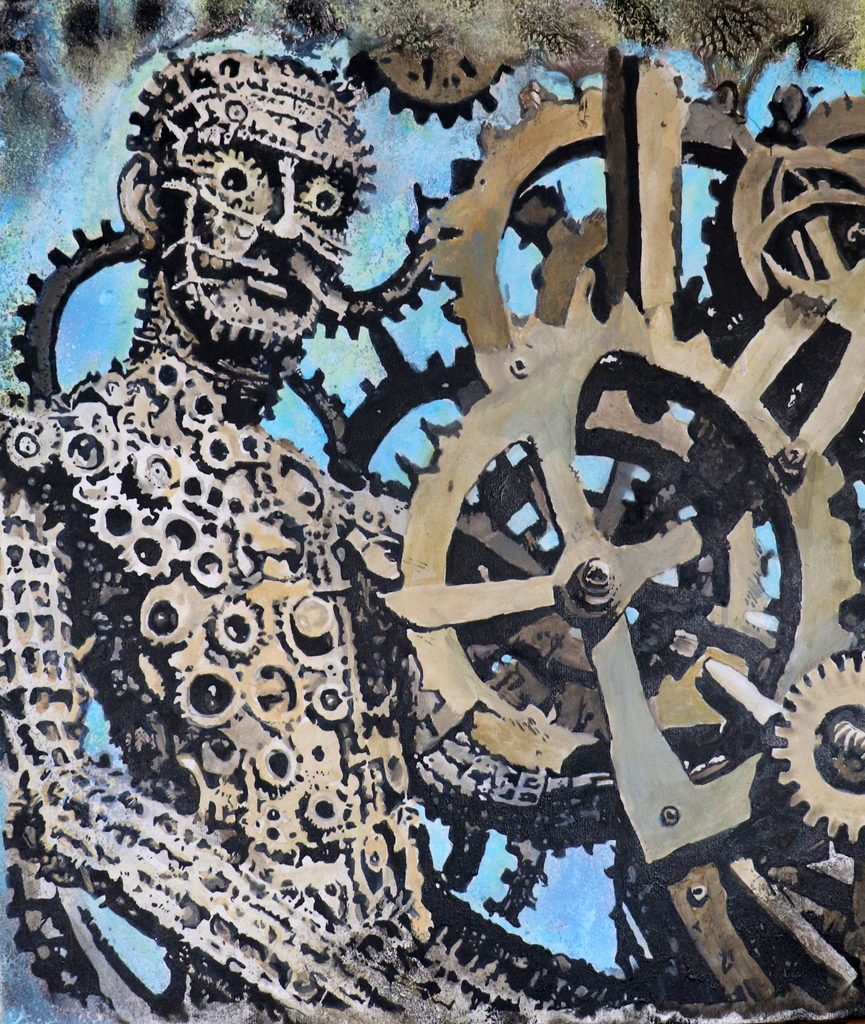
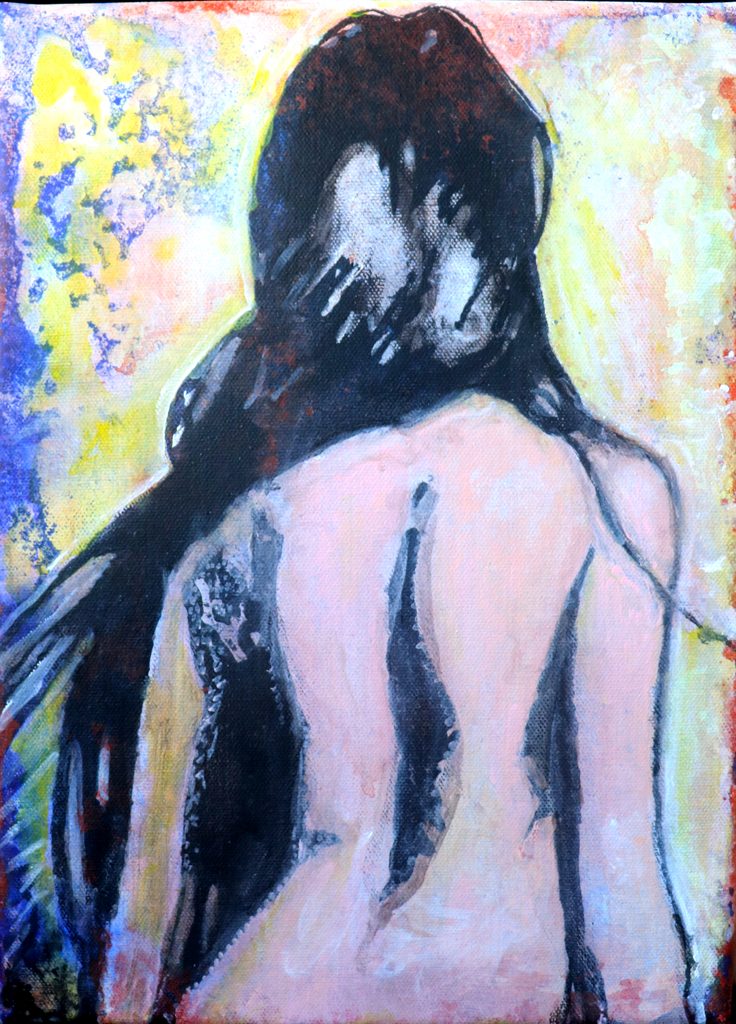
The painting Reification confronts this directly. Reification, from the Latin res, thing, is the process through which a human being is reduced to a product, reproduced and consumed as one commodity among others.
Two Paths: Parmenides, Heraclitus, and the Presocratic Wager
Long before Marx, or Christ, two paths opened before humanity. Parmenides saw a world of permanent, unified Being, a truth beyond change and fragmentation. Heraclitus saw a world of eternal flux, a world of contradiction held together by a hidden logos, a universal reason governing all things.
Between these two views, the Presocratics, Parmenides, Heraclitus, Empedocles, set down what we might call the founding wager of philosophy: the world has an inner coherence, a truth, and the human mind can grasp it. This capacity does not belong to an elite. It was, or should have been, the birthright of anyone who stops to think.
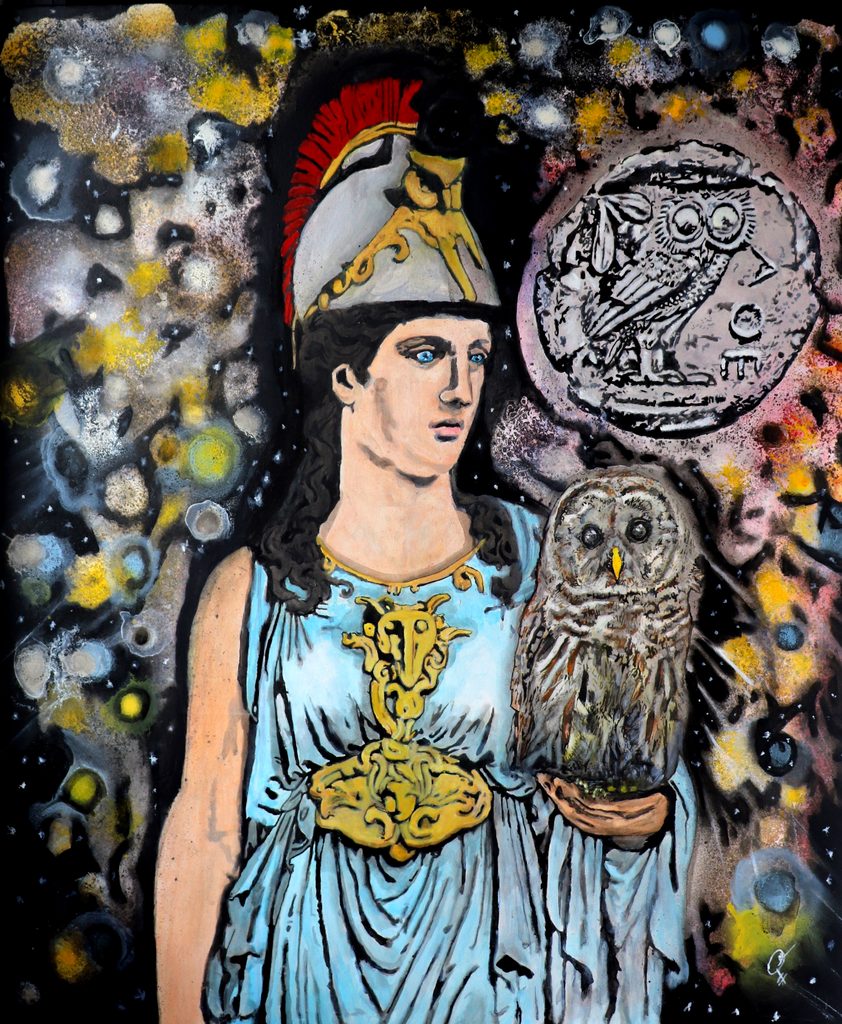
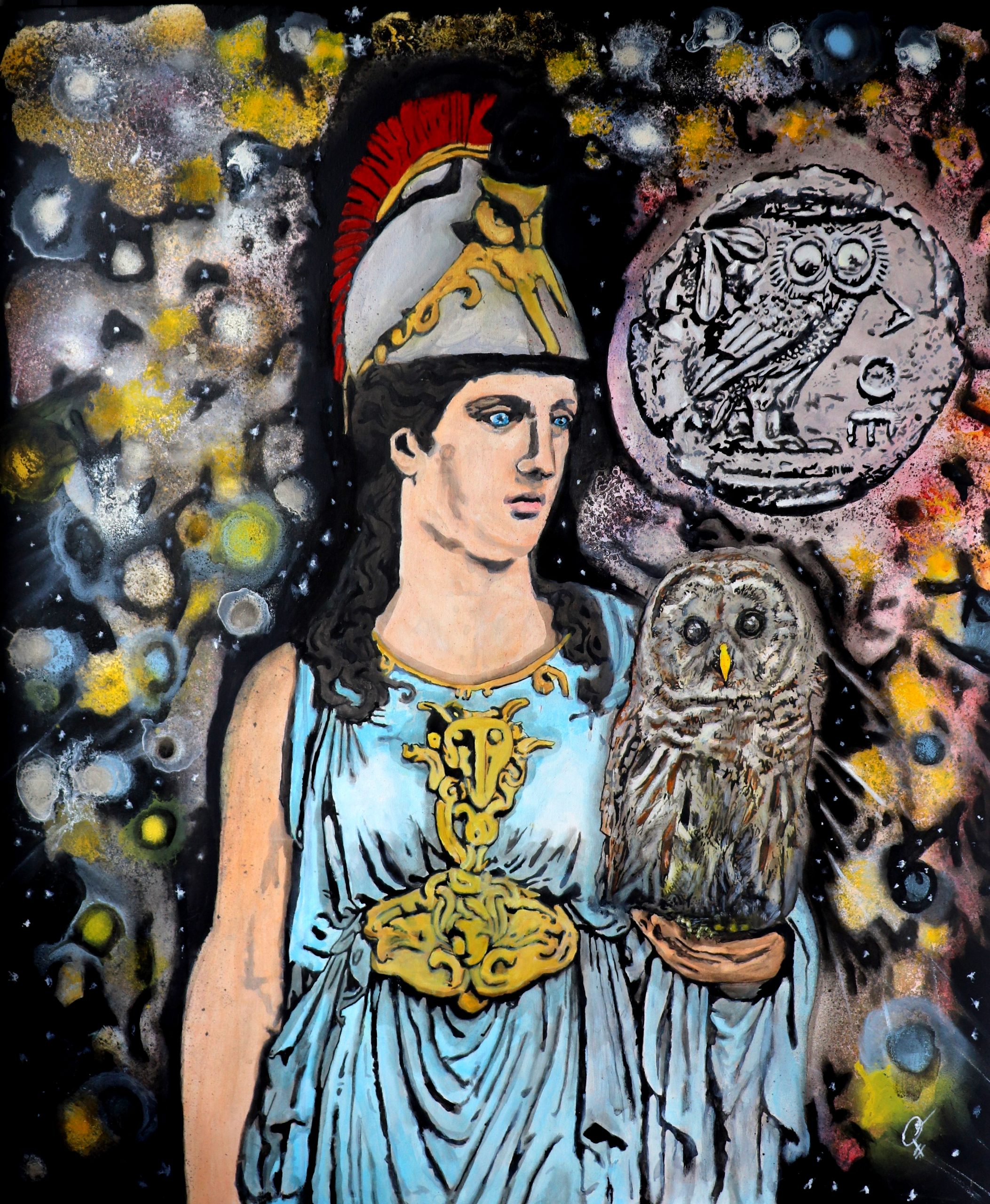
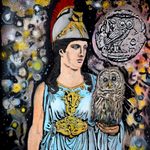
The painting Ἀθηνᾶ, The Shadow of Minerva evokes this tradition. Hegel wrote that the owl of Minerva spreads its wings only at dusk: wisdom comes late, after the events. But the goddess herself, Athena, stands for something else: the dialectical revelation of truth through contradiction, the idea that real understanding does not come from removing opposition but from moving through it. The shadow that falls here belongs to a civilization that has forgotten how to think in contradictions, one that prefers the comfort of a single, market-approved story over the difficulty of real knowledge.
The exhibition asks us to do exactly this: to think again.
Man Embodied as Nature, Nature Embodied as Man
At the heart of this exhibition sits an intuition both ancient and radical: man is not separate from nature. Man is nature becoming conscious of itself.
Etymology, that silent guardian of lost truths, tells us what we have forgotten. Homo, man, and humus, earth, soil, share the same root. To be human means, at root, to be of the earth. Humility, humilitas, is not self-abasement; it is closeness to the soil, to the living earth, to the reality that comes before every abstraction.
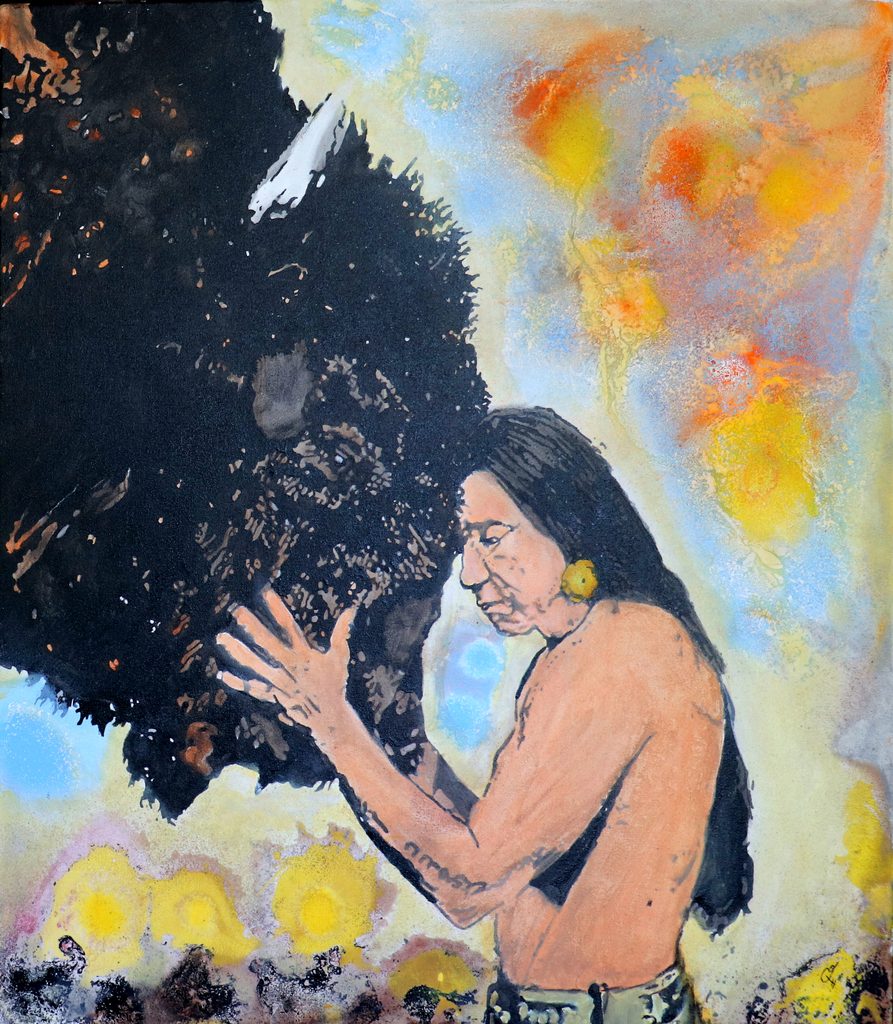
This is what the painting Before Greed mourns: an earlier condition, a world before everything alive was divided into parcels of profit, before the soil turned still and the body turned into labor. This can look like nostalgia for a golden age that never existed. It is more than that. It is the recognition that something real has been lost, and naming that loss is the first act of recovery.
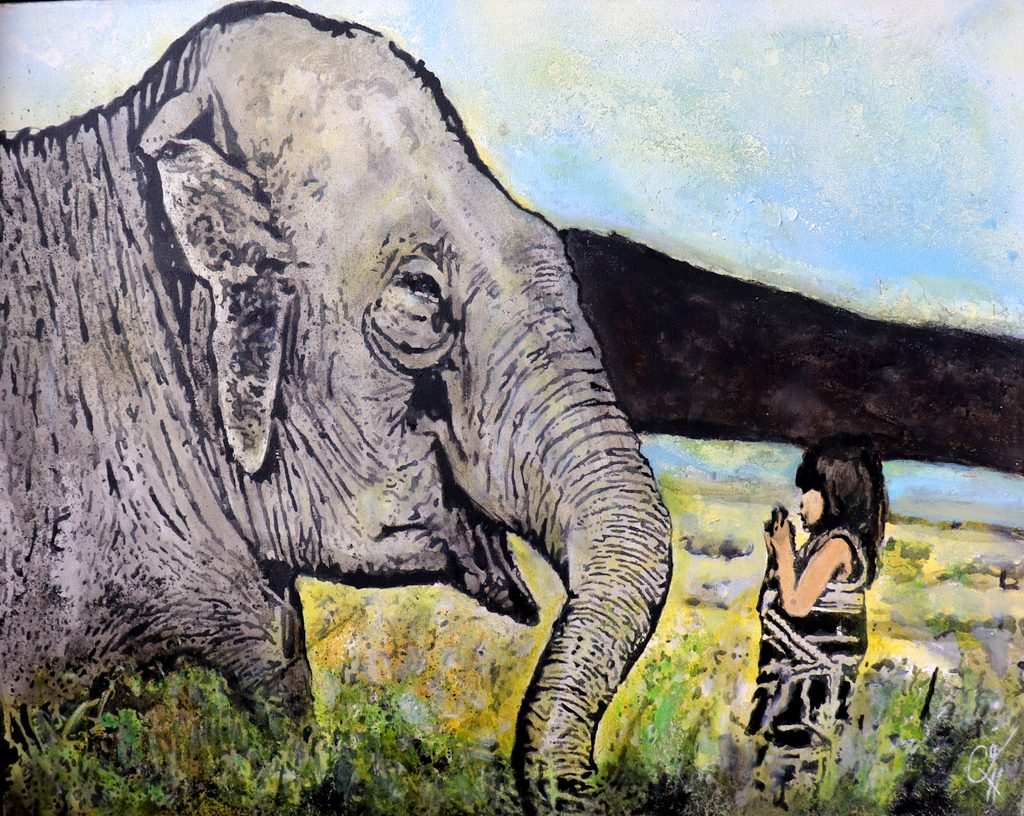
Communion, Sacral Matter, Sacral Love, and The Inalienable Sacral live in the same territory. These works claim that the bond between the human being and the living world is not only ecological or political; it is sacred. And the sacred, in its deepest root sense, sacer, set apart, untouched by trade, is exactly what exchange value cannot absorb. Some things should never carry a price, because pricing them destroys them: love, community, land, the child, the moment of true encounter.
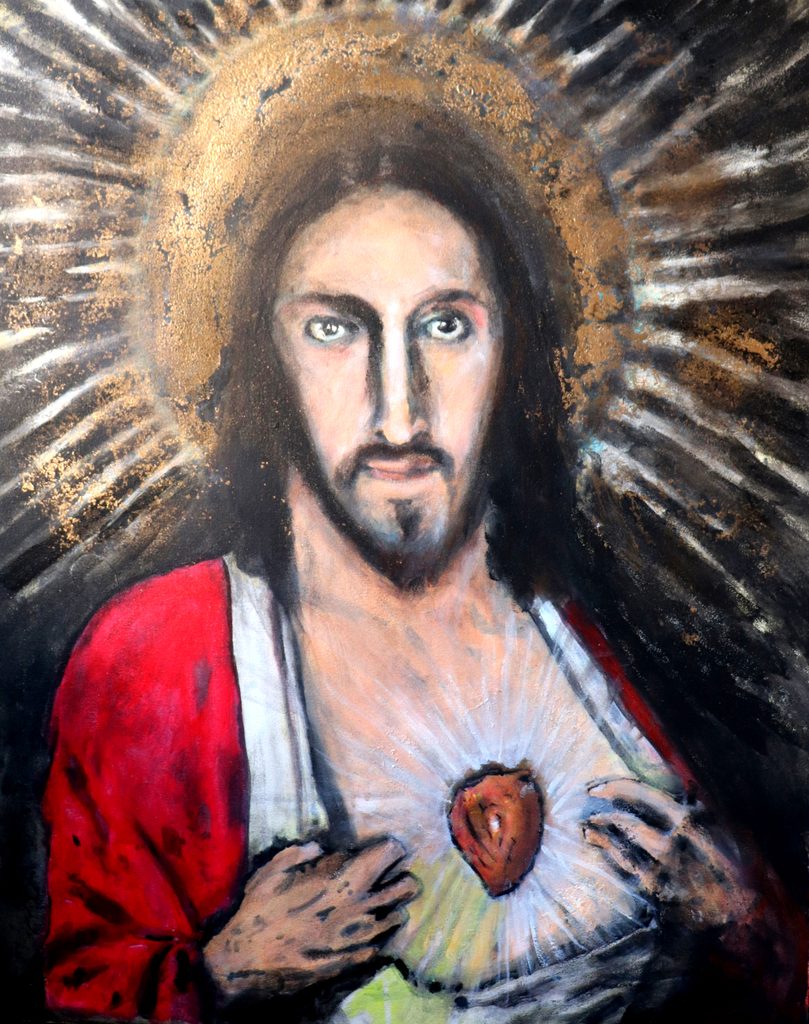
The exposed heart in My Radiance Is Not From This World carries this weight. Not the Christ of institutional religion, but Christ as a radical figure of the incarnate Logos: the idea that universal truth can live in a particular, vulnerable, mortal body. The divine is not elsewhere; it is here, in the incarnation of nature in man and man in nature. This reads more as anthropology than theology. It recognizes that the sacred sits not above us but in us and between us, open to anyone not yet fully colonized by the logic of the market.
Figures of Resistance
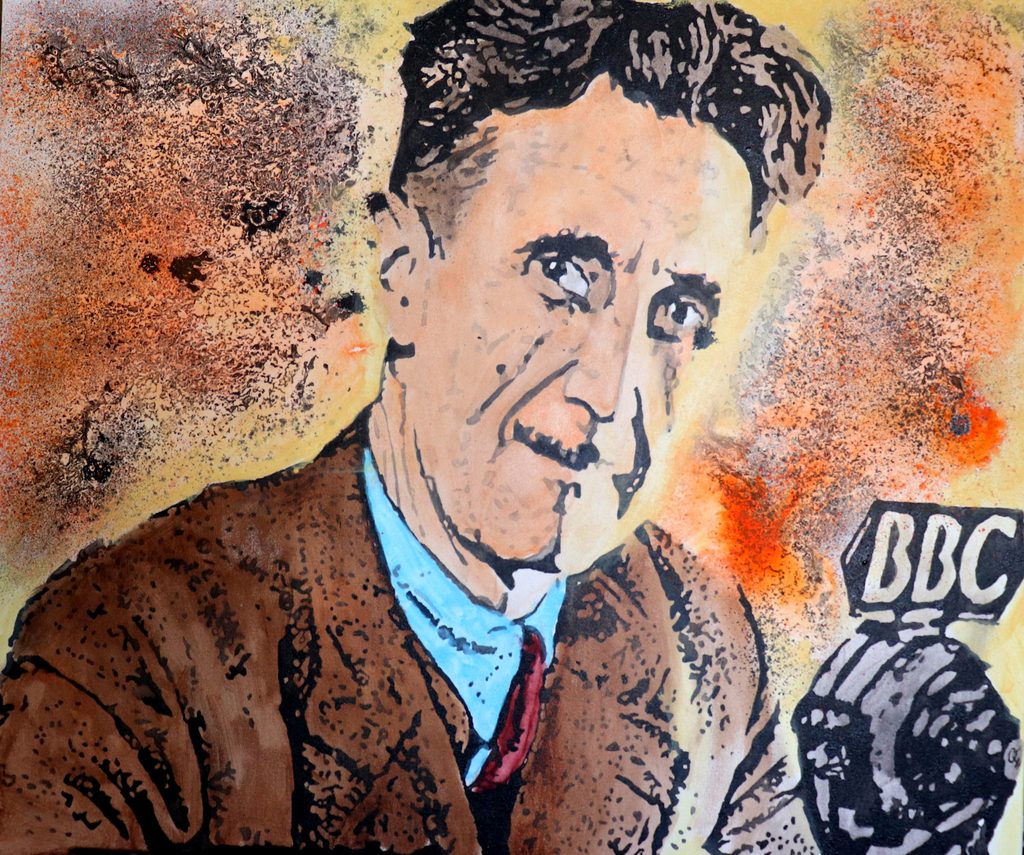
Quentin Hubert’s portraits are encounters. Each face on these walls belongs to a person who, in their own way, refused to reduce life to exchange value, or whose life was consumed by that reduction in ways that show what is at stake in this choice.
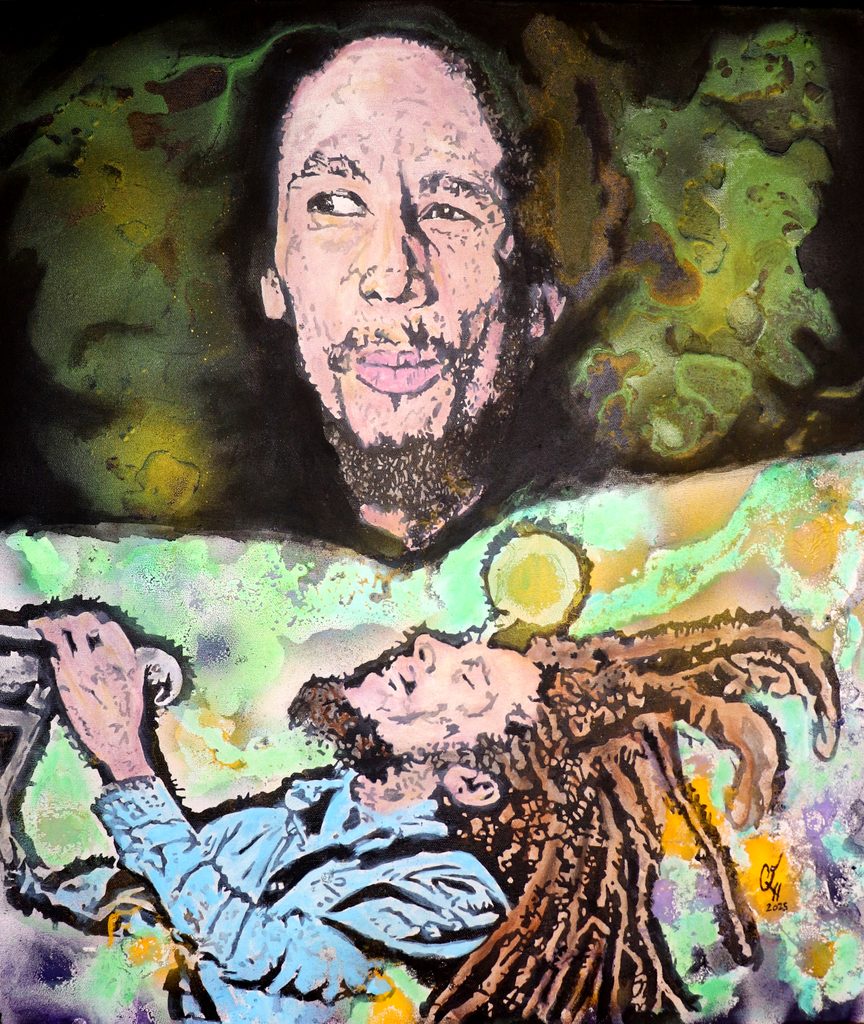
Bob Marley: Emancipate yourselves from mental slavery, none but ourselves can free our minds. Here is a man who used the language of music, one of the last truly communal art forms, to speak a political and spiritual truth that power could not easily commodify, though it tried. His painted face looks back at us as invitation and challenge alike.
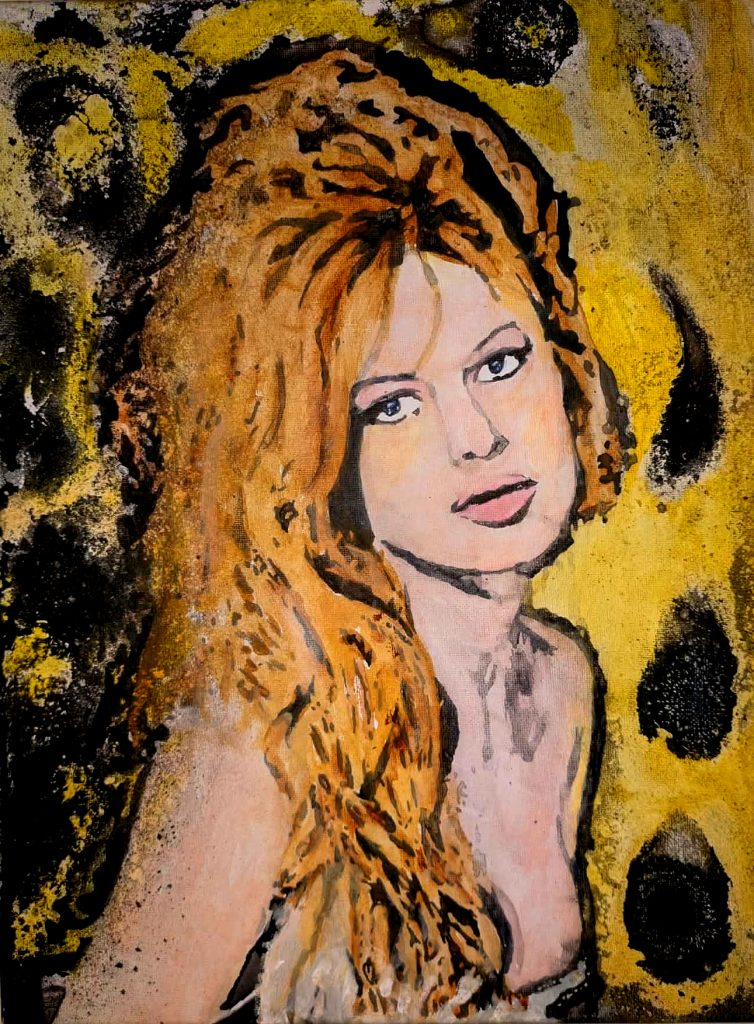
Brigitte Bardot: a paradox and a challenge. Here is a woman turned into a commodity by the French state and the global entertainment industry, who later gave her life to defending animals, beings entirely outside the logic of exchange value. Her face here is not the face from Et Dieu… créa la femme. It is the face of someone who understood, from the inside, what it means to become a thing, and who chose, against that experience, solidarity with the voiceless.
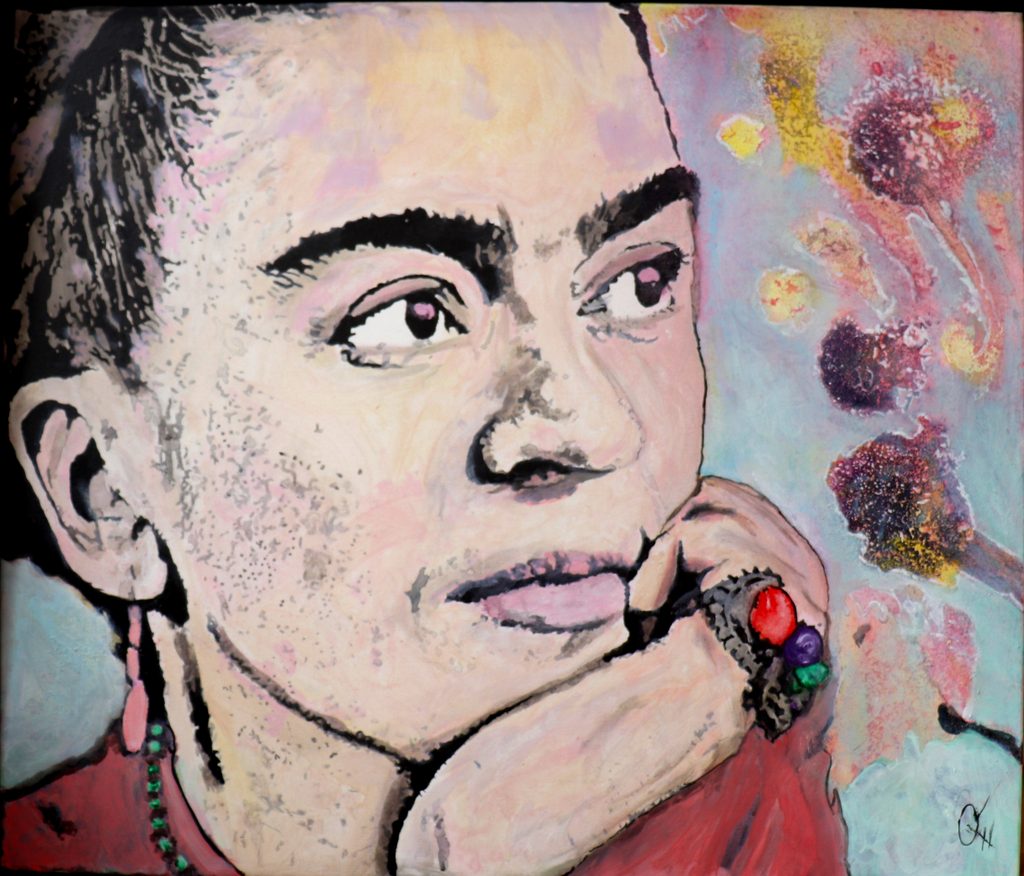
Frida Kahlo: who painted suffering as dignity, who refused to separate the political from the personal, who turned her broken body into a site of cultural and political defiance.
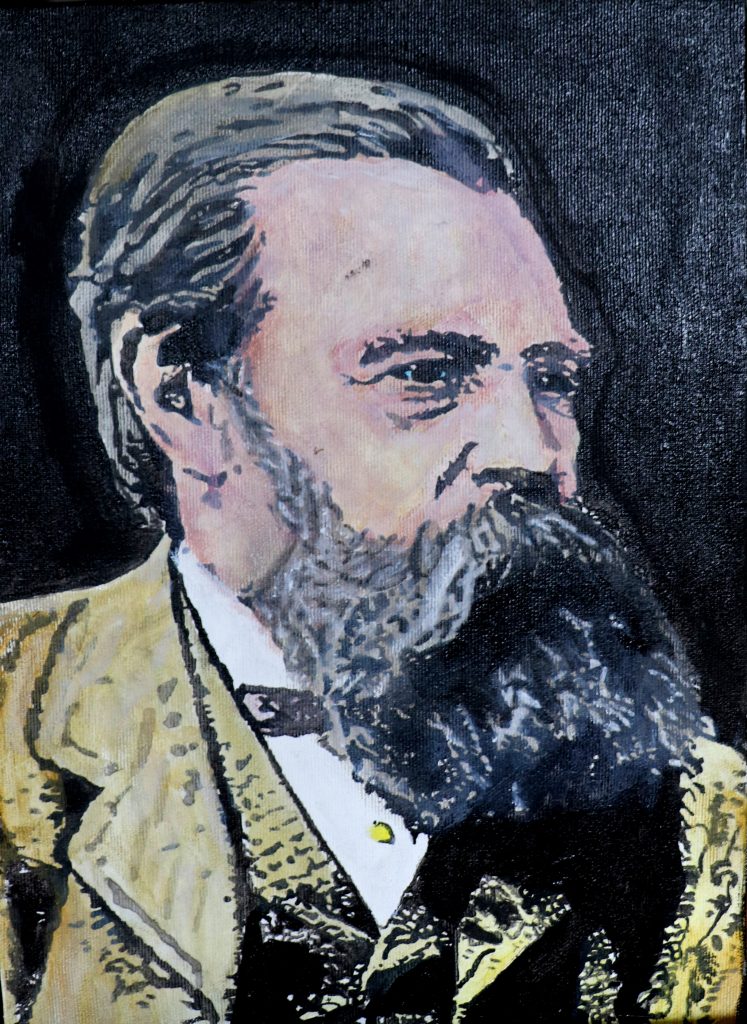
Friedrich Engels: who understood the wage, celebrated as freedom, as simply the most sophisticated form of slavery ever invented, the only one where the enslaved person consents and considers themselves free. His Dialectics of Nature argued, against the dominant idealism of his time, that nature itself is dialectical, that contradiction is not a failure of thought but the structure of reality.
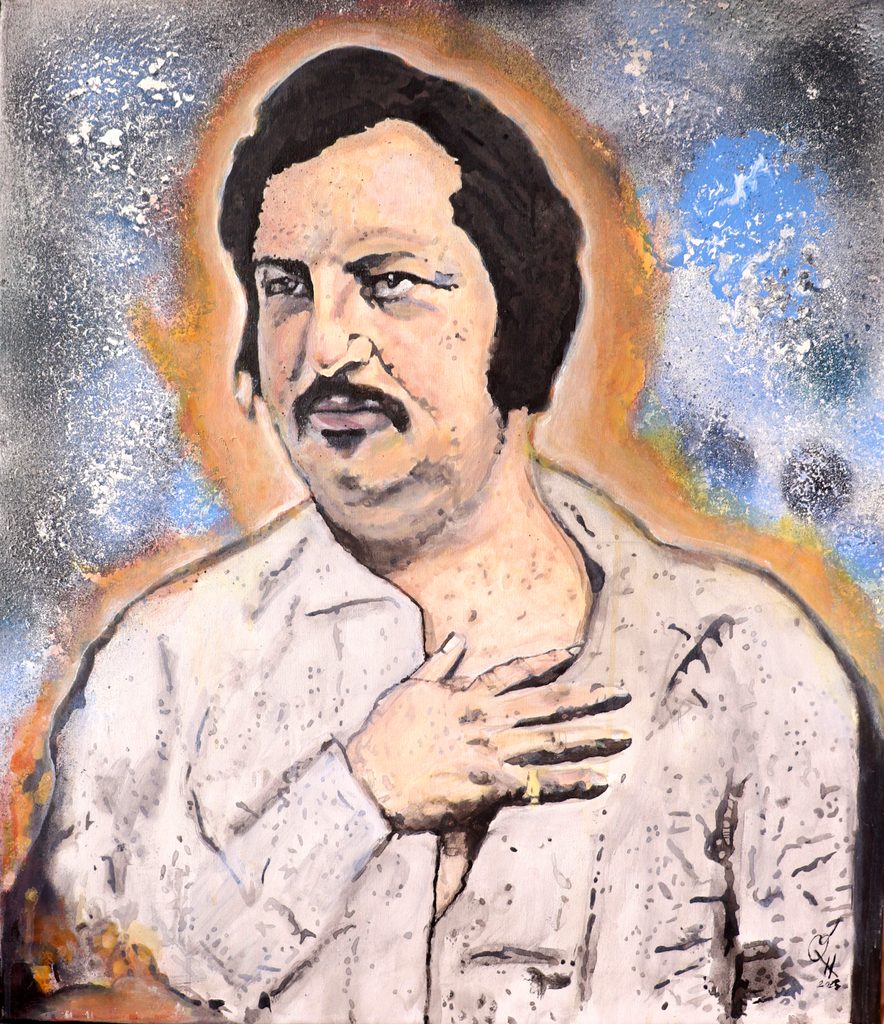
Honoré de Balzac: who described, with devastating precision, how money empties every human relationship, how The Human Comedy is, in the end, a comedy of Having devouring Being.
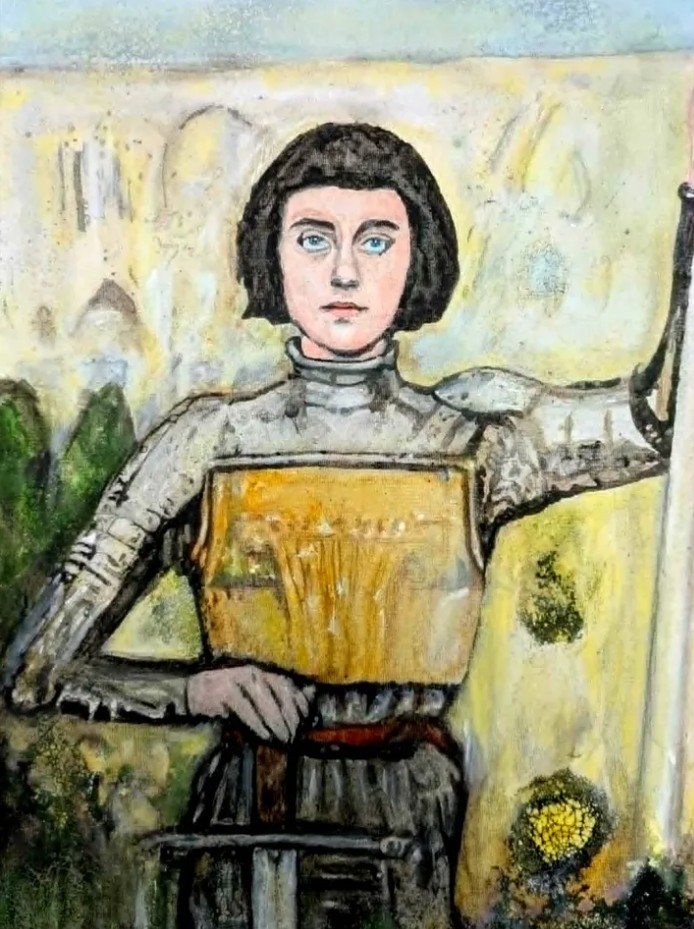
Joan of Arc: Here is the figure of conviction that transcends calculation, a truth strong enough to walk into fire. The Johannine reference is not accidental: in the Gospel of John, the logos, the word, reason, truth, exists from the beginning of creation. Joan is the human being who lets that logos speak through her, whatever the cost.
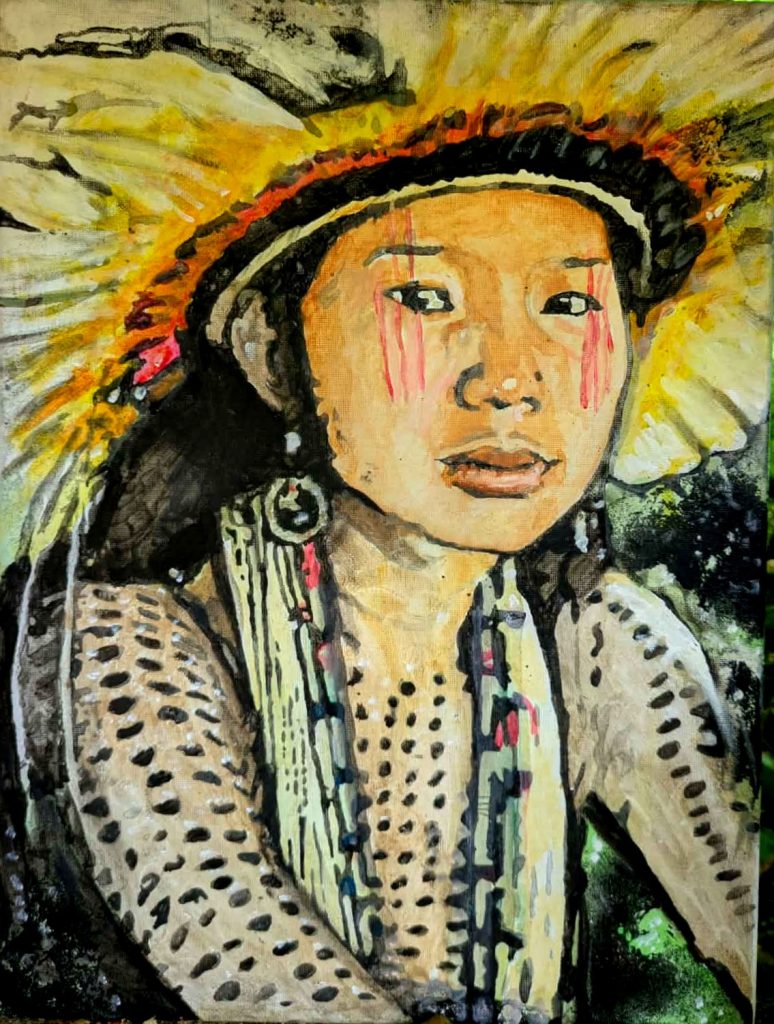
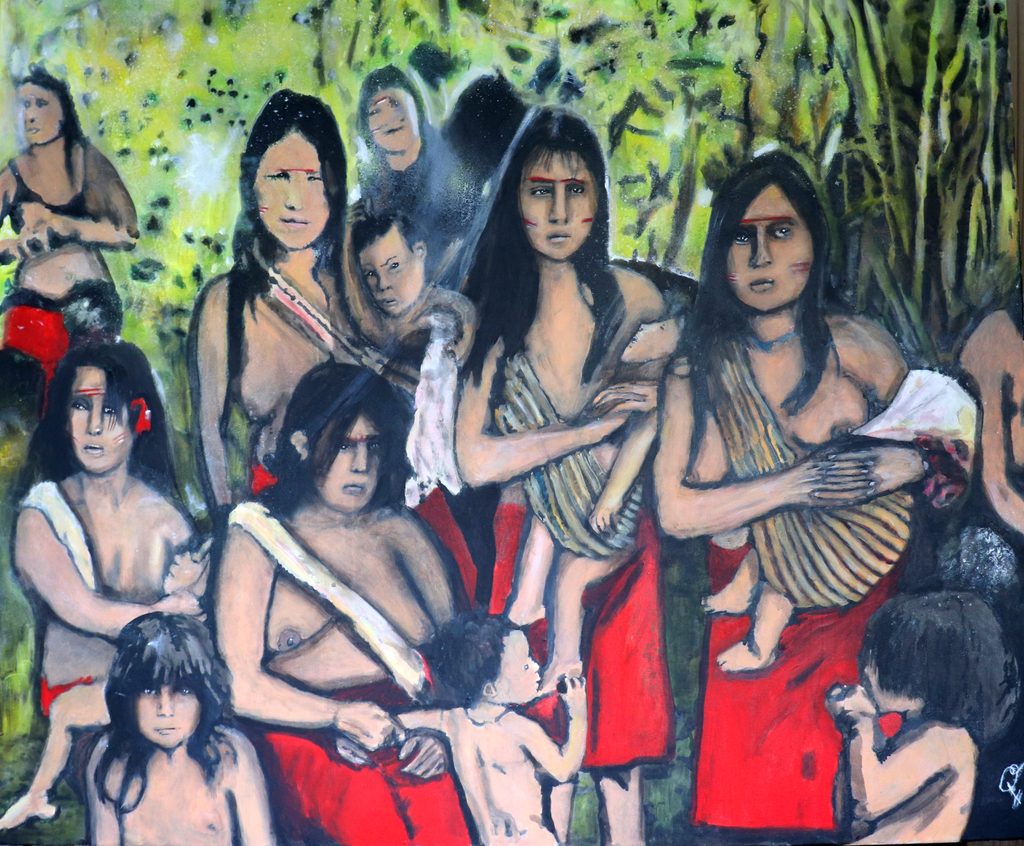
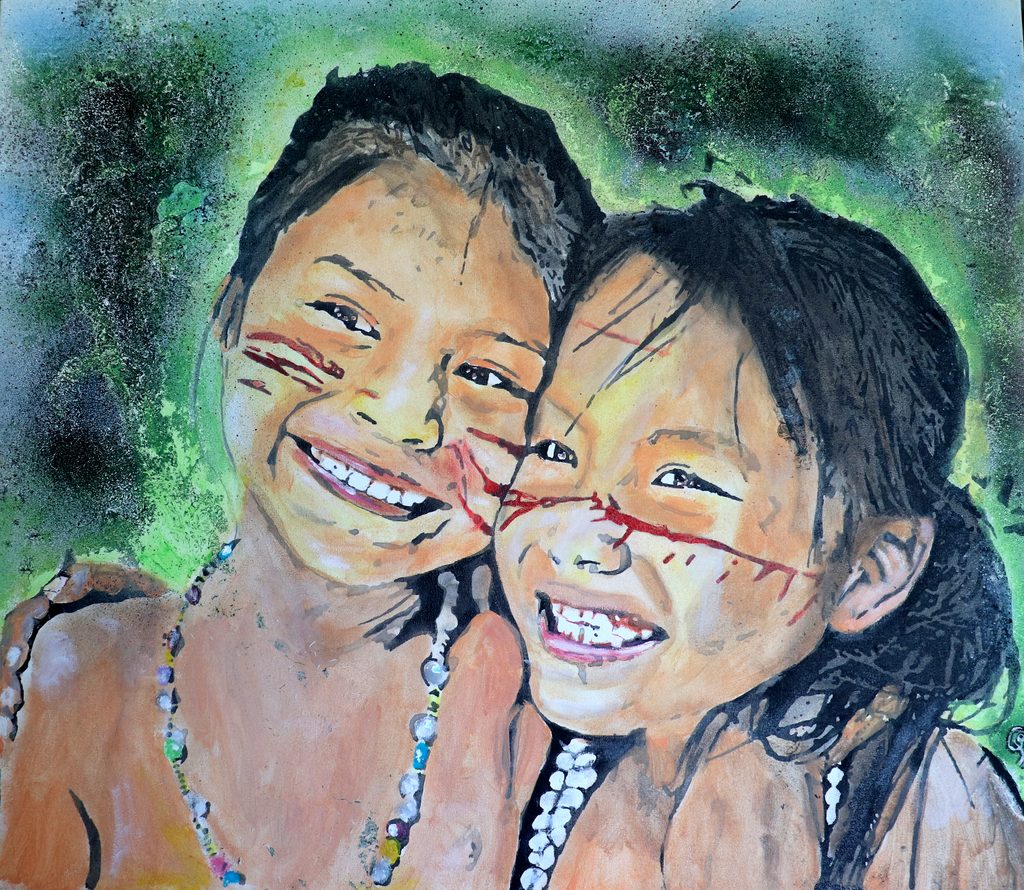
Kayapós and Mothers of the Forest: Indigenous peoples who kept, against the advance of colonialism and capitalism, exactly the relationship with the land that modernity destroyed. They prove that another way of organizing the human relationship with the living world is not only conceivable, it is practiced, defended, dying and surviving at once.
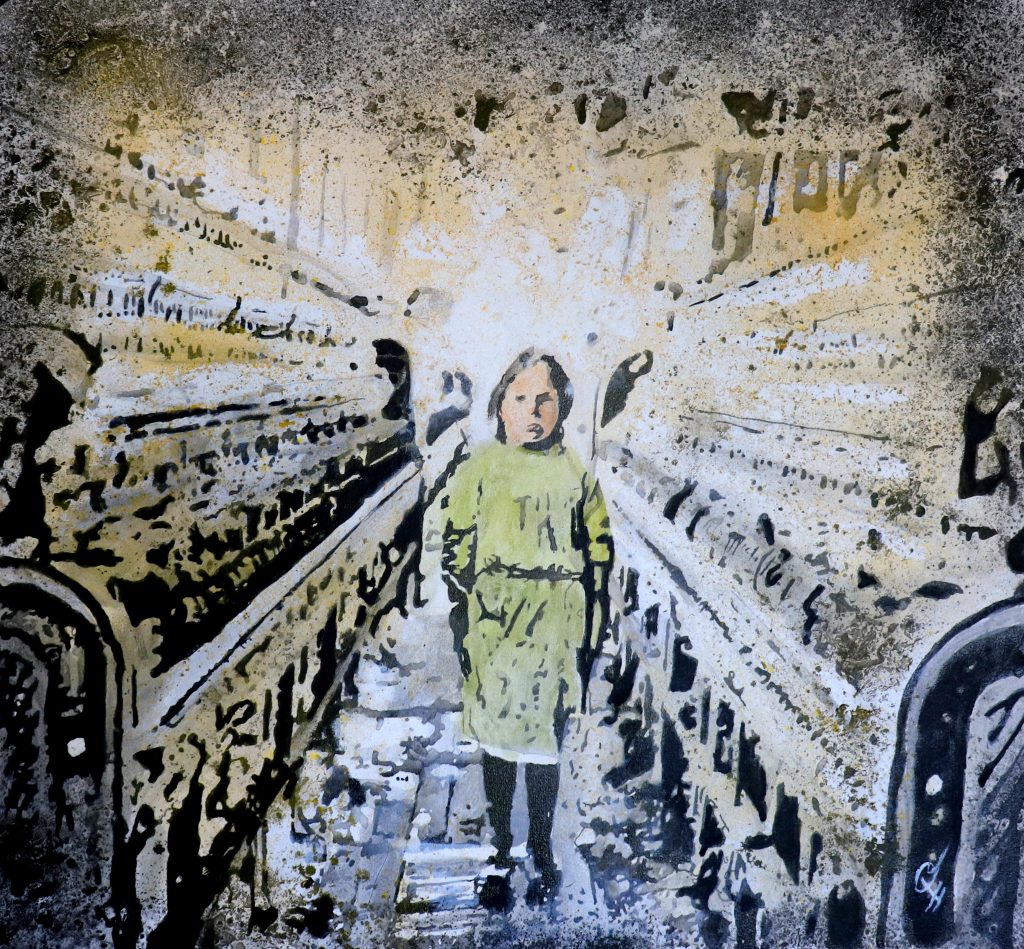
The Surplus, Childhood Sacrificed on the Altar of Accumulation: the children. In any system built on extraction, the first sacrifice is always the child, through child labor, through war, through the poverty produced by the endless flow of surplus value. Thanatos, the death drive, shows up here as a systemic logic more than an individual pathology: life, Eros, joy through nature and love and the sacred, these are exactly what the system of Having cannot tolerate, because they come free.
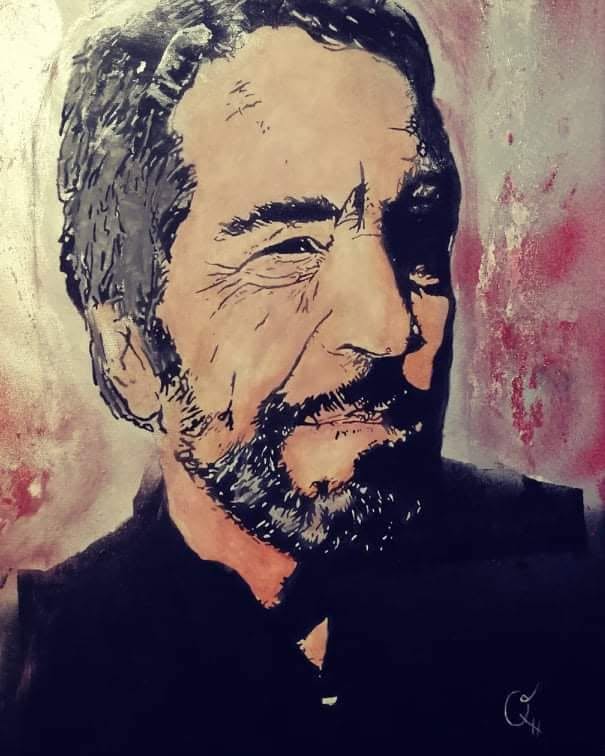
Jeffrey Epstein: here is the dark mirror. If Bob Marley and Brigitte Bardot stand for resistance, Epstein stands for the „satanism of the commodity” in its purest form, the reduction of the child, the body, the most vulnerable, to an object of power and consumption. The painting accuses, this time, and does not celebrates. It names. To refuse to name is to become complicit.
Community, Commune, Communion
As a philologist, I enjoy examining political positions through their etymological roots. Though I take no stance, viewing these terms from an artist’s perspective reveals unique insights:
The word communism has been so deeply distorted, by Cold War propaganda, by Stalinist practice, by liberal contempt, that we have lost access to what it actually says. Communis: shared, common, belonging to everyone. Commune: the basic unit of shared life, the village, the neighborhood, the gathering of people who face each other and decide together. Communion: the sacred sharing that binds human beings not only to each other but to the living world they inhabit.
Gracchus Babeuf, the first communist in the modern political sense, understood this: what capital destroys is not only economic equality, but the fabric of communal life itself. Exchange value, once it turns universal, dissolves everything that cannot be priced: local solidarity, the commons, the gift, the festival, living knowledge of the land.
Democracy, in turn, has been hollowed out. Demos and kratos: the power of the people. But from the start, in the Athens described by Plato and Aristotle, democracy was a contested, contradictory experiment. Dialectic, the law of contradiction, was also the law of the city. Real democratic power was never simply counting votes; it was the ongoing struggle over what counts as truth, over who gets heard, over who belongs to the demos and who is left out. Hegel saw history moving toward the universal recognition of freedom. Marx saw that this movement is not smooth, but torn by contradiction and class struggle.
Painting as a Vital Act
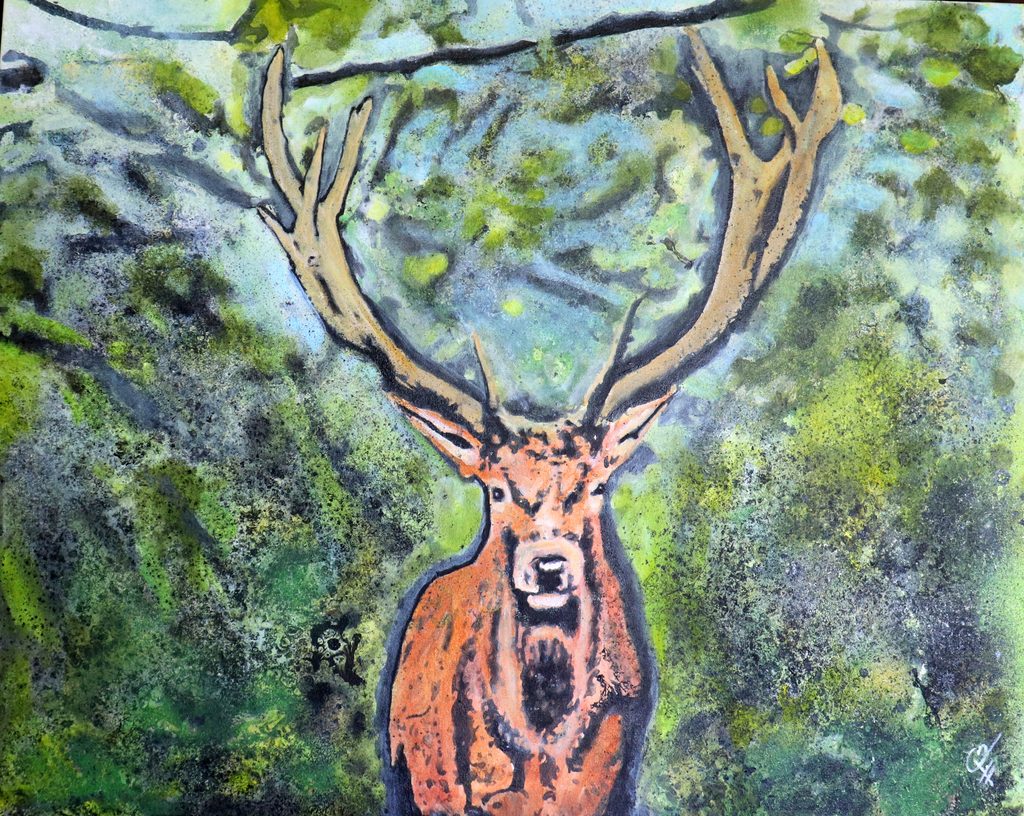
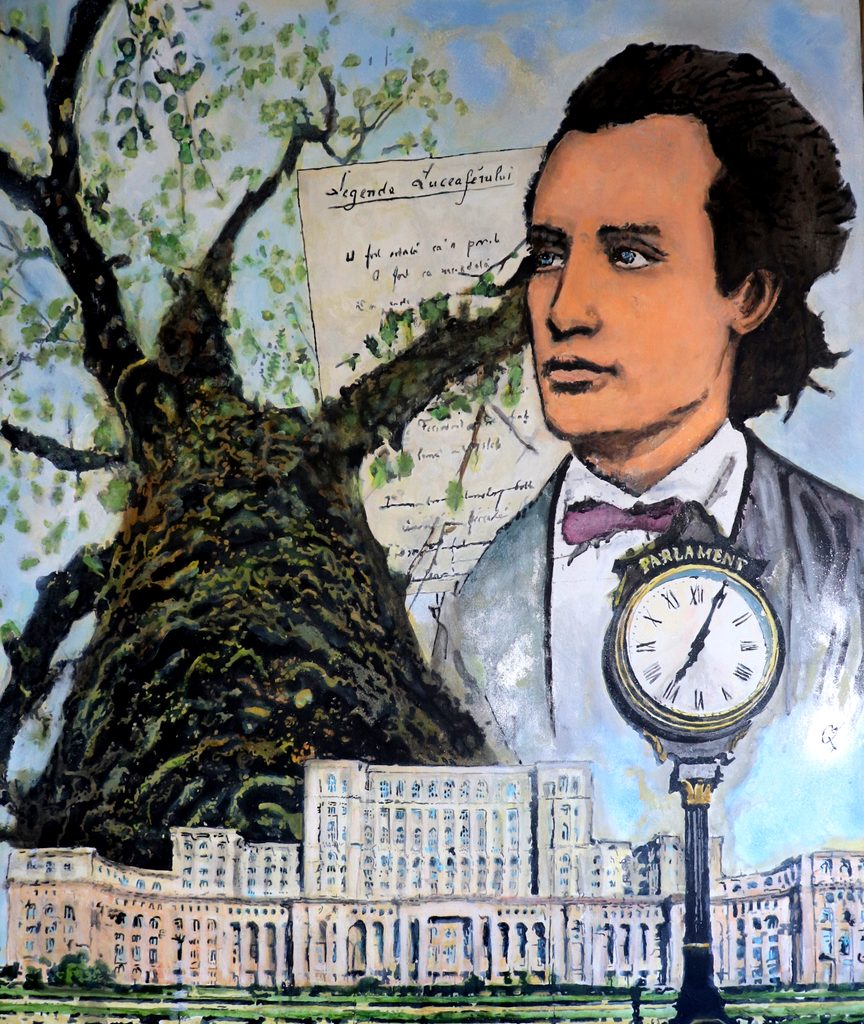
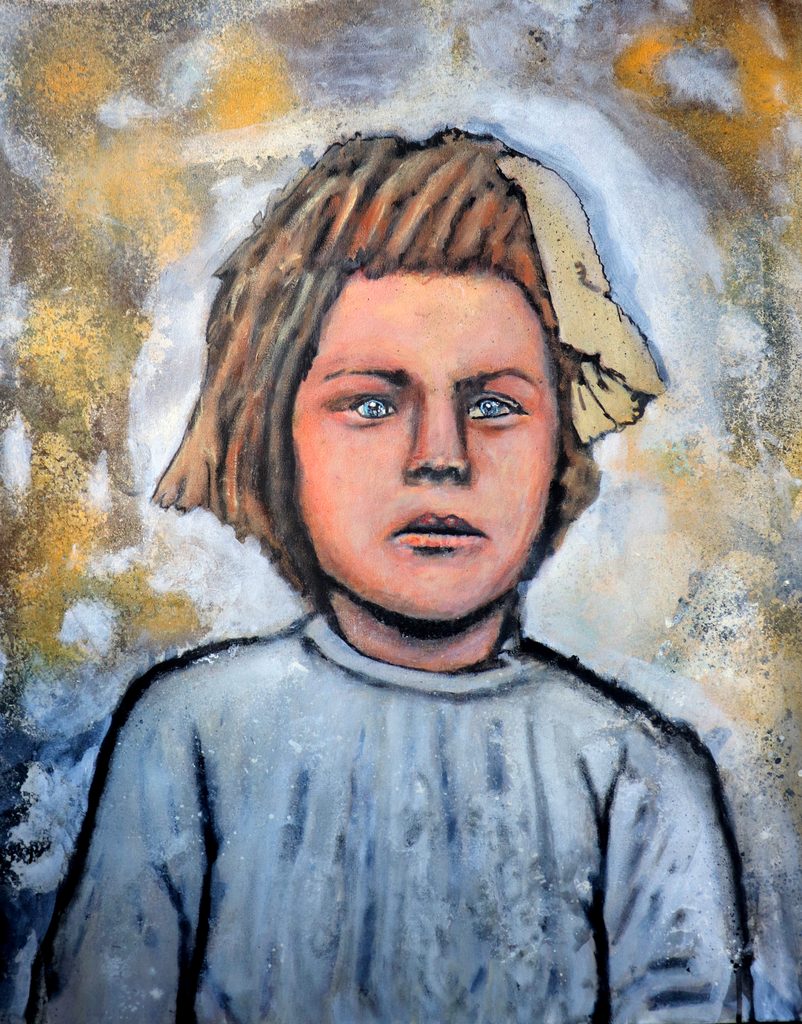
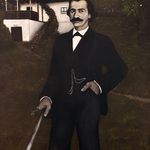
Hyperion, the largest canvas, calls on the Romantic ideal from Eminescu, the poet-genius who refuses to step down into the ordinary world of compromise and possession. The Soul in Smoke Blue (portrait of a girl with a bow) suggests interiority, the life of the spirit that escapes capture. Antlers of Resurrection joins the animal and the sacred in a single image: the stag, an ancient symbol of renewal and of what cannot be tamed, rising.
Human Being: Not Having, Not Doing, But Being
This exhibition leaves us with one last question, hidden in the language we speak every day.
In English, the phrase human being holds the verb to be inside it. Not human having. Not human doing. Human being. Man defined through the act of being, not through what he owns or produces. This is not an accident of language. It is a philosophical inheritance buried in the words themselves, a reminder that human essence was never, at its root, a matter of accumulation or performance.
In Romanian, the word ființă, being, is built entirely from the verb a fi, to be. Ființa umană, the human being, is not only a phrase; it is an ontological definition. We are, first and before anything else, beings that are, not beings that have, not beings that do, but beings that are. Existence comes before possession. Presence comes before production.
This understanding of the human being is exactly what commodity fetishism attacks at its root. It convinces us that we are what we have, that our worth equals our exchange value, that to be someone means to own something. Advertising is not an accident of capitalism; it is capitalism’s most effective philosophical tool, because it repeats, without end, this basic lie: you are what you have.
Against this lie, Quentin Hubert’s exhibition raises a simple, radical claim: we exist before we have. And in that word, exist, sits everything at risk of being lost: community, the sacred, the bond with the land, love, truth, the dignity of the child, the voice of the voiceless.
Rediscovering Being is not a nostalgic project. It is a political act. It refuses to let the verb to be get colonized by the verb to have.
Conclusion
Against expectation, the question this exhibition leaves us with is not academic. It looks at how we live, what we choose, what we refuse.
If Being is possible, if it is not simply an archaic fantasy but a real alternative already present in our everyday lives, then the way back runs through everything exchange value cannot absorb: through real community, through the sacred in its original sense, through recognizing that the land is not a resource but a home, through art that acts instead of decorating, through the courage to name the system and picture what comes after it.
The artist reminds us that the dialectic of nature is also a dialectic of history, that nothing stays permanent, that structures which look eternal are already becoming something else. The real question is what replaces them, and whether we get a say in it.
This exhibition is the artist’s answer in practice.
As Quentin himself puts it, What remains irreducible and alive.
Lasă un comentariu