
Immersive installation
Curated by Andrei Fășie
Madrid, Spain
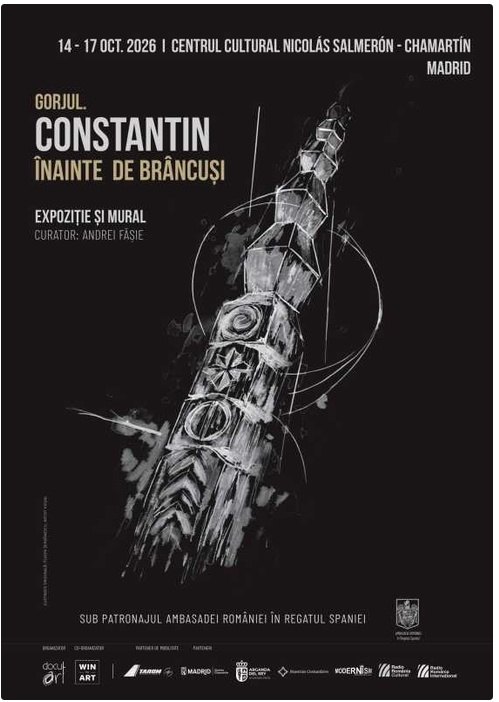
14 to 17 October 2026
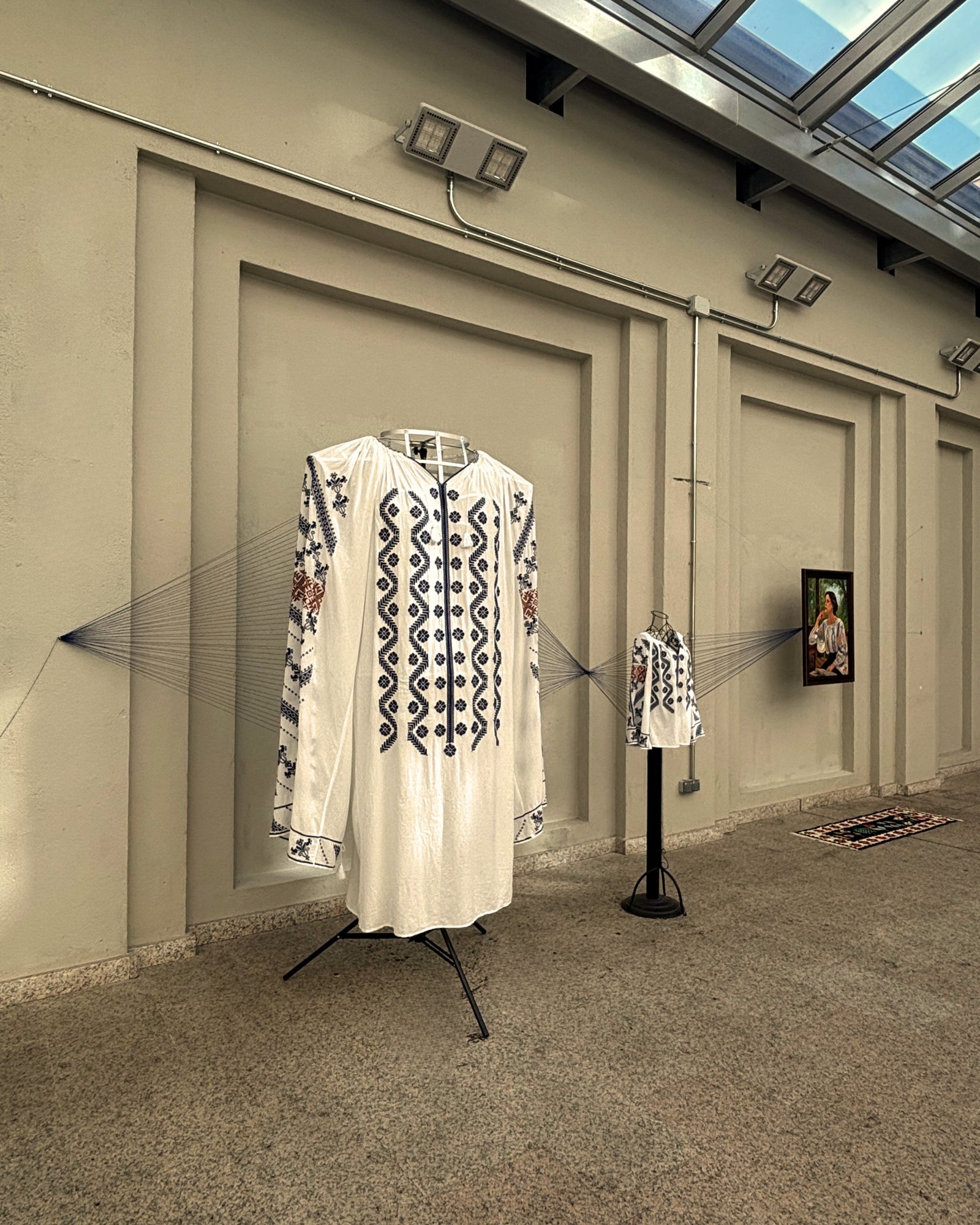
The Gorj. Constantin before Brâncuși is an immersive installation on the living heritage of Gorj, shown in Madrid for the 150th anniversary of Constantin Brâncuși’s birth. It brought Oltenian bed covers, wooden pillars from traditional houses and a hand-sewn ie of over 20 square metres into one room, set to reinterpreted old local music.
About Constantin before Brâncuși
The exhibition ran from 14 to 17 October 2026 at the Nicolás Salmerón Cultural Centre in Chamartín, Madrid. It was organised by the Docuart Association, with the WIN for ART Foundation as co-organiser, under the patronage of the Embassy of Romania in Spain. The project also marked 145 years of diplomatic relations between Romania and Spain.
Before he became Brâncuși, Constantin was a child in Hobița, in a world of carved wood, woven cloth and embroidered shirts. The installation shows part of that world. The objects are not displayed as isolated museum pieces. They sit together in a contemporary space, so visitors meet them before they read any label.
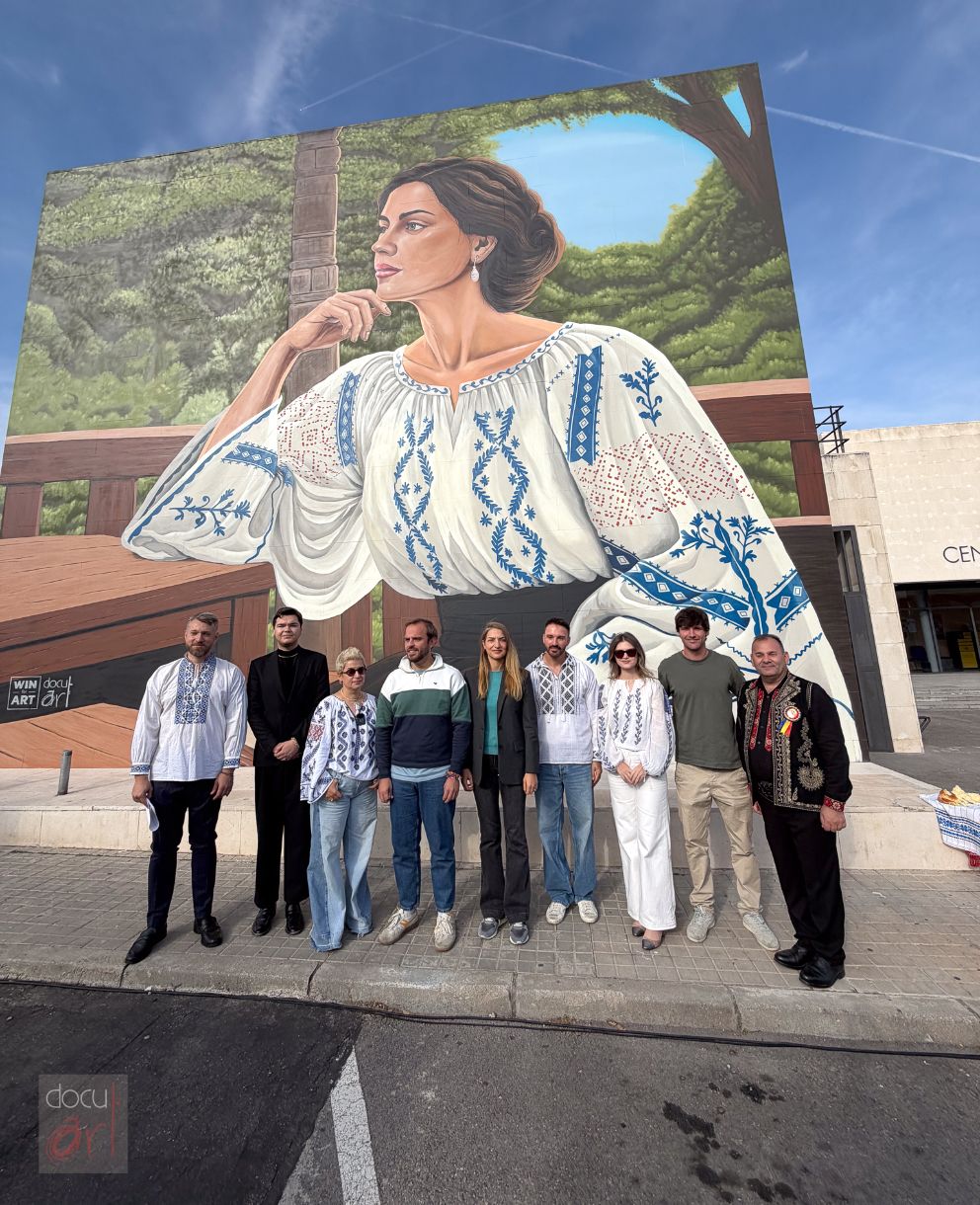
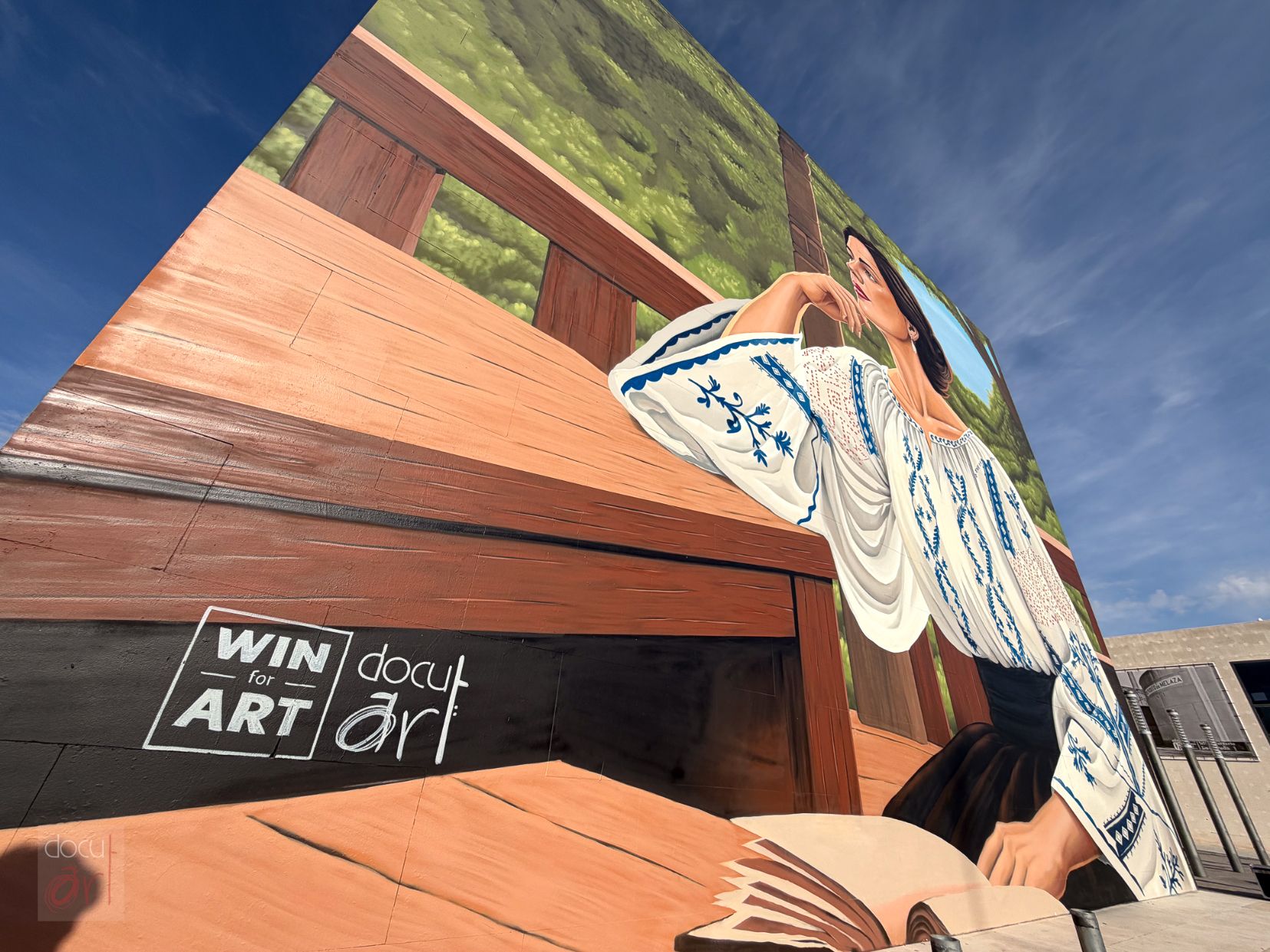
On 17 October, the project moved outside the exhibition hall. An 80 square metre mural was unveiled on an exterior wall of Centro Integrado de La Poveda in Arganda del Rey. It transposes a painting by the Romanian artist Roxana Irimia, based on the Gorj ie from the installation, and was made with the Hispano-Romanian Association Nuestras Costumbres. The mural was conceived as a permanent work.
See also A Blouse the Size of a Village, the ie installation for Sânziene in Târgu Jiu, and Lemnul, Pânza și Vorba, the exhibition on the intangible heritage of Gorj.
Curatorial text
The project presents in Spain part of the material and symbolic universe in which Constantin Brâncuși was formed. It takes place 150 years after the artist’s birth and 145 years after the start of diplomatic relations between Romania and Spain. The exhibition brings together objects, images and sounds from Gorj, the region where Brâncuși was born and spent his childhood.
The objects are not presented as isolated ethnographic exhibits. They come together in a contemporary visual and sensory construction. Wood, cloth, thread and the sewn sign form a capsule of a world in which a child could already sense „form” and sculpture in the things around him, before knowing the meaning of these words.
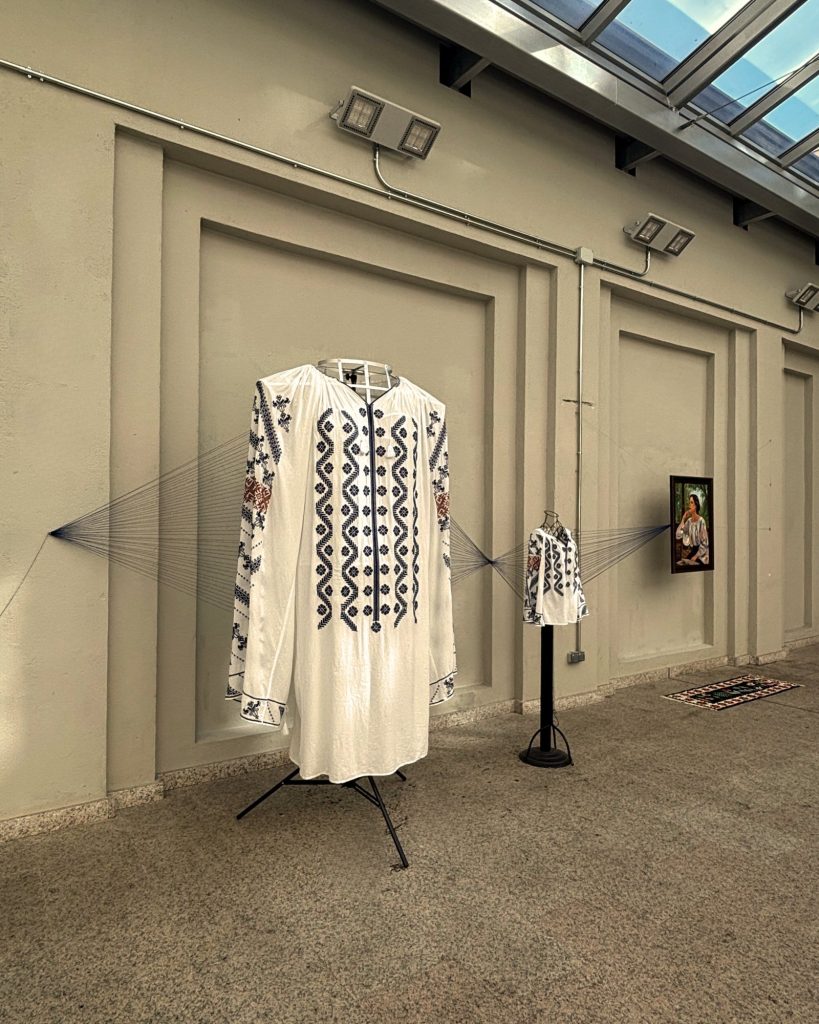
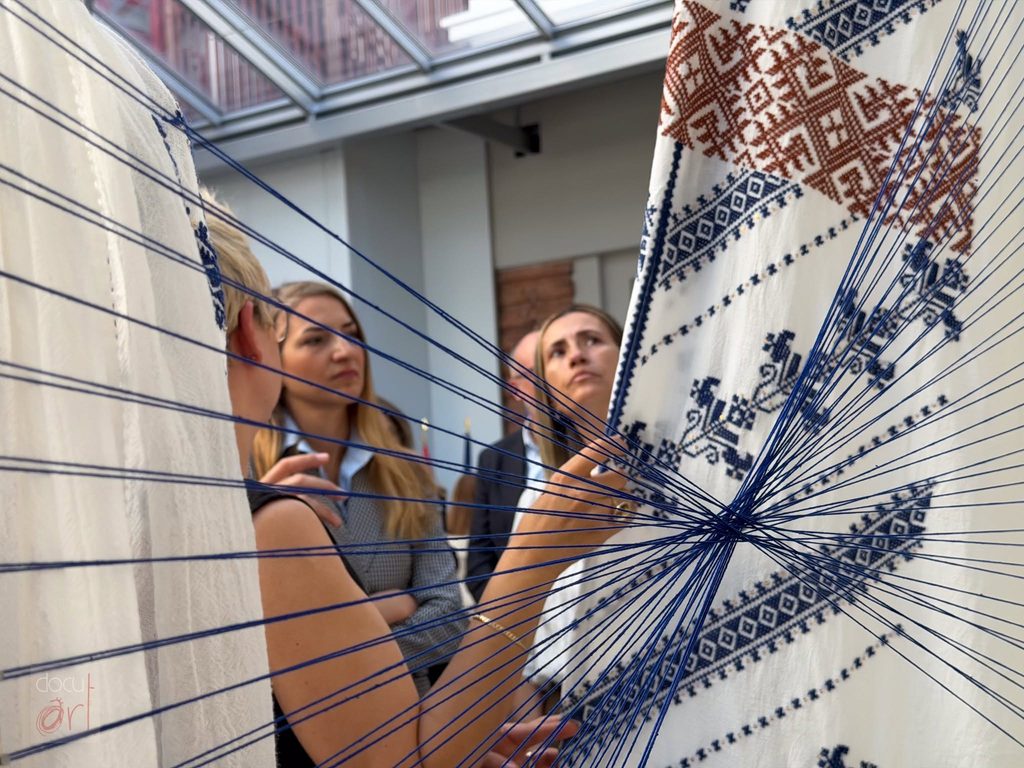
The centrepiece is an ie with altiță of 20 square metres, sewn by hand, the largest ever sewn. The art of the shirt with altiță has been on the UNESCO Representative List of the Intangible Cultural Heritage since 2022.
The shirt carried information about the woman who wore it. In Oltenia, red was the colour of girls and young wives, while dark cherry red and blue were preferred by older women. On the ie on display, the altiță is sewn in gold and the vertical bands in blue. The ii on display also carry the column motif, a sign of how an archaic motif continues today through Brâncuși’s work and through its promotion as a woven symbol.
Blue threads link the monumental ie, a wearable ie and the painting that shows the image of the 80 square metre mural, made on the wall of the town hall in Arganda del Rey, a transposition at architectural scale.
In the peasant house, the scoarță covered the wall, the bed or the chest and was part of a girl’s dowry. The Oltenian scoarță stands out through its border, the element that orders the composition. Larger pieces have a central field framed by two or three borders. In the field appear plant motifs, birds, animals and human figures, placed freely. The borders carry geometric motifs, such as rhombuses, zigzags and stars. The tree of life, one of the most frequent motifs, is read by ethnographers as an image of life that renews itself.
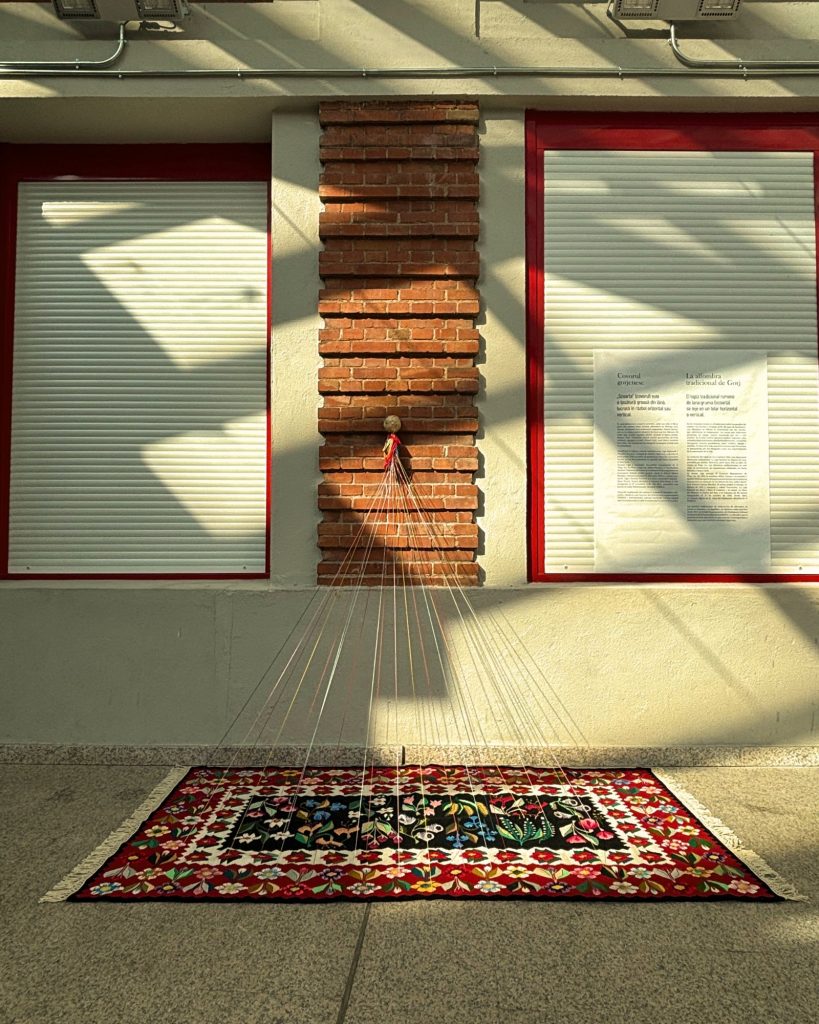
Weaving in Gorj also has an institutional history. The National League of Gorj Women, led by Arethia Tătărescu, opened a weaving workshop in Târgu Jiu around 1926. The carpets made there were shown at exhibitions in Paris, Brussels and New York.
The same League commissioned the Monumental Ensemble in Târgu Jiu. In 1934, the sculptor Milița Petrașcu recommended to Arethia Tătărescu that she invite Constantin Brâncuși to make a monument for the Gorj heroes who fell in the First World War. The artist accepted in February 1935 and refused the fee. The League financed the works and donated the ensemble to the town.
The Table of Silence, the Gate of the Kiss and the Endless Column were inaugurated on 27 October 1938. Since 2024, the ensemble has been on the UNESCO World Heritage List.
The traditional techniques of making scoarțe in Romania and the Republic of Moldova have been on the UNESCO Representative List of the Intangible Cultural Heritage since 2016.
The scoarță on display is contemporary and shows that the craft is still practised today.
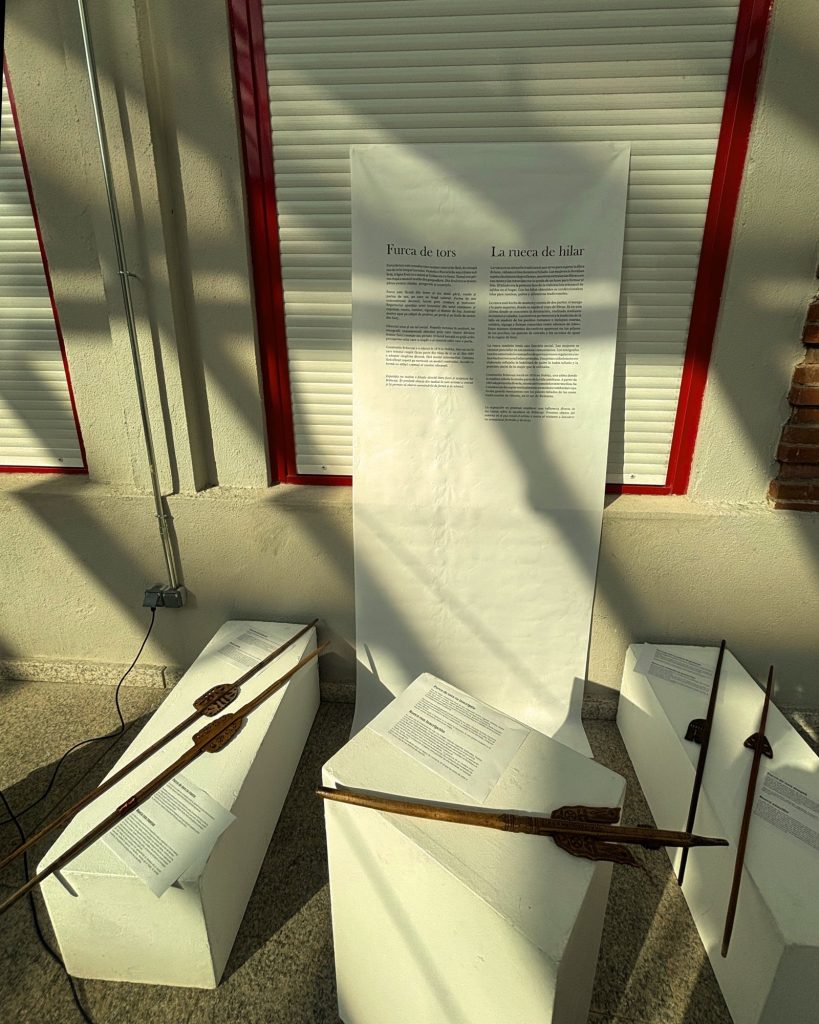
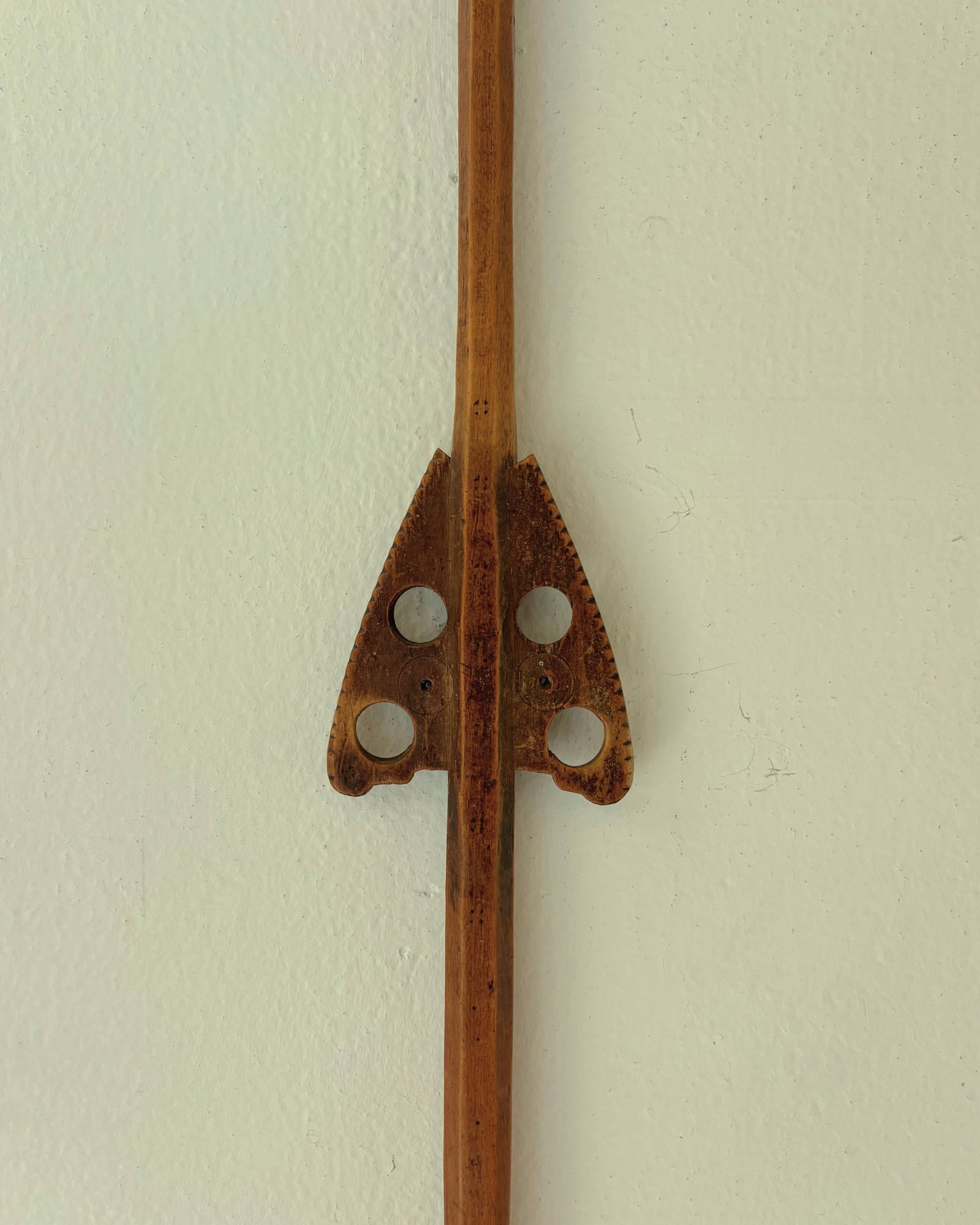
The distaff is the tool that holds the bundle of wool, hemp or flax during spinning. The woman fixed it at her waist or held it under her arm, drew the thread with one hand and twisted it with the spindle. Spinning was the first stage of textile work in the household. From the spun thread they wove the cloth for shirts, towels and scoarțe.
The distaff is made of wood and has two parts, the shaft and the upper part, where the bundle is tied. The upper part holds the decoration, worked by notching and fretwork.
The repertoire belongs to the woodcraft of the Romanian village and includes the rosette, the rhombus, the zigzag and the wolf’s tooth.
The same motifs appear on porch pillars, gates and dowry chests in Gorj.
The object also had a social role. Women spun together at evening gatherings, and ethnographers record the custom of young men giving girls notched or painted distaffs. A carefully worked distaff showed the skill of the man who carved it and the standing of the woman who carried it.
The simple distaff
The simplest of the distaffs on display has an austere decoration and a contrast between its long structure and the pierced side element. The four circular holes, set symmetrically, create an elementary visual rhythm. Here, repetition is the main means of artistic expression.
The circle, often linked in traditional art to continuity and cycles, can be read here in relation to spinning itself, since the repetitive movement turns the wool fibre into a continuous thread.
The absence of elaborate ornaments suggests a simple aesthetic, reduced to the essential, where expressiveness comes from the relation between full and empty, not from decorative abundance.
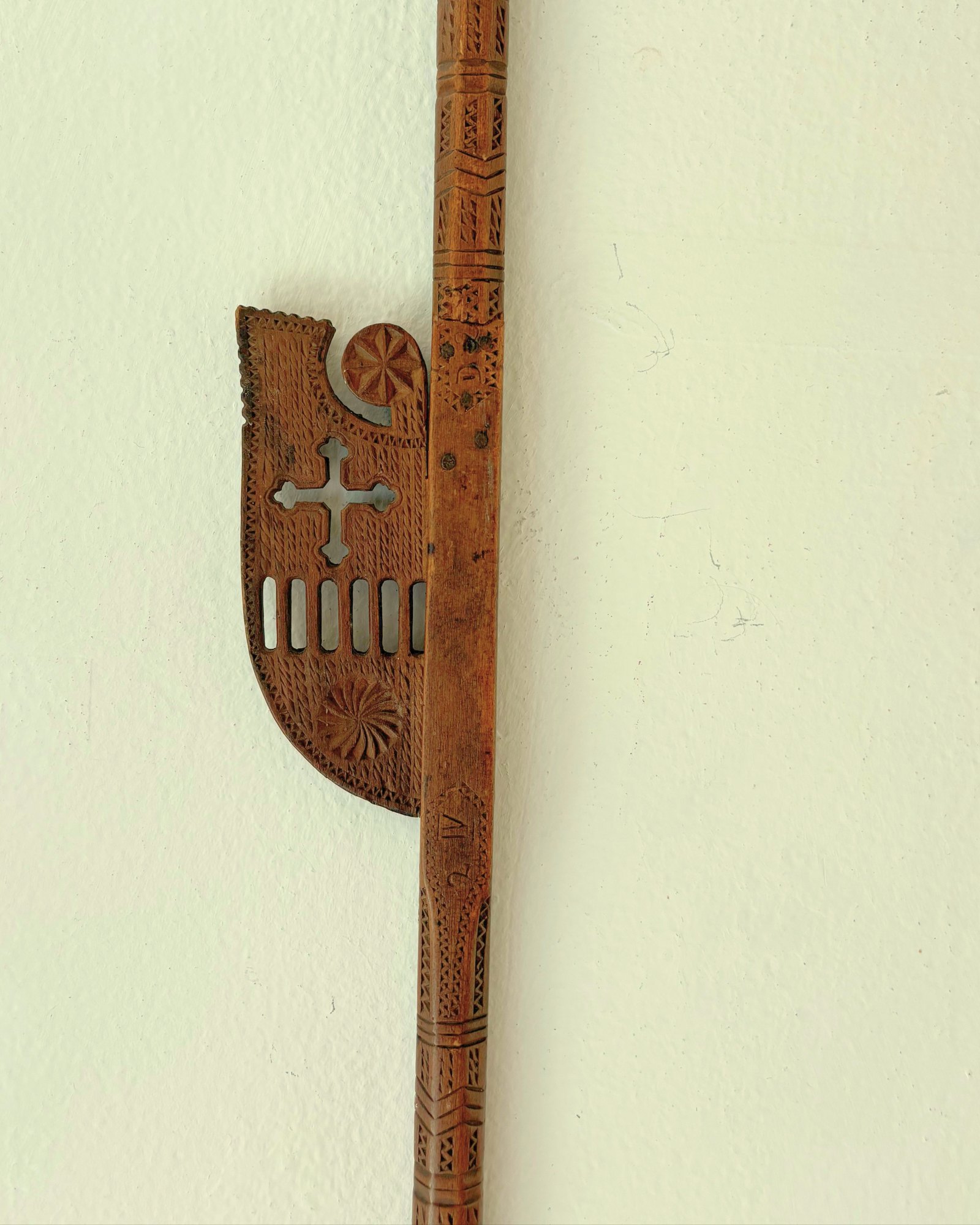
The distaff with protective signs
This distaff has a complex decoration, with a pierced cross, a sequence of vertical openings and a radial rosette, completed by geometric incisions along the shaft.
The cross is one of the best-known motifs of Romanian folk art, a symbol of Christian spirituality and of the wider idea of protection. Next to the rosette, a motif often read as a solar symbol, it allows a reading in which the religious world and the symbolism of nature live together in the decoration of an everyday object.
Through the arrangement of signs in successive registers, the distaff goes beyond its role as a tool of domestic work and becomes a possible carrier of the wish for protection and harmony.
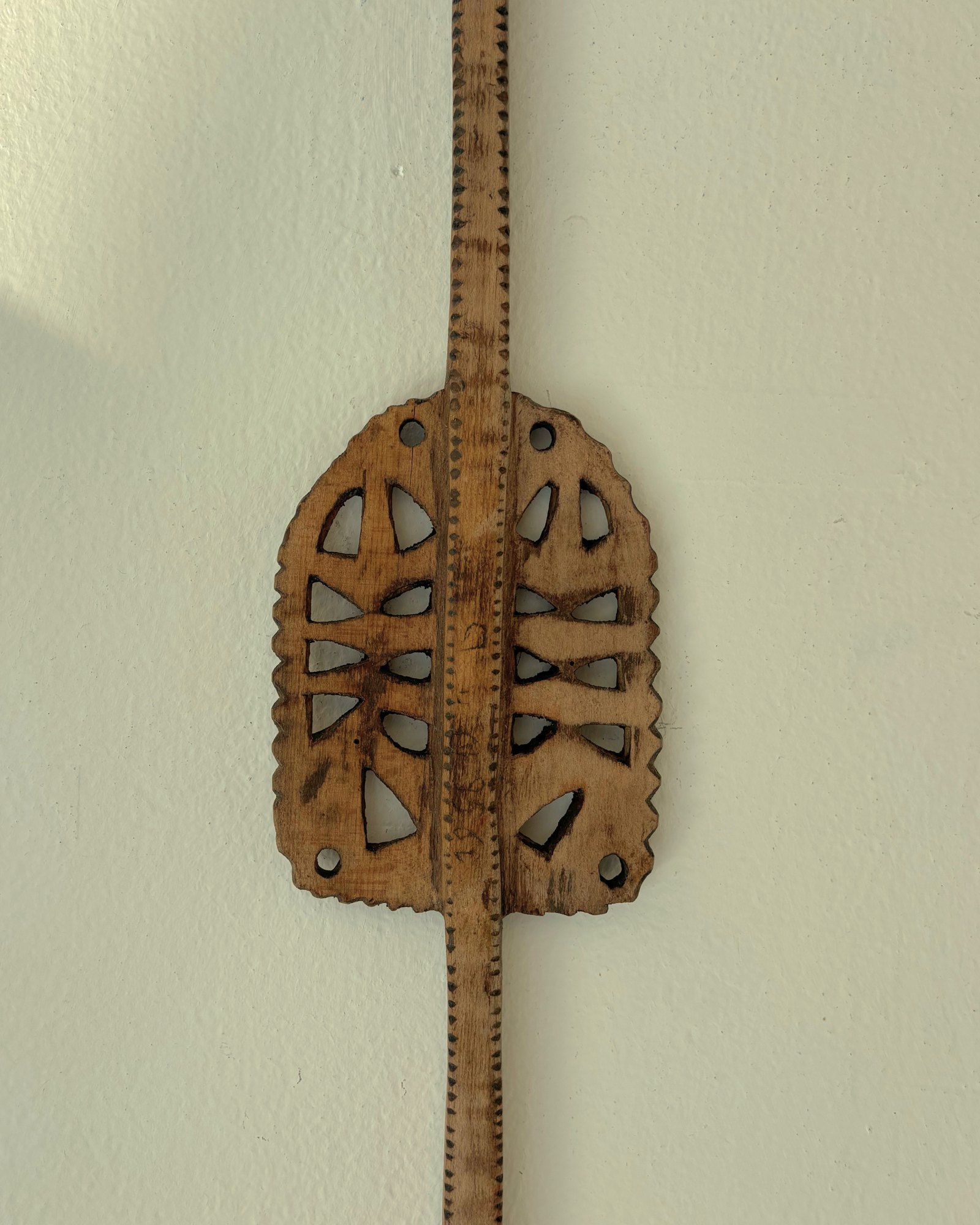
The pierced distaff
This distaff stands out through the extent of its fretwork and the complex composition of its decoration.
Rhythmic cut-outs, set on both sides of the central axis, form a network that recalls plant branches and the structure of a woven fabric. This resemblance allows a reading in which the tool made to produce thread reproduces, in its own material, the logic of weaving and interconnection.
The artistic particularity of this distaff is the way it turns the absence of material into an expressive element. The light that passes through the holes becomes part of the object, and the wood takes on the look of carved lace.
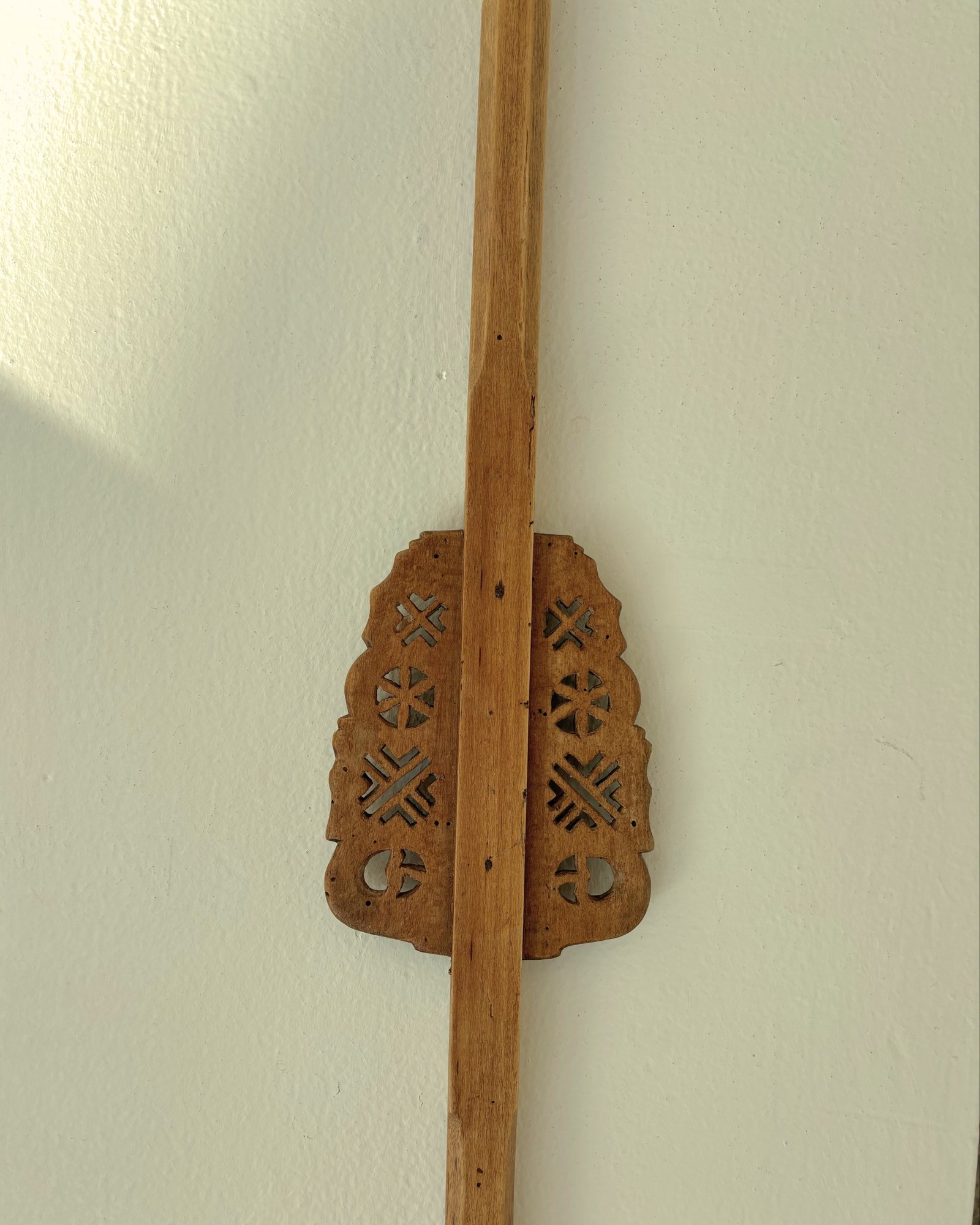
The distaff with rosettes
The distaff with rosettes has a symmetrical composition built around circular and cross-shaped motifs, set in decorative registers on the two side wings.
The rosettes with radial arms can be linked to solar symbols, while the cross shapes and the crossed diagonals bring in the idea of order around a centre. Symbolically, this structure can be read as an image of circular time, a theme that finds a direct echo in the rotation of the spindle.
In this way, the distaff is a miniature image of a world ordered by repetition and balance, and spinning, as a metaphor, belongs to the wider rhythms of nature.
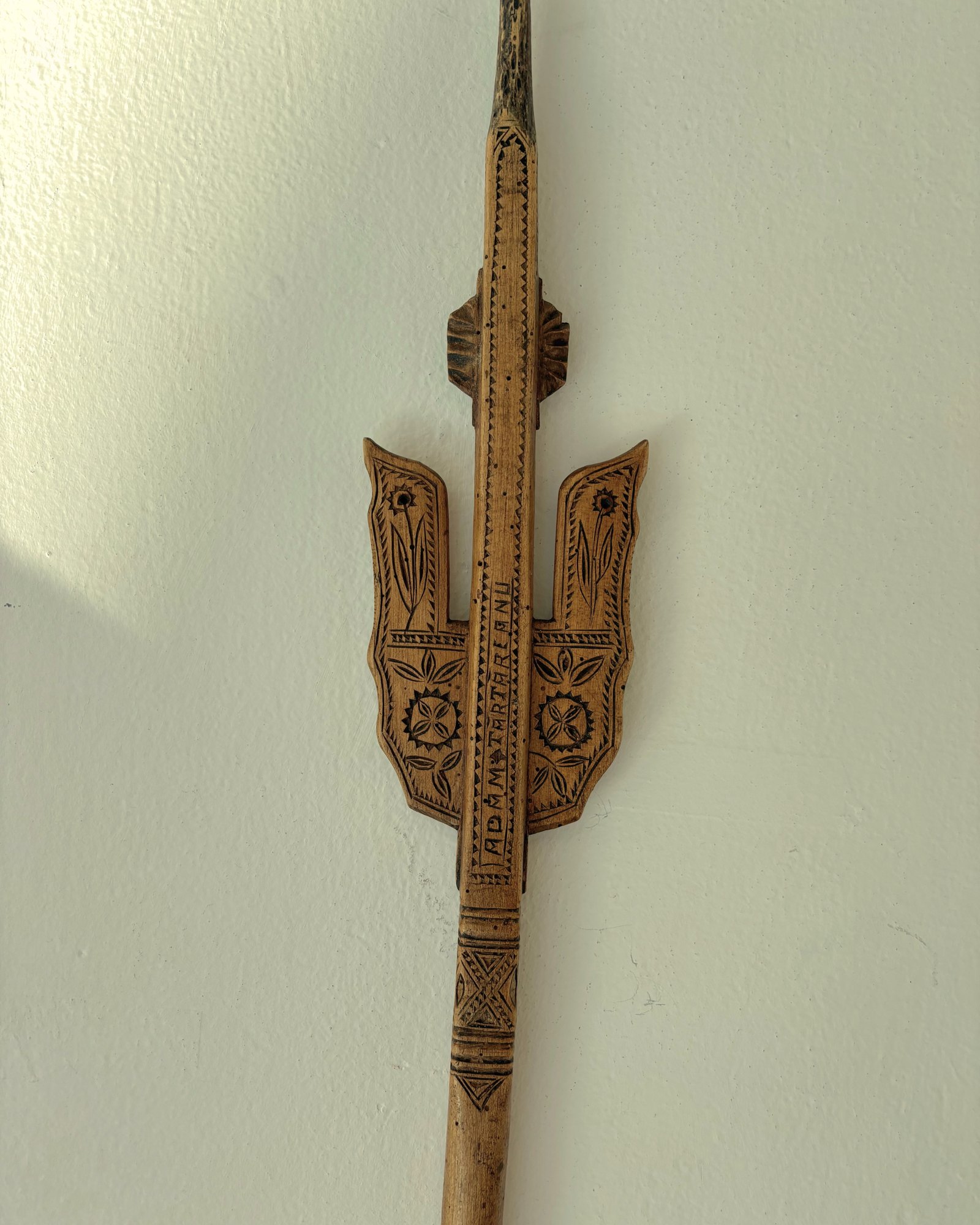
The distaff with an inscription
The most richly decorated distaff combines stylised plant motifs, rosettes set in serrated circles, geometric registers and an inscription on the central shaft.
The two „wings” are decorated with almost symmetrical floral images. The flowers, linked to solar motifs, allow a reading towards fertility and vitality, recurring themes in traditional plant symbolism.
The element that sets this piece apart is the inscription. The presence of a name brings a personal dimension into the decorative structure. Given the tradition of offering distaffs as gifts, it invites a reading of the object as the carrier of an identity, a message or an emotional bond.
This distaff can be understood as an object of memory, in which the gesture of carving and the gesture of spinning bring together two distinct forms of creation.
Constantin Brâncuși was born in 1876 in Hobița, in a village where carved wood was part of everyday life.
From 1907 he adopted direct carving, with no intermediate model. The Endless Column repeats a rhomboid module vertically, close in form to the notched pillars of Oltenian houses.
Nota bene: The exhibition does not claim a direct line between the distaffs and Brâncuși’s sculpture. It shows you objects from the world in which the artist grew up and lets you notice the similarities of form and technique.
Press and links
- Agerpres, Brâncuși Year: the living heritage of Gorj curated in an immersive exhibition and an 80 square meter mural
- Modernism.ro, Madrid, patrimoniul viu al Gorjului curatoriat într-o expoziție imersivă și un mural de 80 de metri pătrați
- Modernism.ro, Un mural de 80 de metri pătrați dedicat patrimoniului gorjenesc, inaugurat la Arganda del Rey
- Docuart, Un mural de 80 de metri pătrați dedicat patrimoniului gorjenesc, inaugurat la Arganda del Rey
- Periódico El Rumano, Patrimoniul viu al Gorjului curatoriat într-o expoziție imersivă la Madrid
- Curatorial.ro, Mural de 80mp inspirat de patrimoniul gorjean, în Spania
- Radio România Oltenia-Craiova, Mural de 80 de metri pătrați dedicat patrimoniului gorjenesc, inaugurat la Madrid
- Radio Târgu Jiu, Patrimoniul tradițional al Gorjului, prezentat într-o expoziție la Madrid
- Gorjeanul, Patrimoniul viu al Gorjului curatoriat într-o expoziție imersivă la Madrid
- Gorjeanul, Mural de 80 de metri pătrați dedicat patrimoniului gorjenesc, inaugurat la Madrid
- Actual în Gorj, Ia gorjenească, transformată într-un mural monumental în Spania
Organiser: Asociația Docuart
Co-organiser: Fundația WIN for ART
Patronage: Ambasada României în Regatul Spaniei
Partners: Asociația Hispano-Română Nuestras Costumbres
Mural: after a painting by Roxana Irimia
Lasă un comentariu